How Water Quality Monitoring Supports Compliance

Construction dewatering projects depend on controlled discharge and consistent water quality monitoring to stay within permit limits.
On a busy utility upgrade in Metro Vancouver, the excavation is ready, the wellpoints are pulling hard, and trucks are queued at the gate. Then the discharge sample misses a pH limit, and everything stops. Pumps idle. Crews wait. The owner starts asking pointed questions about permits.
Moments like this are why water quality monitoring has shifted from “nice extra” to core part of dewatering and bypass work. When you have live data instead of guesswork, you know what’s heading to the storm, sanitary, or surface water long before a surprise lab result shows up.
If you are responsible for construction dewatering, wellpoint dewatering, or contaminated groundwater treatment, steady monitoring is one of the few tools that protects your schedule, your budget, and your relationship with regulators at the same time.
TL;DR: Why monitoring matters
- Regulators base permits on parameters like pH, turbidity, total suspended solids, and metals that must stay within published guidelines.
- An IoT water quality monitoring system gives early warning when readings drift, instead of finding out after a failed grab sample.
- When monitoring is built into your dewatering plan, you cut down on unplanned shutdowns, re-treatment, and tense calls with reviewers.
- Nexgen pairs water quality telemetry, pH systems, water treatment chemicals, and industrial hose repair to keep both flow and compliance on track.
Table of contents
- Why monitoring is the backbone of compliance on site
- IoT water quality monitoring systems in real-world projects
- Connecting monitoring to construction and wellpoint dewatering
- Turning monitoring data into compliance proof
- Step-by-step: building a monitoring program that works
- FAQs: water quality monitoring for dewatering projects
- How Nexgen Environmental can help
- Summary: monitoring keeps jobs moving and regulators comfortable
Why monitoring is the backbone of compliance on site
In Western Canada, discharge from dewatering and treatment systems is judged against provincial and national water quality guidelines. British Columbia publishes approved ambient water quality guidelines, while federal agencies and the Canadian Council of Ministers of the Environment (CCME) provide guideline values and indices to protect aquatic life.
What regulators look for in site water
The exact requirements on your permit or bylaw vary, but a few parameters show up again and again on construction dewatering and wellpoint dewatering projects:
| Parameter | Why It Matters for Compliance | Typical Sensor or Test |
|---|---|---|
| pH | Controls solubility and toxicity of metals; must generally sit in a fairly tight band to protect aquatic life. | Inline pH probe and controller; lab confirmation for compliance reports. |
| Turbidity / TSS | Represents sediment and fine solids; excess levels can smother habitat and carry attached contaminants. | Turbidity sensor, total suspended solids (TSS) samples to a lab. |
|
Conductivity / TDS |
Signals dissolved salts and some dissolved contaminants; jumps often match spills, seawater influence, or groundwater interaction. | Conductivity sensor; occasional lab test for total dissolved solids. |
|
Metals / hydrocarbons |
Trigger stricter guidelines and can drive treatment design, especially on contaminated sites. | Grab samples to accredited labs, supported by field measurements such as ORP and turbidity. |
What happens when monitoring is an afterthought
When monitoring sits outside the main plan, field problems show up in familiar ways:
- Last-minute lab failures. Discharge samples come back out of spec and by then thousands of cubic metres have already moved.
- Unplanned shutdowns. Crews stand down while someone chases cause, calls the lab, and argues about background conditions.
- Thin documentation. With no continuous record, it becomes harder to show that exceedances were short‑lived or tied to a specific event.
The strongest compliance story is simple: “We saw a trend forming, we corrected it in real time, and here are the readings to prove it.”
IoT water quality monitoring systems in real-world projects
An IoT water quality monitoring system takes the same readings you would collect with a handheld meter and clipboard, then automates them. The goal is not to replace lab work, but to give your team a constant picture of how the treatment train is behaving between samples.

An IoT water quality monitoring system links field sensors, controllers, and telemetry so crews can see changing conditions without driving to site.
Core components of an IoT water quality monitoring system
On a typical Nexgen setup, you might see:
- Sensors at key points. pH, turbidity, conductivity, temperature, and level sensors installed on headers, tanks, or manholes.
- Data logger or controller. Collects readings, performs basic checks, and feeds signals to a modem or site pH control system.
- Cellular or radio modem. Sends data to a secure cloud dashboard so engineers, consultants, and owners can check in without driving to site.
- Alerts and thresholds. Text or email alerts when pH, turbidity, or other parameters drift toward the edge of permit limits.
Nexgen’s water quality telemetry support focuses on these practical pieces: solid sensors, reliable communications, and simple dashboards site staff can read at a glance. (nexgenenv.com)
Key water quality monitoring sensors for dewatering
For construction dewatering systems, the most common water quality monitoring sensors include:
- Inline pH probes feeding a pH adjustment skid that doses water treatment chemicals such as caustic, acid, or CO2.
- Turbidity probes on the final discharge line to keep an eye on how well sediment removal equipment is performing.
- Flow meters that tie water quality readings to volume, so you know how much water met guidelines over a shift or weekend.
- Level and pressure sensors on wells, sumps, and tanks to help coordinate pump operation with quality readings.
A connected water quality monitoring system allows these sensors to work together instead of in isolation, showing how quality changes as water passes through settling tanks, sand filters, resins, and pH skids.
Connecting monitoring to construction and wellpoint dewatering
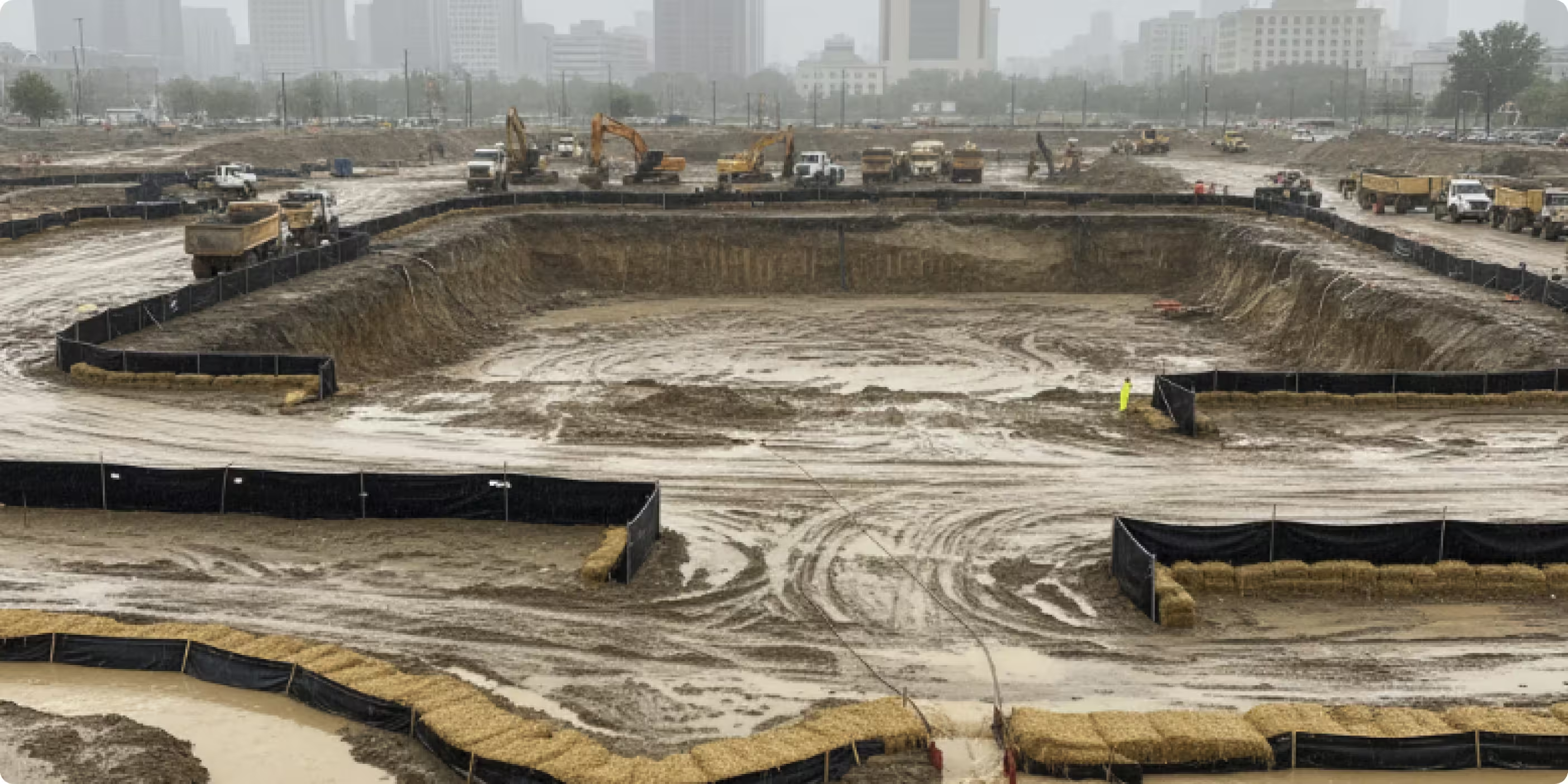
Good data matters most where groundwater and treatment are already under pressure: deep excavations, waterfront work, and contaminated sites with tight metal or hydrocarbon limits. That is where dewatering design, treatment, and monitoring need to be part of the same conversation.
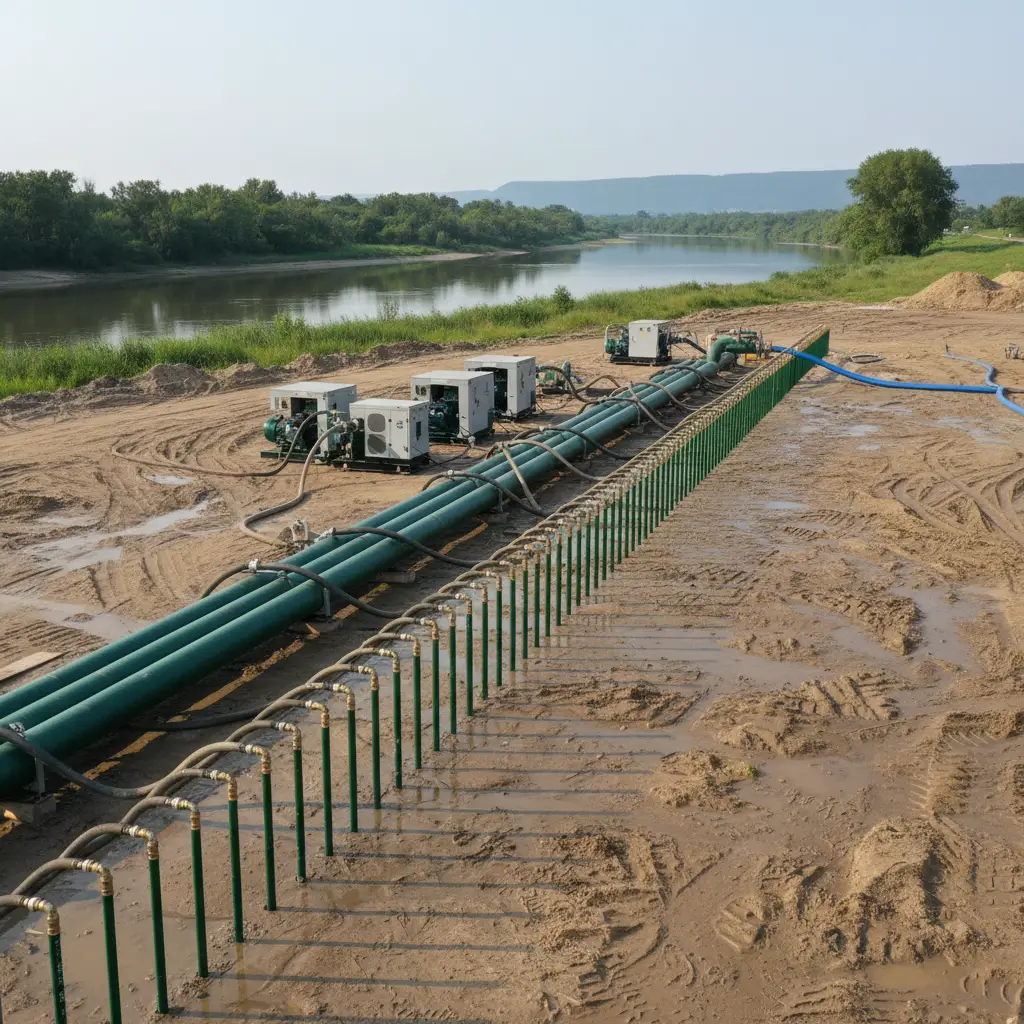
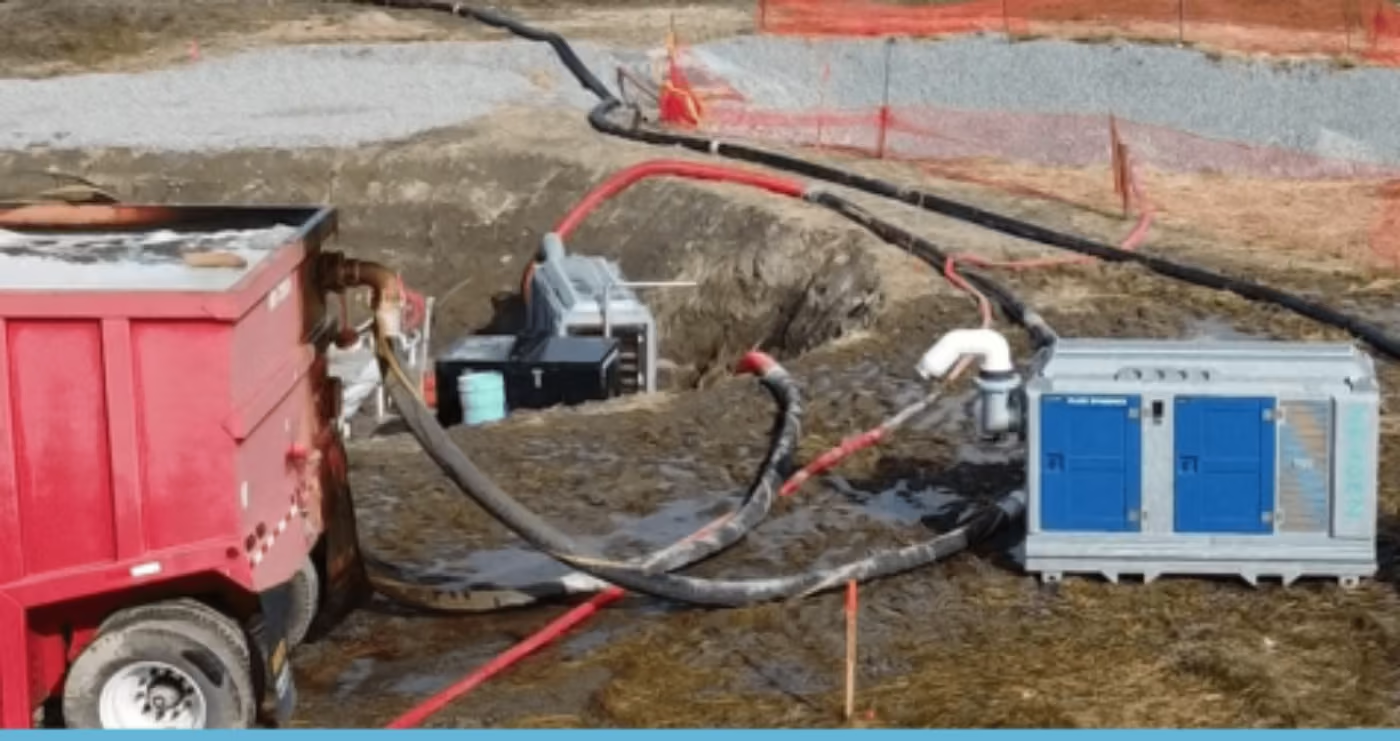
Wellpoint dewatering systems and discharge lines are natural locations for continuous water quality monitoring and sampling points.
From dewatering plan to field execution
Many problems start early, when the dewatering scope focuses entirely on keeping the cut dry and only later folds in discharge limits. A stronger approach is to bake monitoring straight into the written dewatering plan.
That plan can spell out:
- Where samples and sensor readings will be taken along the wellpoint dewatering or sump line.
- Which parameters will be tracked continuously, and which rely on scheduled grab samples.
- How alarms will feed into operating decisions for pumps, valves, and treatment equipment.
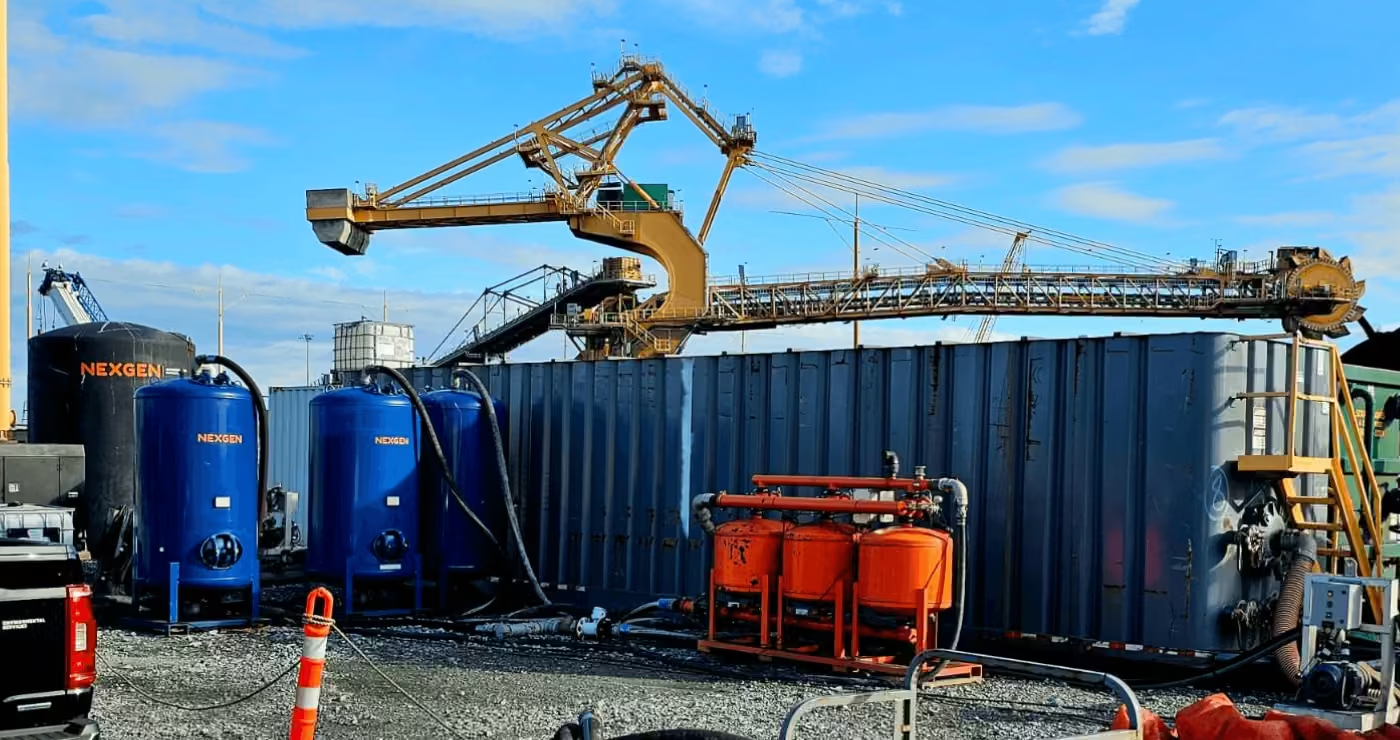
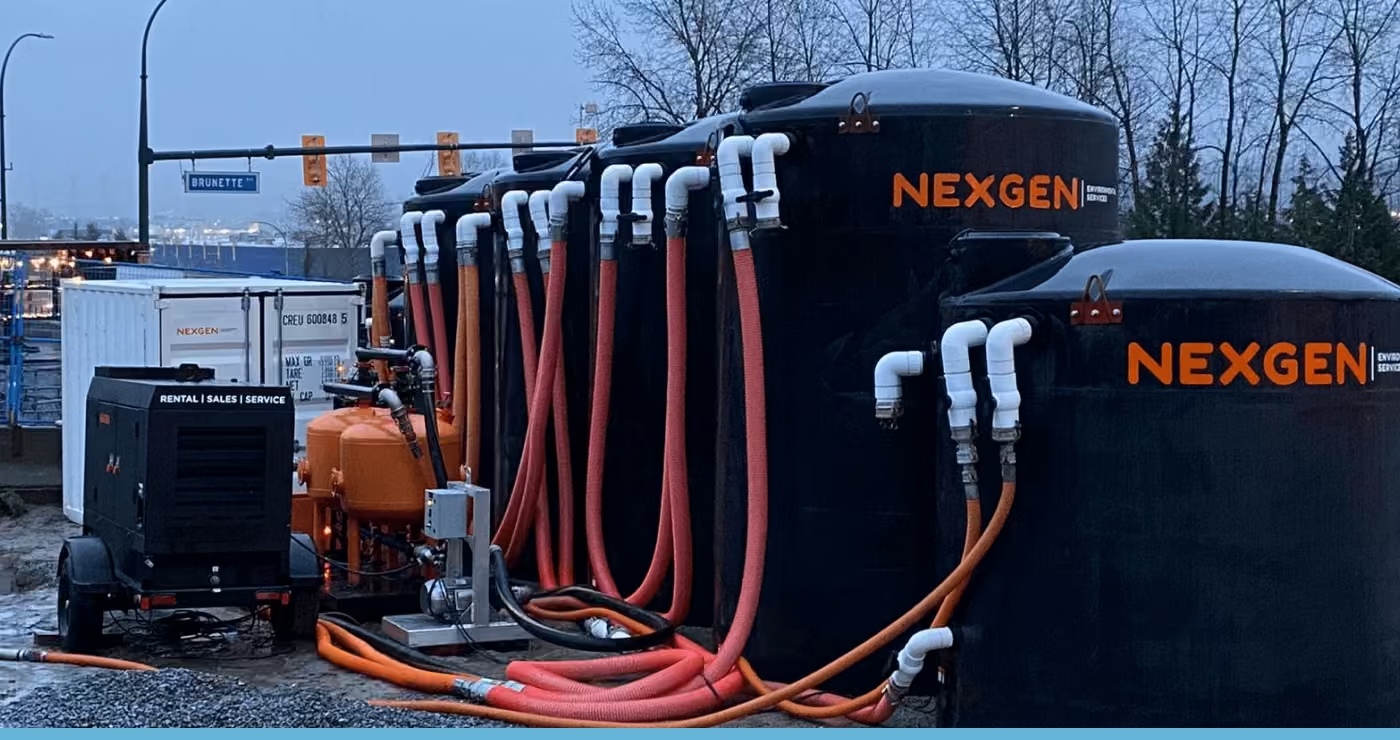
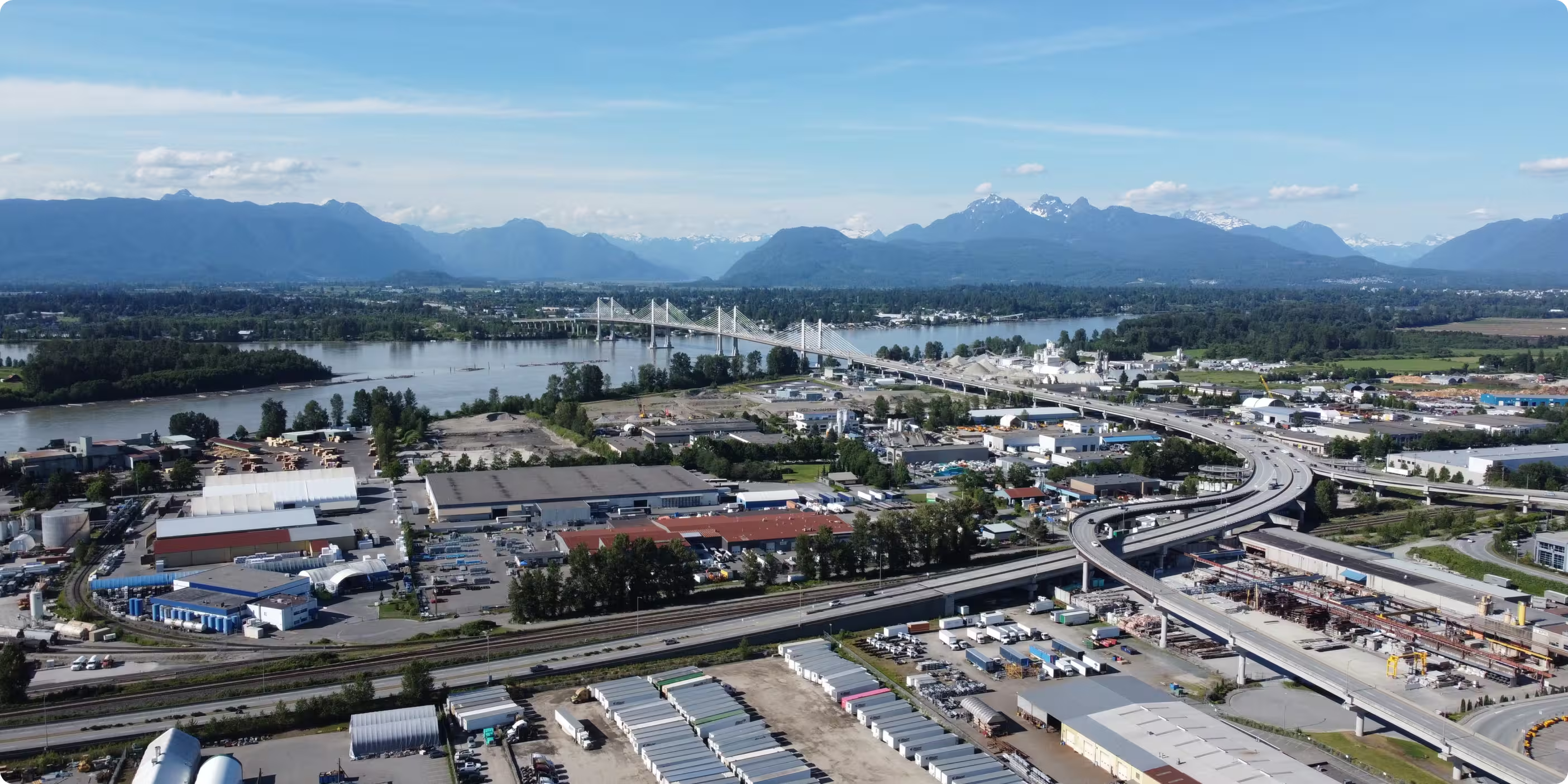
On one Fraser River waterfront project, Nexgen ran a high‑flow metals treatment system with telemetry, giving the team steady feedback on iron‑rich groundwater as it moved through tanks and media beds. That kind of visibility makes it much easier to explain to regulators what happened on a stormy night or during a rapid drawdown.
pH control systems and water treatment chemicals
pH often drives both risk and treatment cost. When it drifts out of range, metals can drop out or dissolve, sand media can foul faster, and discharge can breach permit limits. Nexgen’s pH systems are built so that crews can keep pH steady without turning every adjustment into a science project.
A practical pH control system typically includes:
- Inline pH probes at tank inlets and outlets.
- Dosing pumps and storage for water treatment chemicals (for example, coagulants, flocculants, acids, or bases).
- Controls that respond to both readings and flow, not just manual grabs.
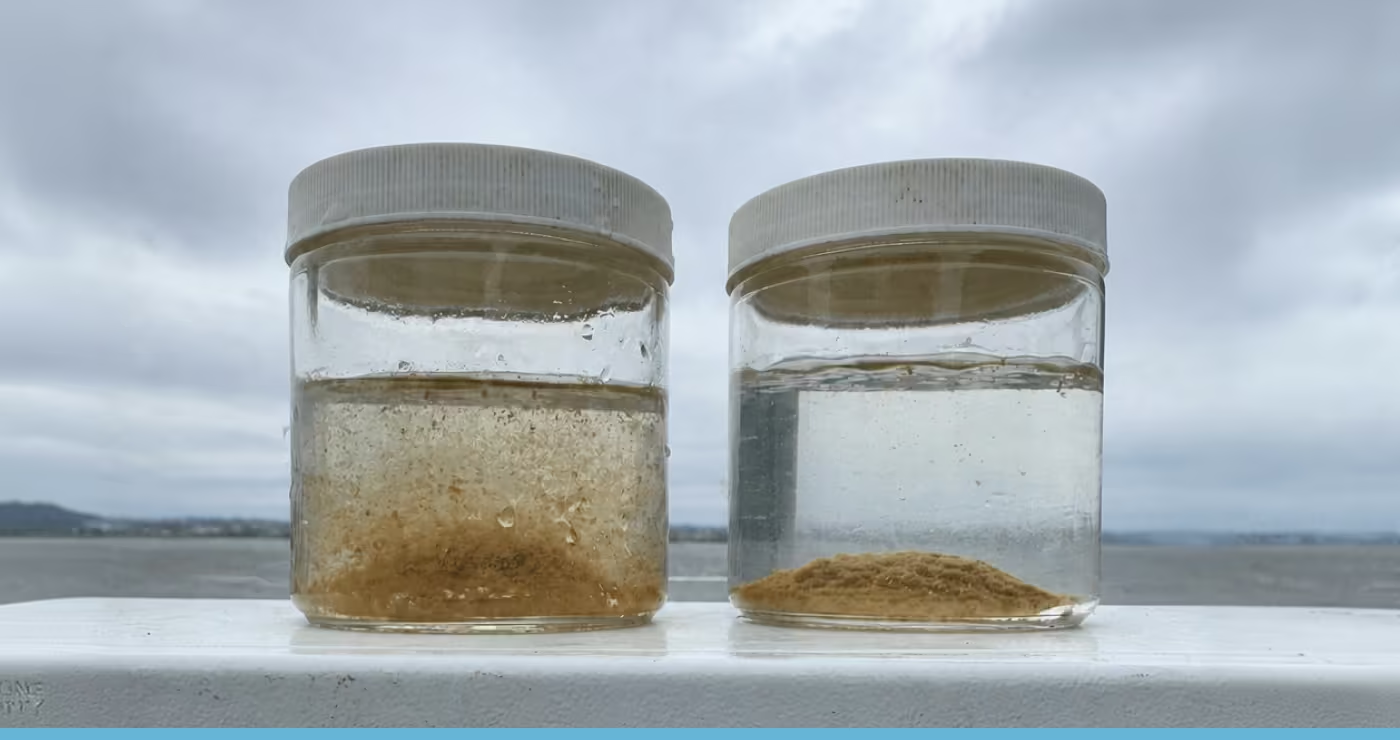
When settling alone is not enough, Nexgen supplies chemical products and sediment removal systems that help fine particles drop out faster and reduce turbidity at the discharge point.
Turning monitoring data into compliance proof
Guidance from agencies such as Environment and Climate Change Canada and provincial ministries ties water quality back to published guidelines and indices. Many programs combine several parameters over time to rate how often, how far, and how many measurements exceed guideline values.
That same thinking applies on a single project. Regulators and consultants want to see:
- Which parameters you measured and why they were chosen.
- How often you sampled or logged data, and at what locations.
- How quickly you reacted when a reading nudged up against a limit.
- Whether quality trends stayed within permit ranges over the life of the work.
Continuous monitoring fills in the story between lab results. When a short‑term exceedance happens, you can show when it started, what actions were taken (for example, adjustment of the pH control system or a temporary recirculation), and when readings came back into range.
Step-by-step: building a monitoring program that works
A strong monitoring program for construction or wellpoint dewatering does not need to be complicated. It just needs to line up with both your dewatering method and your discharge conditions.

Clear procedures and easy-to-read dashboards help field teams respond quickly when water quality trends shift toward permit limits.
- Confirm your limits and background conditions. Work with your consultant or municipality to nail down the parameters, guideline values, and any site‑specific expectations (for example, nearby salmon habitat or combined sewer risks).
- Map monitoring points onto the dewatering plan. Include monitoring locations on the same drawings that show wells, sumps, tanks, and discharge lines. If you are planning a complex setup, Nexgen’s dewatering planning service can help keep this clear from the start.
- Choose sensors and sampling methods. Decide where you need continuous telemetry and where periodic grab samples plus handheld meters are enough. Often that looks like inline pH and turbidity probes at the discharge, backed by lab samples for metals and hydrocarbons.
- Set alarms and response steps. Written instructions help everyone know what to do when pH drifts, turbidity spikes, or conductivity jumps. For example, “If turbidity exceeds X NTU, recirculate to tanks and call the Nexgen technician.”
- Build in equipment resilience. A failed probe, plugged line, or leaking hose can undermine both monitoring and treatment. Nexgen’s hose repair and hose replacement and pump repair and sale services keep the physical system in shape so your data stays trustworthy.
- Keep records organized. Store sensor logs, calibration records, and lab certificates in one place. That way, when an inspector or owner asks questions six months later, you are not chasing files across laptops and field notebooks.
FAQs: water quality monitoring for dewatering projects
What is a water quality monitoring system in this context?
On construction and industrial sites, a water quality monitoring system is the combination of sensors, sampling methods, telemetry, and documentation that tracks key parameters (like pH and turbidity) from the excavation or process discharge to the final outfall.
Do I still need lab samples if I use an IoT monitoring system?
Yes. Sensors are ideal for trend tracking, alarms, and day‑to‑day control, while accredited laboratories provide defensible results for metals, hydrocarbons, and other parameters that cannot be measured inline. Most permits expect both field readings and certified lab reports.
Which water quality monitoring sensors are most valuable for construction dewatering?
pH, turbidity, and flow are usually the first three. Many sites then add conductivity, level, and temperature. Together, they give a clear picture of how well the treatment train and wellpoint dewatering system are working over time.
How does monitoring tie into construction dewatering budgets?
When monitoring is planned properly, it tends to cost less than the overtime, standby crew time, and extra treatment runs that come with surprise exceedances or emergency re‑plumbing. By catching trends early, you reduce the chance that a single bad reading forces a shutdown.
Where does industrial hose repair fit into compliance?
It sounds mundane, but a split discharge hose can send poor‑quality water to the wrong place in seconds. Fast industrial hose repair and replacement help keep flows going where they should, at the rates the treatment system was designed for, so your monitoring actually reflects reality on the ground.
How Nexgen Environmental can help
Nexgen focuses on Western Canadian projects where groundwater, stormwater, and contaminated water can stall work if they are not handled with care. Our field teams link wellpoint systems, contaminated water treatment systems, water quality telemetry, pH systems, and chemical products into one coordinated plan.
Whether you are writing a new dewatering plan, troubleshooting a stubborn discharge parameter, or upgrading from manual checks to an IoT‑based system, our specialists can walk the route with you, flag risks, and suggest practical setups that match your permit and site layout.
If you have upcoming work in Metro Vancouver, elsewhere in BC, or in Alberta, you can request a free consultation to review scope, monitoring needs, and discharge requirements before equipment ever shows up on site.
Summary: monitoring keeps jobs moving and regulators comfortable
When water leaves your site, regulators judge it against clear guideline values backed by decades of science and monitoring experience. A thoughtful mix of sensors, telemetry, and lab work lets you see how your system behaves in real time, not just at isolated sampling moments.
Tie that monitoring to a solid dewatering plan, reliable pH control, well‑maintained hoses and pumps, and the right water treatment chemicals, and you turn water quality from a constant worry into something predictable, documented, and much easier to defend.