How to Choose the Right Water Treatment System Setup for a Job Site
On construction and civil projects, water can turn into a wildcard fast. One storm or high‑groundwater excavation and pumps are running nonstop while everyone wonders if discharge still meets the permit. Choosing a water treatment system that fits your job site keeps those moments from becoming fire drills.
In Western Canada, sediment, metals, pH, and hydrocarbon limits are detailed, and constructors are directly accountable. The right setup protects schedules, budgets, and nearby ecosystems; the wrong one shows up as rework, penalties, or work stoppages while samples are checked.
This guide outlines a practical framework, based on how Nexgen Environmental delivers Environmental Dewatering Services for projects across British Columbia and Alberta, so you end with a clear checklist to use with your team or a specialist.
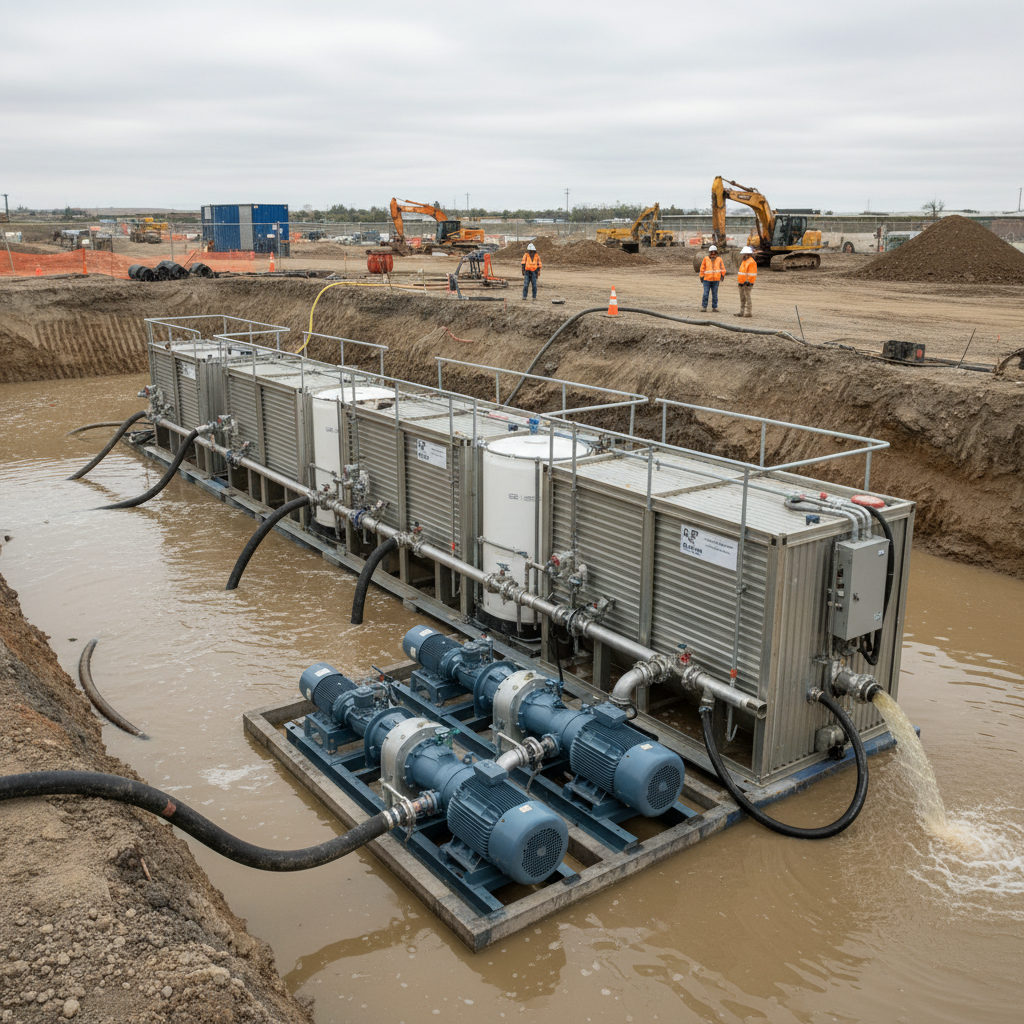
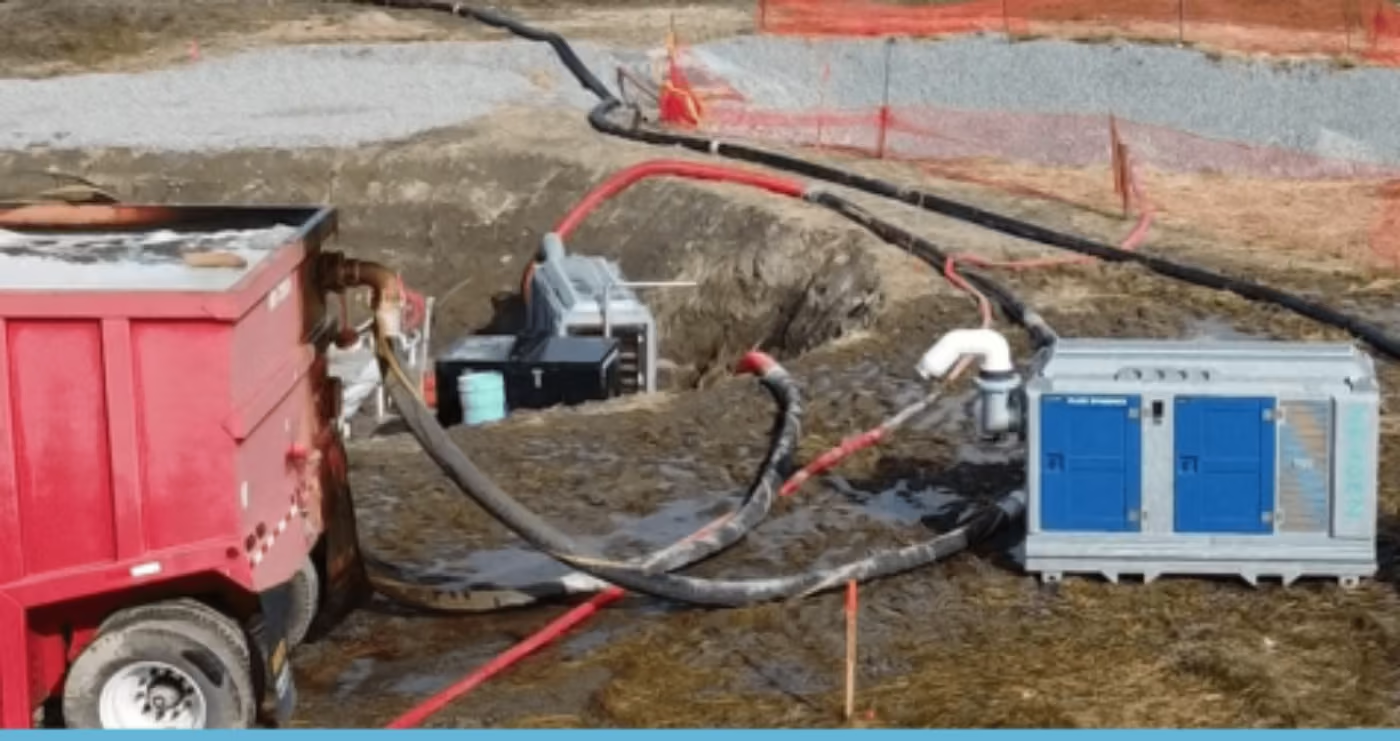
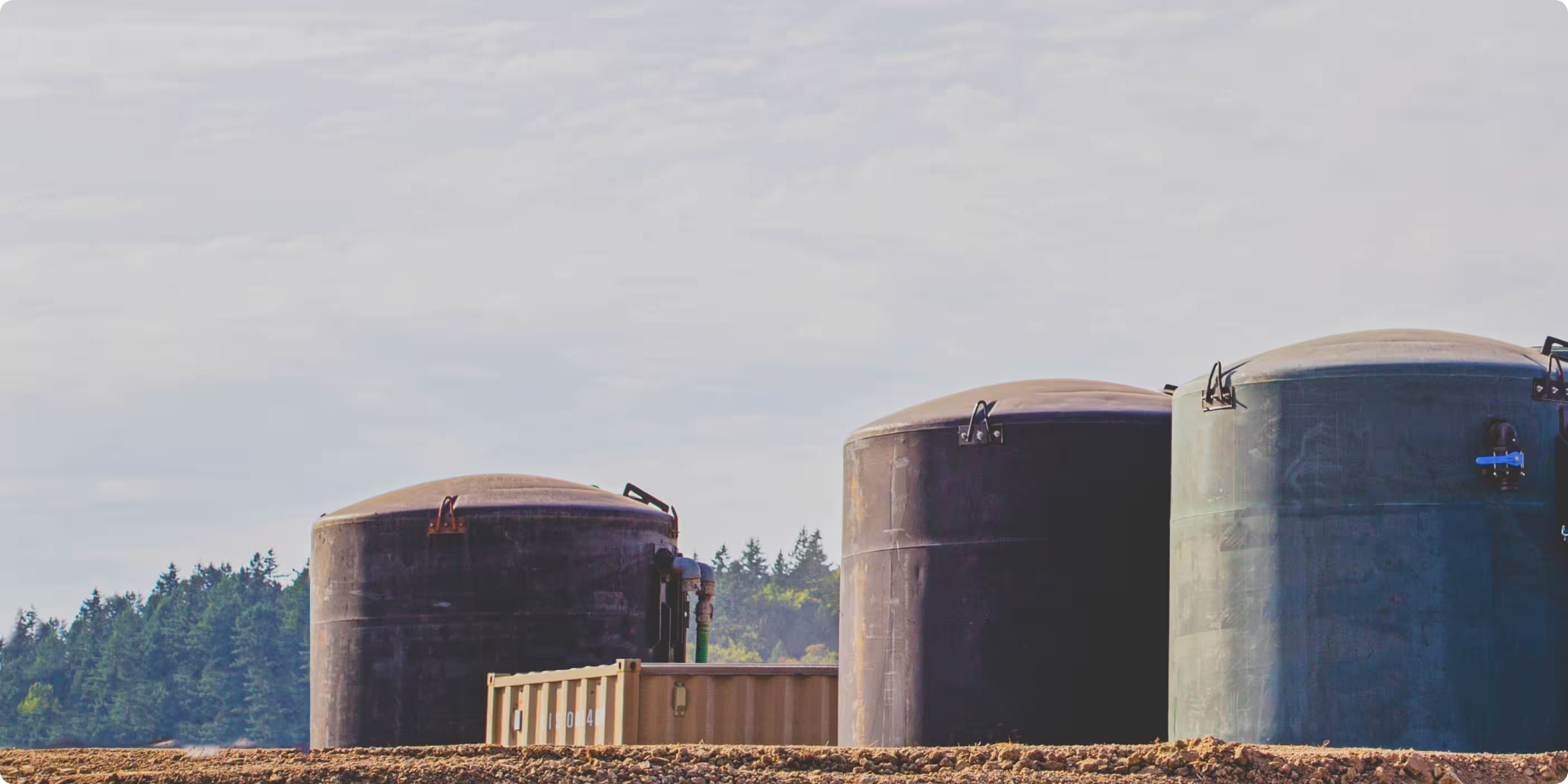
A well-sized job site water treatment system keeps excavation work moving, even when groundwater and storms push flows higher.
TL;DR – The Job Site Water Treatment System Checklist (4 Steps)
- Start with the water: volume, source (groundwater, stormwater, process water), and likely contaminants.
- Follow the Job Site Water Treatment System Checklist: four steps from understanding your water to setup and logistics.
- Clarify regulatory targets early: permit conditions, local bylaws, and your planned discharge location.
- Match treatment processes to the problem: settling, filtration, chemical treatment, and polishing as needed.
- Choose configuration: temporary or semi‑permanent system, dewatering equipment rentals, or a fully managed package.
- Plan logistics: footprint, power, access, monitoring, and what happens if conditions change.
- Bring in specialist Environmental Dewatering Services when flows are high, contaminants are tricky, or compliance risk is high.
Table of contents
- Job site vs. whole house systems
- Step 1 – Understand your water and compliance targets
- Step 2 – Match treatment processes to your water
- Step 3 – Choose the setup and equipment mix
- Step 4 – Logistics, cost, and risk
- Common mistakes when choosing a job site water treatment system
- When to call Environmental Dewatering Services
- How Nexgen designs job site systems
- Job site water treatment system FAQ
Job site vs. whole house water treatment system
Many project managers are familiar with a whole house water treatment system at home: steady flows, consistent quality, and a long‑term installation on a single connection. Job sites are a different world.
On construction and civil sites, flows change day to day, water often carries sediment from excavation, and contaminants can range from turbidity to dissolved metals, hydrocarbons, or cement‑related high pH. Systems must be mobile, rugged, and designed to meet permits from regulators like the EPA, the Canadian Council of Ministers of the Environment, and provincial agencies.
In short: home systems focus on household comfort; job site setups sit at the intersection of safety, productivity, and environmental compliance on large, messy sites.
Step 1 – Job Site Water Treatment System Checklist: Understand your water and compliance targets
How much flow will your water treatment system need to handle?
Before anyone sketches a treatment train, map out where water will come from and how much you expect:
- Shallow or deep groundwater entering excavations or shoring systems.
- Stormwater running across disturbed soil or stockpiles.
- Process water from saw cutting, pressure washing, or concrete work.
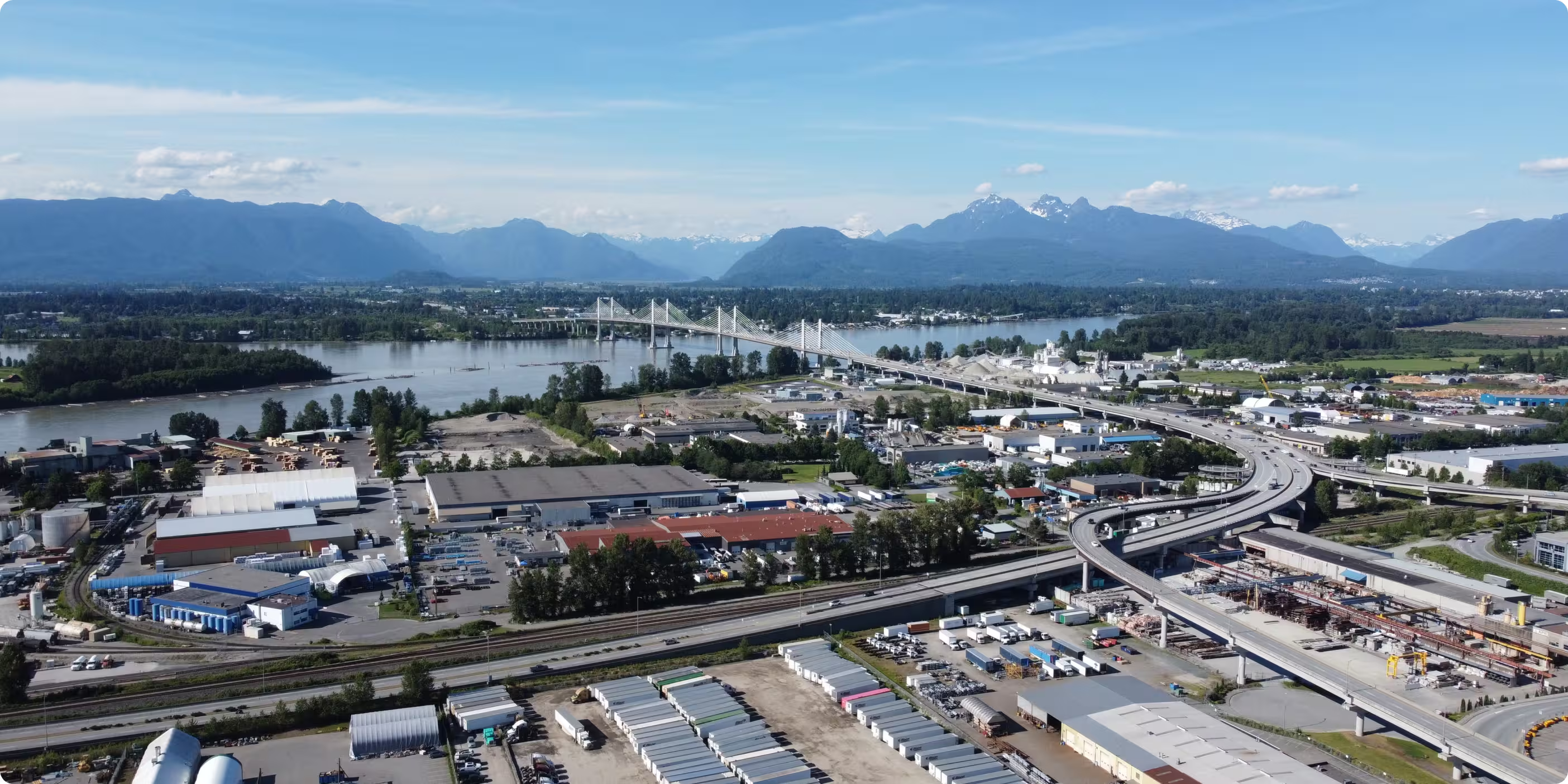
A high‑flow foundation excavation in Metro Vancouver needs a different setup than a small utility trench. Experienced dewatering planning services balance pumps, wellpoint spacing, and storage so treatment units see a steady, manageable flow.
Where can you discharge treated water from a job site?
The destination shapes the standard you must meet:
- Discharge to storm or surface water usually means tighter limits on turbidity, metals, and hydrocarbons.
- Discharge to sanitary may have different pH or oil and grease limits, along with flow caps set by the municipality.
- Trucking to a licensed facility shifts the load to logistics and tipping fees.
| Destination | Typical water quality focus | Operational implications |
|---|---|---|
|
Storm or surface water |
Tied to aquatic life guidelines: tight control of turbidity, suspended solids, hydrocarbons, metals, and pH. | Requires robust treatment trains, careful monitoring, and rapid response when storms or excavation changes push results toward permit limits. |
| Sanitary sewer | Focus on pH, oil and grease, organics, and loading so the wastewater plant can keep operating effectively. | Often allows higher turbidity than storm discharges but includes flow caps, pre-treatment expectations, and surcharges that must be built into schedule and budget. |
|
Truck-off to licensed facility |
Facility-specific acceptance criteria; solids and hazardous constituents are tightly controlled. | Lowers on-site compliance risk but adds hauling logistics, queue time, and tipping fees; best reserved for smaller volumes or higher-risk water streams. |
Reviewing permits, local bylaws, and guidelines such as the BC Approved Water Quality Guidelines gives your team clear targets that the system must hit day after day.
Step 2 – Job Site Water Treatment System Checklist: Match treatment processes to your water
Physical separation: settling and filtration
Most sites start with physical steps that remove suspended solids before chemistry is added:
- Settling tanks, weir tanks, or frac tanks for residence time.
- Bag or cartridge filters for finer sediment and debris.
- Sand media filters when flows are higher or fines are stubborn.
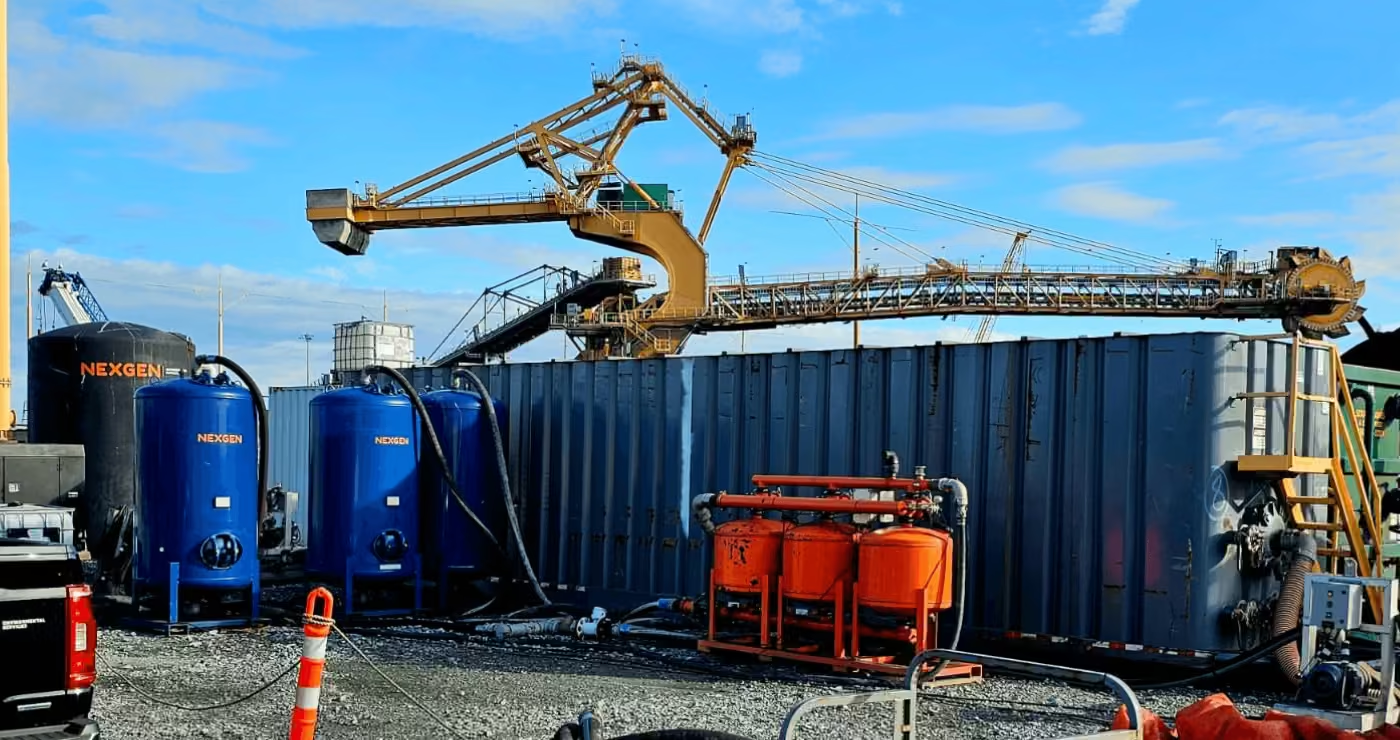
For projects with tight turbidity limits, Nexgen often integrates sand media units from our dewatering equipment rentals fleet with properly sized storage tanks to even out flows.
Chemical treatment: coagulants and polymers
When solids are very fine or metals need to come out of solution, chemical dosing enters the picture:
- Coagulants and flocculants to bind fine particles into larger flocs.
- pH adjustment to bring water into the right range for both permits and chemistry.
- Specialty resins or media to address specific metals or contaminants.
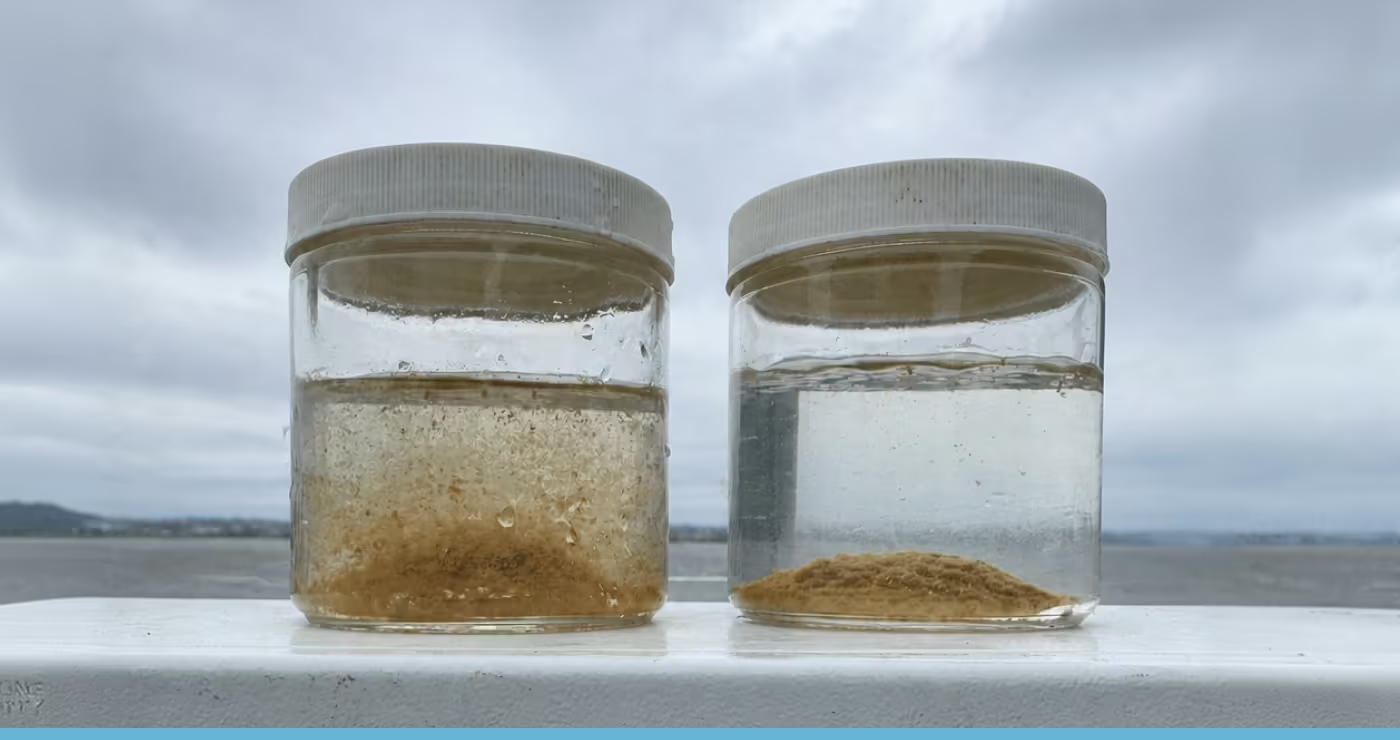
Jar testing early in the project lets technicians tune chemicals and doses so the system hits performance targets without wasting product.
Polishing steps for sensitive receivers
For discharges to fish‑bearing streams, wetlands, or sensitive urban waterways, an extra “polishing” step often makes sense:
- Activated carbon to handle hydrocarbons and some dissolved organics.
- Additional filtration stages for very low turbidity limits.
- Flow‑paced dosing and continuous monitoring to catch swings fast.
The more sensitive the receiving environment, the more you should treat the system as engineered environmental infrastructure, not just “some tanks and filters beside the hole.”
Example treatment trains
While every project is unique, many job site systems follow a few proven patterns. A typical baseline layout looks like: pumps or wellpoints → storage and equalization → chemical injection and mixing (if needed) → sand media filtration → carbon or other polishing → discharge.
- High turbidity, few other contaminants. Pumps or wellpoints → equalization tank → settling tank → sand media filter → final bag or cartridge filter → discharge to storm or surface water under a turbidity‑focused permit.
- Metals, high pH, or hydrocarbons. Pumps or wellpoints → storage tank → pH adjustment and coagulant/polymer dosing → settling tank → sand filtration → carbon or metals‑specific media → discharge to storm, sanitary, or truck‑off depending on permit and water quality.
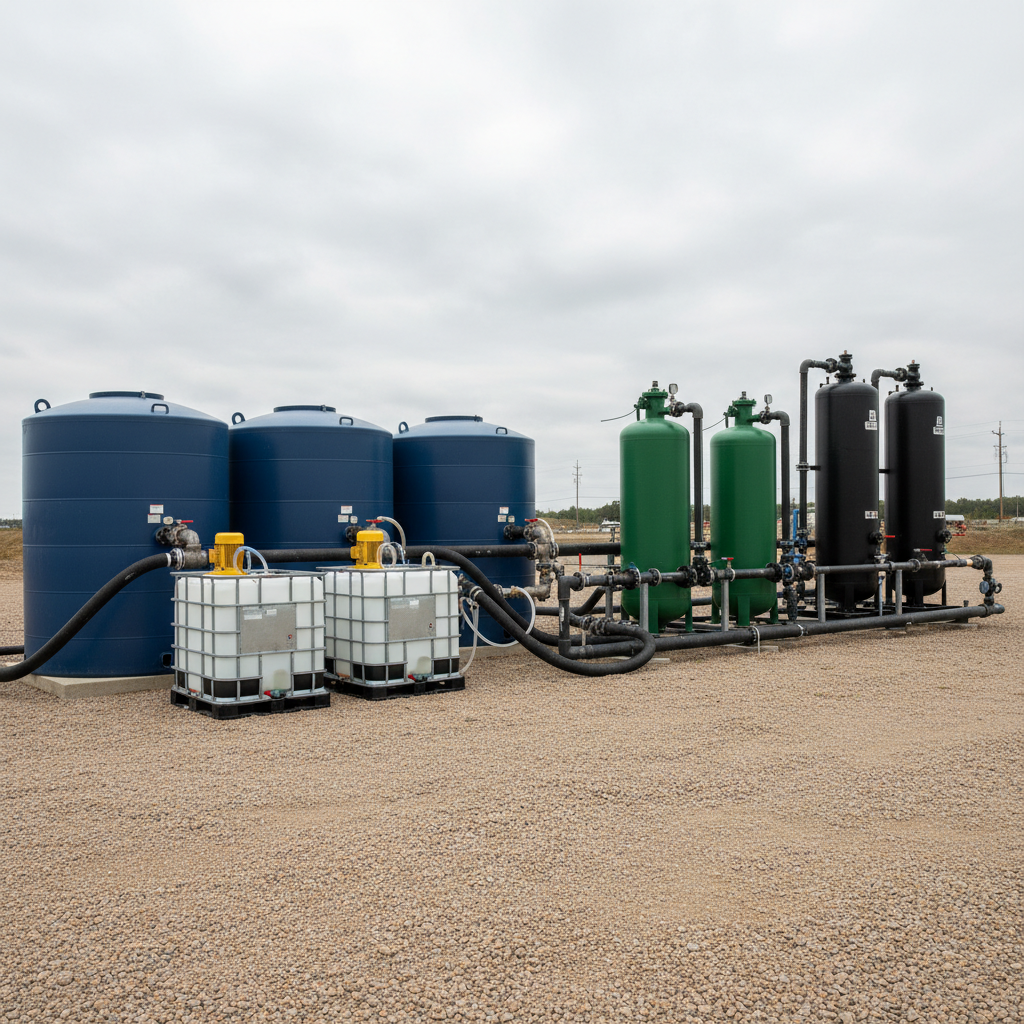
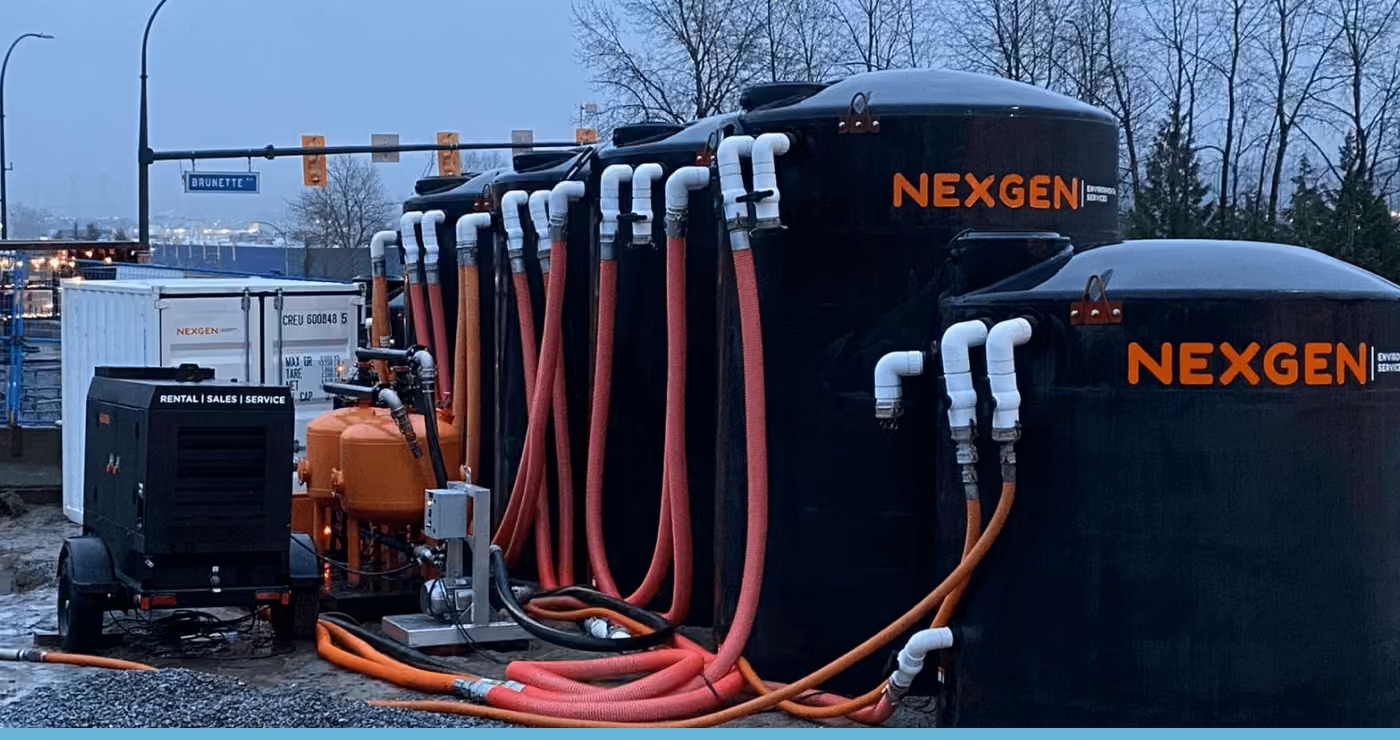
A typical job site water treatment train links storage, chemical dosing, sand filtration, and carbon polishing into a single connected system.
Step 3 – Job Site Water Treatment System Checklist: Choose the setup and equipment mix
Temporary, semi‑permanent, or mobile?
Job site systems usually fall into a few patterns:
- Short‑term, mobile setups that move as the excavation moves.
- Seasonal or project‑long systems for big civil or infrastructure work.
- Hybrid approaches where a central plant serves multiple work fronts.
Early conversations about staging, traffic routes, crane picks, and laydown space help decide whether your treatment train sits on skids, trailers, or a more fixed pad.
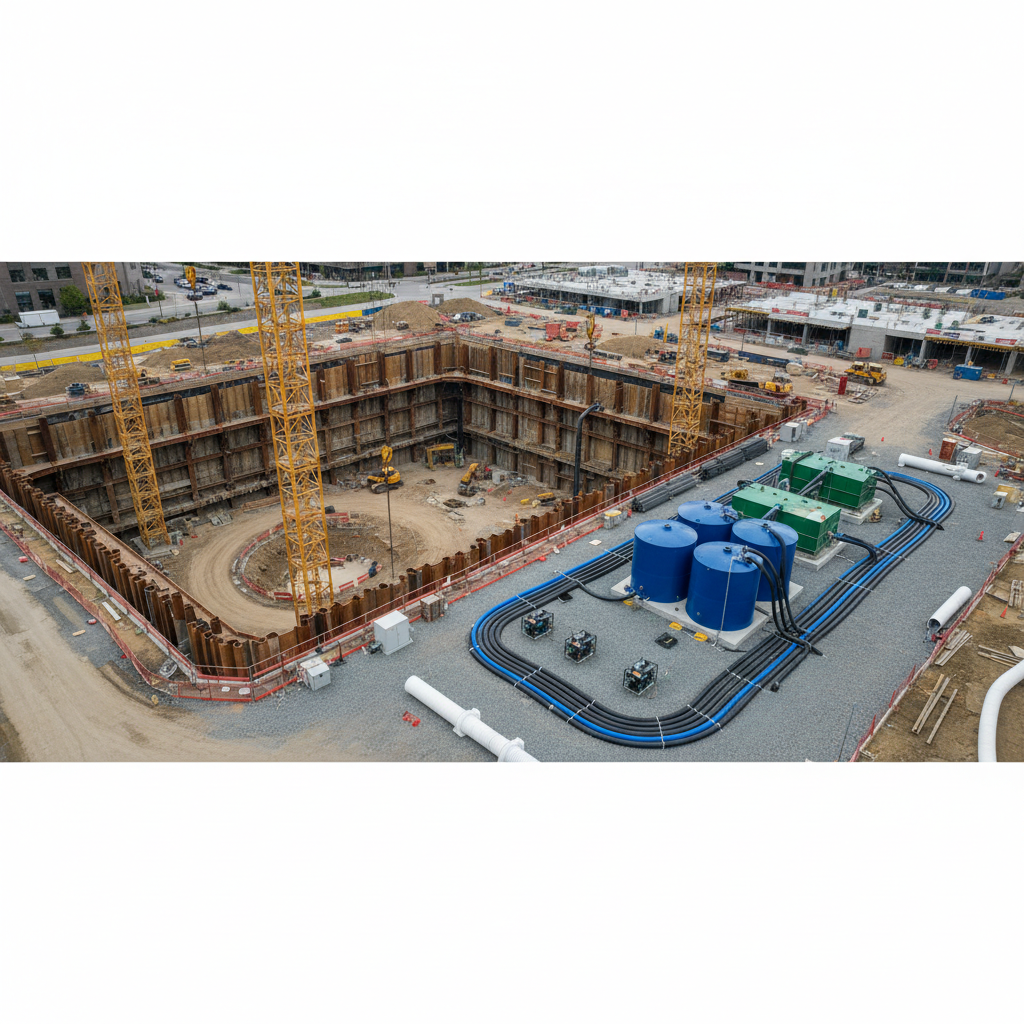
Laying out pumps, tanks, and filters beside the excavation keeps the water treatment system accessible without blocking cranes or material deliveries.
Renting vs. buying equipment
For most contractors, especially in Western Canada, renting treatment and dewatering gear is the practical route. With dewatering equipment rentals, you get:
- Modern pumps, tanks, filters, and control systems sized to the actual project.
- Service and swap‑outs if conditions change or equipment needs repair.
- Freedom from owning, storing, and maintaining specialized units between jobs.
Buying can make sense for owners with continuous process water, but most general and civil contractors prefer to lean on a specialist fleet instead of owning a whole house water treatment system–style installation just for one or two jobs.
Monitoring, controls, and data
A solid job site setup does more than move water; it also generates data that keeps you confident in compliance:
- Flow meters and run‑time logs for pumps and treatment units.
- Regular turbidity, pH, and visual checks, documented for your records.
- Sampling plans aligned with your permit and local requirements.
Nexgen often builds monitoring and reporting into our contaminated water treatment systems, so superintendents and environmental coordinators have clear records when regulators or owners ask questions.
Example: tying setup, treatment, and discharge together
Imagine a mid‑rise development in Metro Vancouver with high groundwater inflows into a deep excavation close to a fish‑bearing stream. The municipality requires discharge to storm within strict turbidity and pH limits tied to provincial and CCME guidelines. A practical setup might use perimeter wellpoints feeding baffled storage tanks, inline pH adjustment and coagulant dosing, then sand filtration and activated carbon polishing before discharge. By trialling the chemistry in advance and monitoring turbidity and pH in the field, the contractor can keep excavation work moving through a wet season without schedule‑stopping non‑compliance events.
Step 4 – Job Site Water Treatment System Checklist: Logistics, cost, and risk
Footprint, access, and power
Space is always at a premium, especially on tight urban sites. When you plan your system, check:
- How many tanks, filters, and pumps can fit without choking off laydown or access routes?
- Can vacuum trucks or sampling crews reach the system safely?
- Is there reliable power, or do you need engine‑driven pumps and generators?
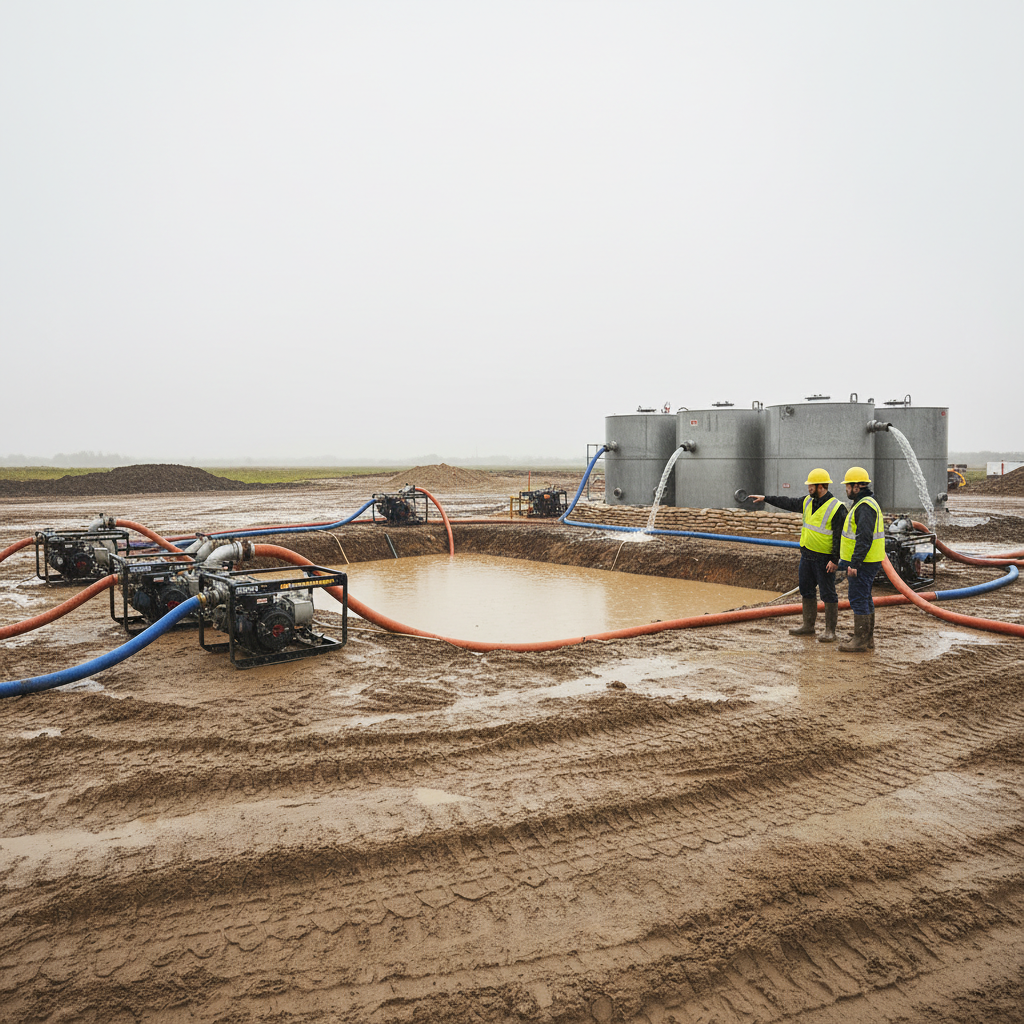
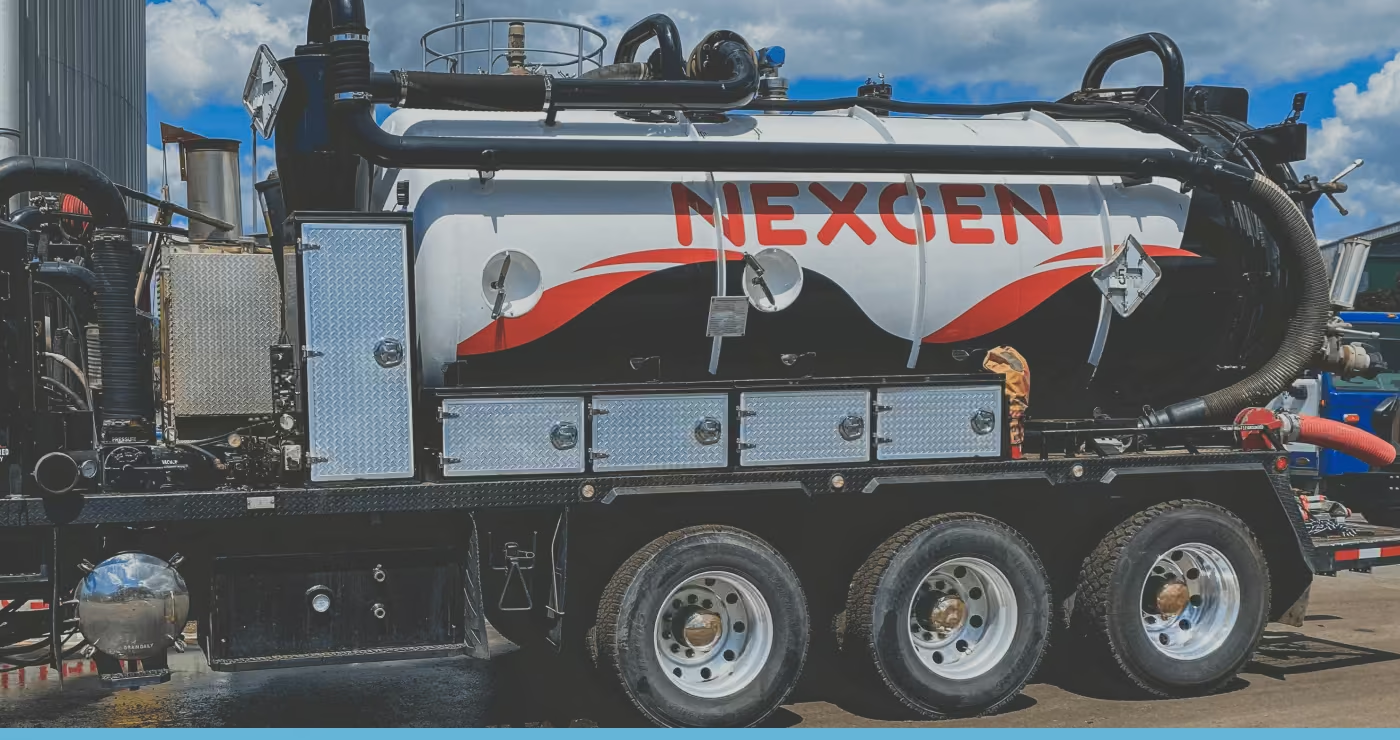
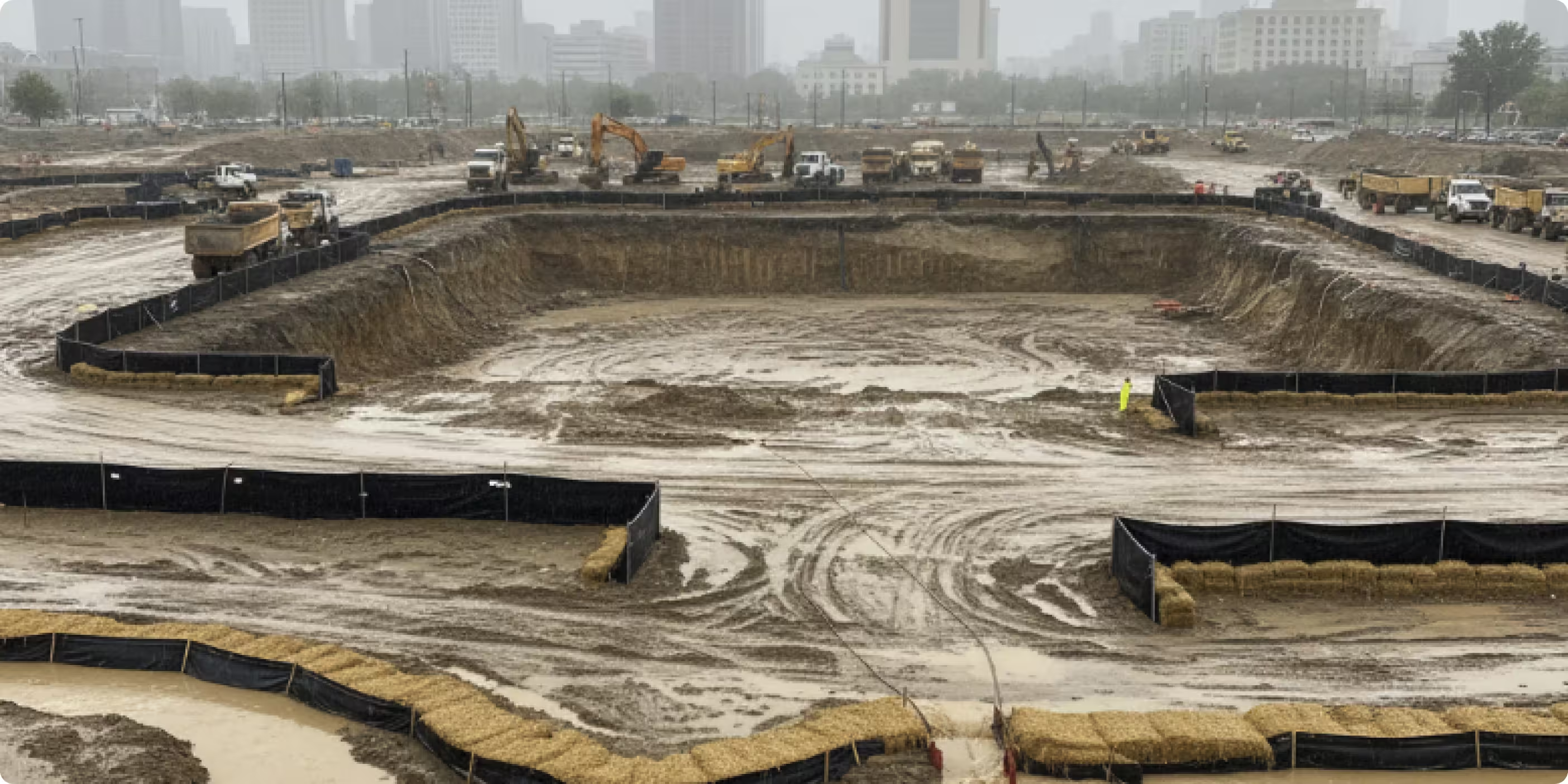
Planning for access, storms, and after-hours support keeps job site water treatment systems running when conditions are at their worst.
Contingency and uptime
Water does not wait for handy business hours. When flows spike or a pump trips offline, you need headroom:
- Redundant pumps or backup units ready to connect.
- Extra tank capacity for storms or high groundwater days.
- A plan for after‑hours callouts and on‑site support.
This is where working with a partner that both engineers and operates systems, not just rents gear, pays off in real‑world uptime.
Cost drivers for a job site water treatment system
On paper, many systems look similar: pumps, tanks, filters, and maybe a chemical dosing skid. In practice, four factors usually drive cost:
- Flow rate and variability. Higher or more variable flows need larger tanks, more filter area, and bigger pumps, and surges can force a much larger footprint than a steady, low‑flow layout.
- Contaminants of concern. Clear water with occasional turbidity spikes is inexpensive to manage; dissolved metals, hydrocarbons, or cement‑affected high‑pH water add chemistry, specialty media, and extra polishing.
- Permit limits and sampling frequency. Tight limits or frequent sampling often mean better monitoring gear, more operator time, and higher lab costs.
- Uptime expectations and risk tolerance. Critical infrastructure or rail work may justify full redundancy and standby support, while low‑risk utility work can tolerate occasional downtime.
As one benchmark, the U.S. EPA Construction General Permit (CGP) for certain dewatering discharges to sensitive waters requires at least one turbidity sample per discharge point on every day there is dewatering flow, with the weekly average compared against a 50 NTU benchmark. Even if your permit is different, expect to budget for monitoring as well as treatment hardware.
“The cheapest setup on paper rarely stays cheapest once you factor in schedule hits, sampling failures, and emergency callouts.”
Common mistakes when choosing a job site water treatment system
Even experienced teams can run into trouble when they rush or skip steps in the Job Site Water Treatment System Checklist. Watch for:
- Under‑sizing storage and settling tanks. Without enough equalization volume, short‑term peaks can overwhelm filters and cause turbidity or pH spikes at the discharge point.
- Ignoring where the water is actually going. Designing around a generic “clean enough” target instead of the specific storm, sanitary, or truck‑off requirements often leads to redesigns once permits are issued.
- Assuming clear water means clean water. Groundwater that looks clear can still carry dissolved metals, alkalinity from contact with concrete, or hydrocarbons from legacy contamination.
- Skipping redundancy on critical systems. A single pump, single filter train, or no bypass plan is a recipe for downtime if anything plugs or trips offline during a storm.
- Leaving monitoring and sampling to the last minute. Waiting until the first inspection to sort out field meters, sampling locations, and lab logistics increases compliance risk and stress.
When to bring in Environmental Dewatering Services
Some projects can get by with simple sumps and basic filtration, but many cannot. In Nexgen’s experience across civil and infrastructure projects in Western Canada, specialist Environmental Dewatering Services are worth bringing in when:
- Groundwater inflows are high or variable, especially near rivers, shorelines, or deep utilities.
- There is a real chance of dissolved metals, hydrocarbons, or other contaminants in the water.
- Permits reference strict guidelines or sensitive receivers such as fish‑bearing streams or wetlands.
- You need a full package: wellpoints or deep wells, bypass pumping, treatment, monitoring, and disposal.
A quick conversation early in design often saves weeks of scrambling later, especially once structures are open and work needs to continue regardless of the weather.
How Nexgen designs the right water treatment system setup for your job site
Nexgen Environmental focuses on turnkey dewatering and fluid management for Western Canadian contractors. Our field teams combine pumps, tanks, chemical treatment, and filtration into systems that meet the Canadian Water Quality Guidelines for the Protection of Aquatic Life and local bylaws while keeping crews working.
A typical engagement looks like this:
- Site and water review. Drawings, geotech reports, expected flows, and any lab data you have.
- Treatment concept. A proposed train of dewatering, storage, treatment, and discharge, with footprint and power needs.
- Equipment plan. Specific pumps, tanks, filters, and controls drawn from our dewatering equipment rentals inventory.
- Field setup and commissioning. Installation, start‑up, and tuning once real water is running.
- Monitoring and adjustments. Ongoing checks, sampling support, and tweaks as site conditions shift.
You stay focused on building; we focus on keeping water managed, permits satisfied, and neighbours comfortable with the work happening next door.
Key takeaway: the “right” job site water treatment setup is less about a specific piece of equipment and more about a system that matches your water, permits, and schedule, with people who stand behind it.
Ready to talk through an upcoming project in BC or Alberta? Request a free consultation with Nexgen Environmental’s dewatering specialists.
FAQs
What is a water treatment system for a job site?
A job site water treatment system is a temporary or semi-permanent setup that collects, treats, monitors, and discharges water from construction, civil, or industrial projects. It may include pumps, storage tanks, filtration, chemical dosing, pH adjustment, and polishing steps to help meet permit and environmental requirements.
How is a job site water treatment system different from a whole house water treatment system?
A whole house water treatment system is designed for steady residential water use, while a job site system is built for changing flows, muddy water, groundwater, stormwater, and possible contaminants. Construction systems need to be mobile, rugged, scalable, and designed around discharge permits, site access, and changing field conditions.
How do I choose the right water treatment system for a construction site?
Start by understanding the water source, expected flow rate, contaminants, discharge location, and permit limits. From there, the system can be designed with the right mix of settling tanks, filtration, chemical treatment, pH control, carbon polishing, and monitoring equipment.
Do all job site water treatment systems need chemical treatment?
No. Some sites only need physical treatment such as settling tanks, bag filters, or sand media filtration. Chemical treatment is usually needed when the water contains very fine sediment, high pH, dissolved metals, hydrocarbons, or when the discharge limits are strict.
Is it better to rent or buy a job site water treatment system?
For most contractors, renting is the better choice because every project has different water volumes, contaminants, permits, and site constraints. Renting gives you access to the right pumps, tanks, filters, and treatment equipment without the long-term cost of storage, maintenance, and ownership.
When should I call a dewatering or water treatment specialist?
You should bring in a specialist when groundwater flows are high, the discharge location is sensitive, contaminants may be present, permits are strict, or the project cannot afford downtime. Early planning can prevent failed samples, rushed redesigns, schedule delays, and compliance issues.
How long does it take to set up a job site water treatment system?
On a typical construction project, a straightforward system of pumps, storage tanks, and filtration can usually be installed and commissioned in a few days once power, pad, and access are ready. Complex systems with chemical treatment, multiple discharge points, or tight space constraints take longer because they need more testing and tuning, so finalizing flows, discharge locations, and permits before equipment arrives speeds everything up.
Do I always need chemicals, or can I use physical filtration only?
Some low‑risk sites can rely on physical controls such as settling tanks, weir tanks, and bag or sand filters when turbidity limits are moderate and there are no dissolved metals, high pH, or hydrocarbons to remove. Chemical treatment, such as pH adjustment and coagulant or polymer dosing, typically becomes necessary for very fine sediment, cement‑affected water, metals that must be precipitated, or very low turbidity limits at sensitive receivers, so most larger projects use both.
Is it better to rent or buy a job site water treatment system?
Most contractors choose to rent water treatment and dewatering equipment because flows, site conditions, and permit requirements change from project to project, and renting provides access to a specialist fleet, service, and upgrades without long‑term storage and maintenance. Buying usually only makes sense for owners or facilities with ongoing, predictable water treatment needs at a single location.
Can one water treatment system serve multiple work fronts on a project?
Yes, on larger civil and infrastructure projects, it is common to design a central treatment plant and route flows from several work fronts back to that system. To make this work, you need sufficient pumping capacity and pipe routing plus allowance for variable flows and water quality, so early planning with your dewatering planning services provider helps decide between a central plant, several smaller systems, or a hybrid approach.