When to Use Wellpoints for Excavation Projects
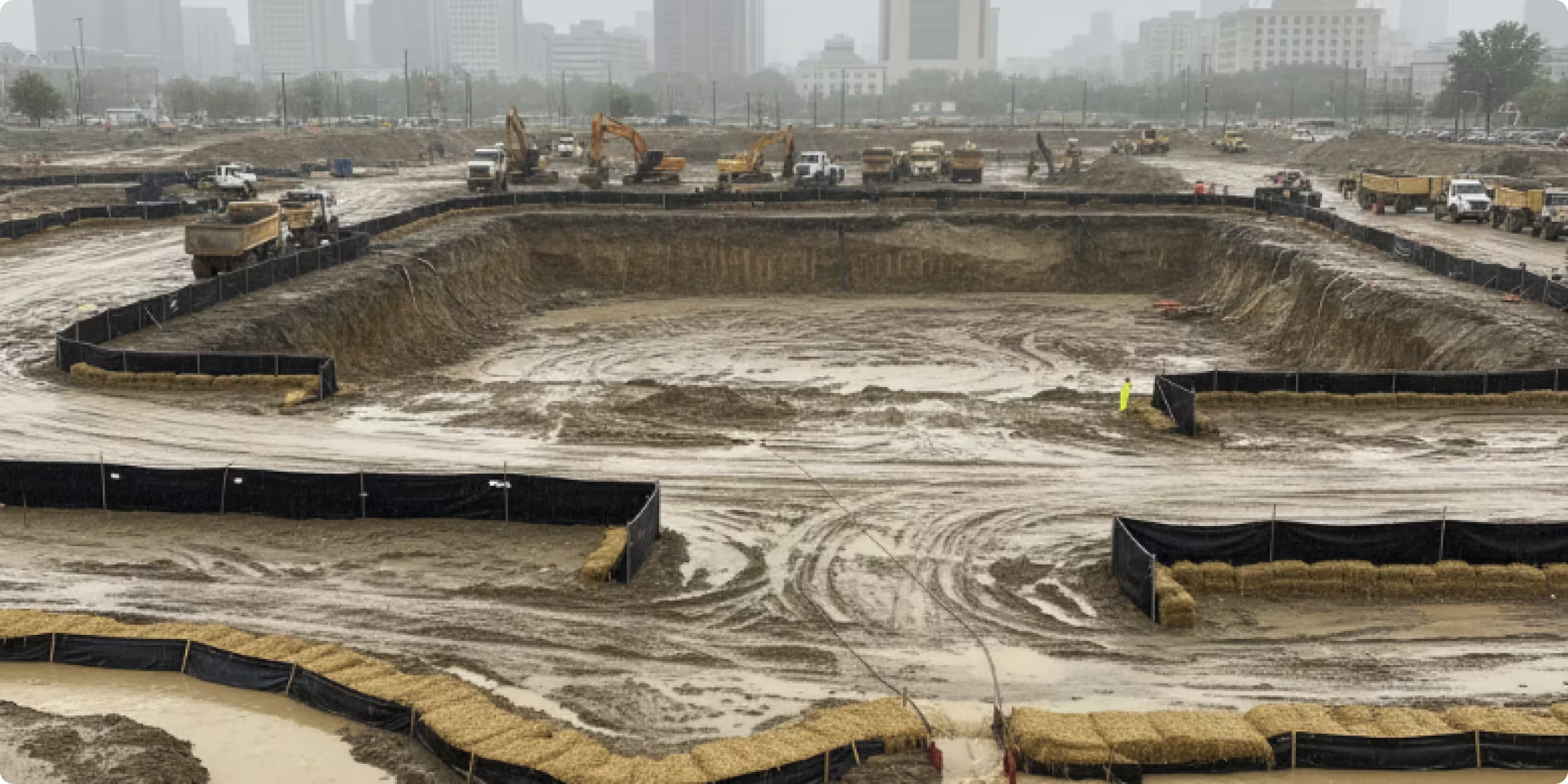
You’re on a tight urban site. The first bucket comes out and, before you hit design grade, groundwater is seeping in from every side. Pumps in the bottom help for a while, but slopes start to ravel and production drops. Many contractors in Metro Vancouver or Alberta eventually hit this situation and wonder whether wellpoint dewatering is the missing piece.
This guide walks through when this system is the right choice for excavation work, when other dewatering methods make more sense, and how to combine wellpoints with filtration, wheel wash systems, and rental equipment so your discharge, track‑out, and paperwork all line up with current B.C. rules.
TL;DR: When do wellpoints make sense?
- Best fit: Shallow to mid‑depth excavations (typically up to ~5–6 m of drawdown per stage) in sandy or silty soils where groundwater can flow toward the points.
- Common scopes: Utility trenches, parkade and elevator pits, lift stations, shallow shafts, and linear works along busy streets.
- Watch out: Very tight clays, rock, or very deep cuts often need deep wells or other methods instead of wellpoints; the dewatering overview on Wikipedia outlines alternative methods.
- Pair with: Sand media filters, pressure vessel rental packages, and wheel wash systems when discharge or track‑out rules are strict.
- Who sets it up? A dewatering contractor like Nexgen Environmental designs, installs, and tunes the system so your crew can keep digging.
Table of Contents
- What is a wellpoint dewatering system?
- When wellpoints are the right choice for excavation projects
- Field signs you should consider wellpoints
- When wellpoints are not the right method
- Linking wellpoints with discharge, filtration, and track‑out control
- Planning wellpoint dewatering with Nexgen
- Quick FAQ: wellpoint dewatering for construction projects
What is a wellpoint dewatering system?
In simple terms, construction dewatering is about temporarily lowering or controlling groundwater so crews can build foundations, utilities, or shafts safely (for general background, see the construction dewatering article on Wikipedia). One of the most common methods for shallow excavations is the wellpoint dewatering system.
A wellpoint setup uses:
- Many small‑diameter screened wells (“wellpoints”) installed around or inside the excavation
- Header pipes that connect each wellpoint back to a common suction line
- A vacuum pump set on the surface that draws water from every point at once
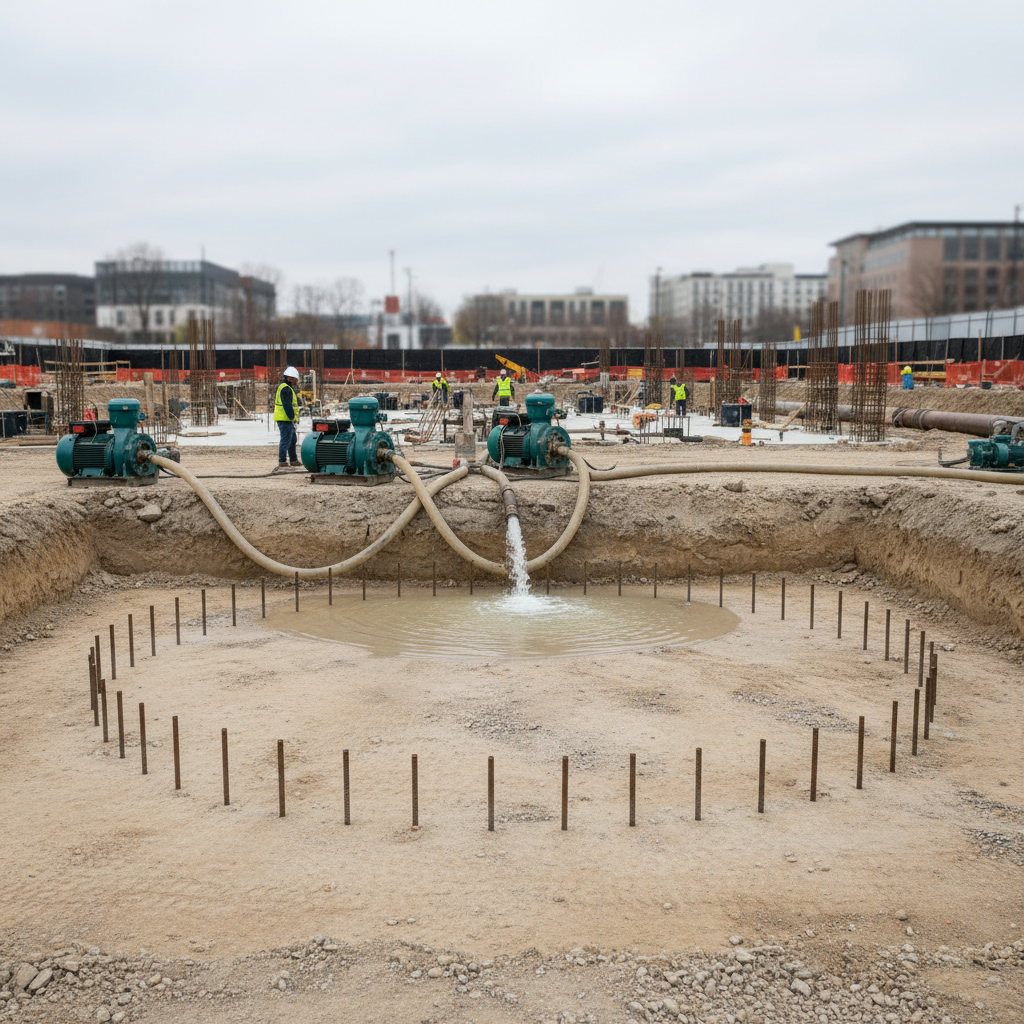
Simplified plan view of a wellpoint dewatering system: a ring of small‑diameter wells connected to a header pipe and surface pump that encircles the excavation.
Instead of chasing water with sump pumps in the bottom of the hole, you build a ring of suction around the cut. That lowers the local water table before you dig to grade, which helps keep slopes tighter and the subgrade more uniform. Single‑stage systems commonly achieve about 4–6 m of drawdown; deeper excavations use multiple stages or switch to deep wells. For more detail, see this wellpoint design and pump selection guide.
Wellpoints are widely used for excavations, trenches, and foundations built below groundwater level in permeable soils; published wellpoint case studies from specialist dewatering contractors show how flexible the method is on dynamic civil sites.
Compared with deep wells, wellpoints shine on smaller, shallower scopes where access is tight and drawdown needs to be even across the footprint. Compared with simple sump pumping, they give far better control over soil stability and inflow.
If you want a broader comparison of dewatering methods, see Nexgen’s guide to common dewatering methods as a companion read.
When wellpoints are the right choice for excavation projects
The first groundwater question on most projects is simple: “Can we handle this with wellpoints, or do we need something heavier?” On many Western Canada jobs, the answer is yes, if a few site conditions line up.
“On the right soils and depths, a simple ring of wellpoints can recover more production than adding another sump pump in the bottom of the cut.”
1. Soil and groundwater conditions
Wellpoints rely on soils that transmit water: typically clean sands, sandy gravels, silty sands, or permeable backfill zones where water can travel freely toward the screens. In these conditions, a well‑designed ring under vacuum can lower the groundwater level quickly and evenly; in very tight clays, tills, or rock, yields are poor and other dewatering methods usually work better.
2. Excavation depth and geometry
A typical single‑stage wellpoint system comfortably handles drawdown in the range of a few metres. Deeper cuts can be handled by multiple stages or terraces if the soil cooperates. Wellpoints are especially efficient on:
- Utility trenches along busy streets
- Parkades, lift stations, and sump pits
- Shallow shafts for manholes or valve chambers
- Linear works where you can keep leap‑frogging the header and pump
For multi‑storey underground parkades or very deep cores where drawdown well beyond ~5–6 m is required, deep wells or hybrid designs (often combined with bypass systems and treatment) are usually a better fit.
3. Schedule and production
Chasing water with sump pumps slows crews, drives re‑work, and erodes margins. A well‑designed wellpoint system stabilizes the excavation early so benches hold, subgrades stay clean for forming and waterproofing, and groundwater spikes are less likely to shut you down.
Nexgen often folds wellpoints into a broader construction dewatering and flow‑control plan so pump sizes, discharge routes, and backup equipment all support your production targets.
4. Regulatory and discharge context in B.C.
In British Columbia, construction dewatering falls under the Water Sustainability Act and Water Sustainability Regulation. Recent policy created low‑ and mid‑volume construction dewatering tiers, for example, activities diverting up to 300 m³/day or 1,000 m³/day per aquifer can qualify if specific conditions are met, as outlined in the provincial Policy Bulletin (PDF) and Operational Policy. A predictable wellpoint layout and discharge plan make it easier to match the right tier or support an authorization when one is required.
| Use wellpoints when… | Consider other methods when… |
|---|---|
| Soils are sands / sandy gravels / silty sands | Soils are very tight clays, tills, or bedrock |
| Excavation is shallow to mid-depth (up to ~5–6 m per stage) | Excavation is very deep or beneath sensitive structures |
| Room exists for headers, pumps, and discharge hoses | Access for installation and headers is extremely limited |
| Discharge can be filtered and routed to a legal outfall | Water is highly contaminated and needs specialized treatment |
Field signs you should consider wellpoints
Not every wet cut needs a full wellpoint ring, but certain field clues suggest sump pumps alone are no longer enough:
- Boiling or heaving in the base as water rises through the subgrade
- Sloughing slopes that need constant trimming or shoring adjustments
- Persistent inflow that overwhelms pumps after rain, high‑tide, or storm events
When these symptoms show up together, it is time to call a dewatering specialist to review the geotech, groundwater data, and discharge requirements and consider a wellpoint ring around the excavation.
When wellpoints are not the right method
Wellpoints are powerful, but they are not a silver bullet. On some jobs, other construction dewatering methods are safer, more predictable, or easier to permit.
Challenging soils
Very low‑permeability clays and some tills do not transmit enough water toward the points for vacuum drawdown to work. In those cases, options such as deep wells, cutoff walls, or staged excavation with sumps may perform better.
Very deep excavations or high drawdown targets
When you are chasing deep rock elevations or critical base slabs, the vertical limits of vacuum systems come into play. Beyond a certain depth, physics caps the lift you can get from surface‑mounted pumps, and multi‑stage systems become complex. Deep wells or hybrid systems are usually more practical for those scopes.
Highly contaminated groundwater
If the site investigation shows significant hydrocarbons, metals, or other regulated contaminants, your first call is often to an environmental consultant and your dewatering partner. In many of these cases, wellpoints are combined with contaminated water treatment systems or replaced by designs that support more intensive treatment before discharge.
Linking wellpoints with discharge, filtration, and track‑out control
Choosing wellpoints is only half the story. Your groundwater plan also has to deal with discharge permits, stormwater bylaws, sediment control, and track‑out at the gate.
1. Filtration for clean discharge: sand media filters and pressure vessels
A wellpoint system usually feeds a short treatment train before water reaches a storm sewer, ditch, or receiving water. On many jobs that train includes:
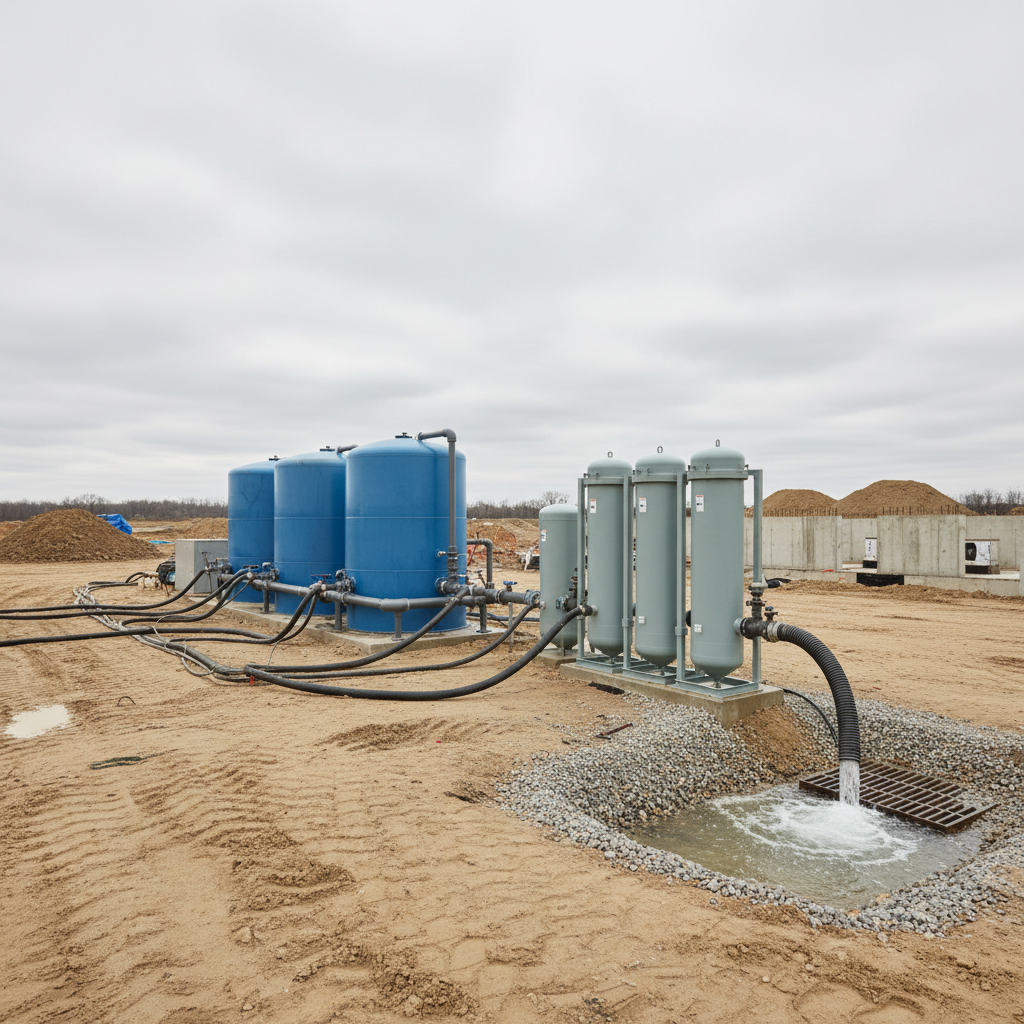
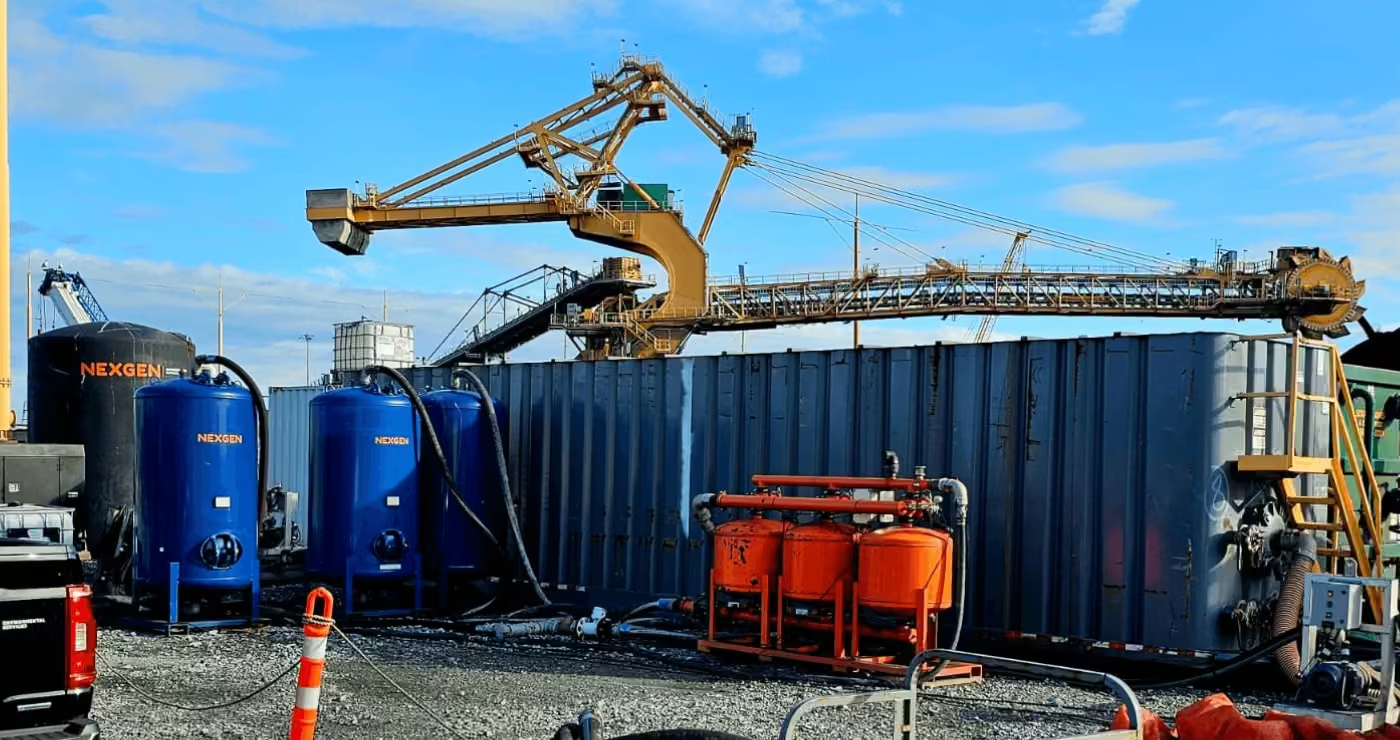
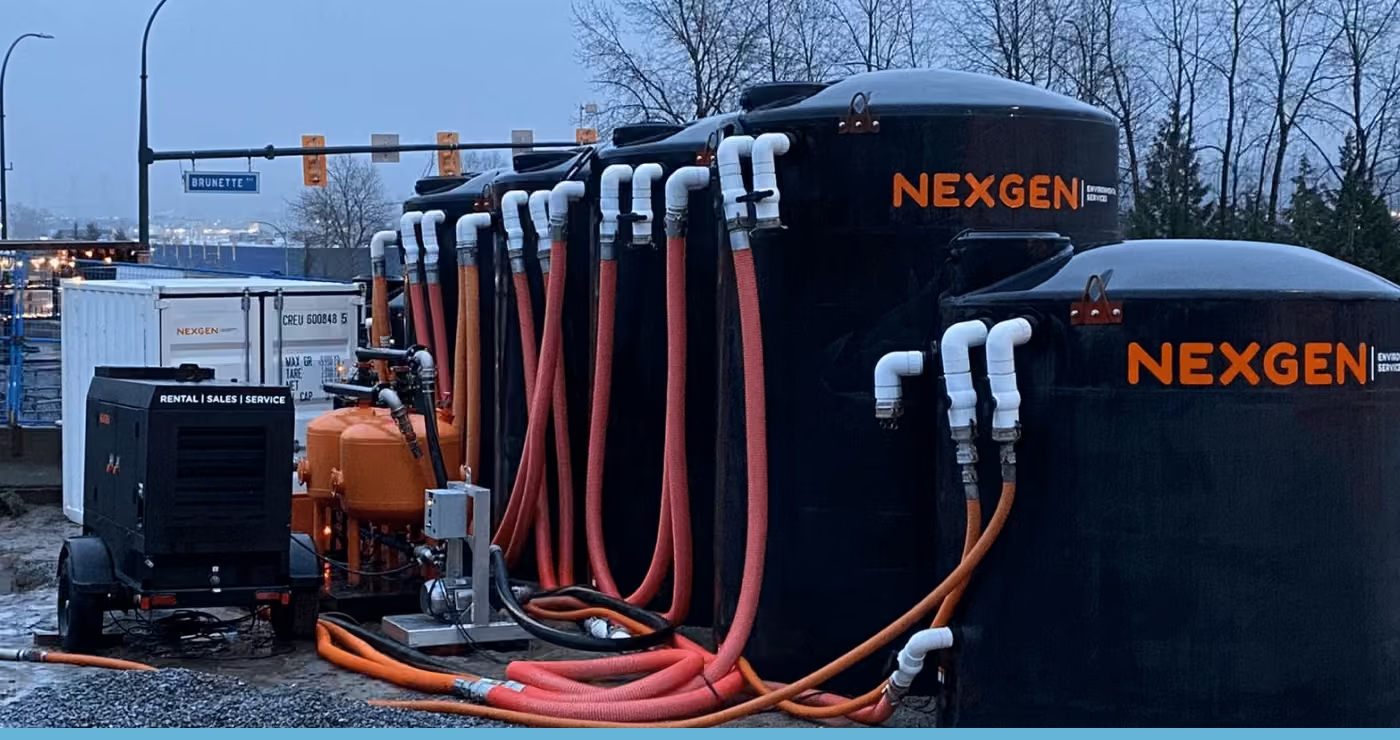
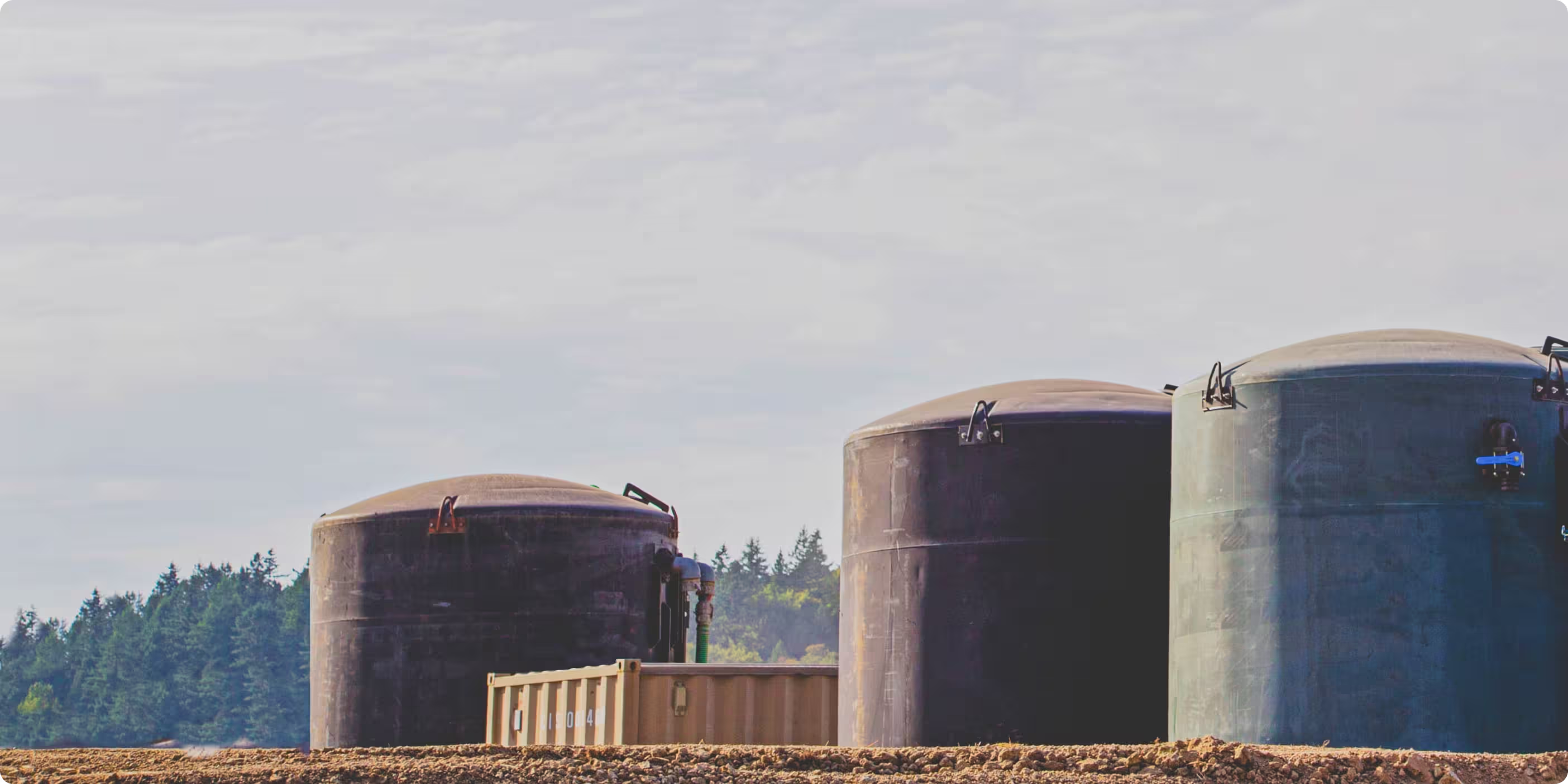
Typical treatment train paired with wellpoint dewatering: above‑ground tanks and sand media or pressure vessel filters polishing groundwater before discharge.
- A settling tank or weir tank to knock out coarse sediment, often as part of a broader sediment removal system
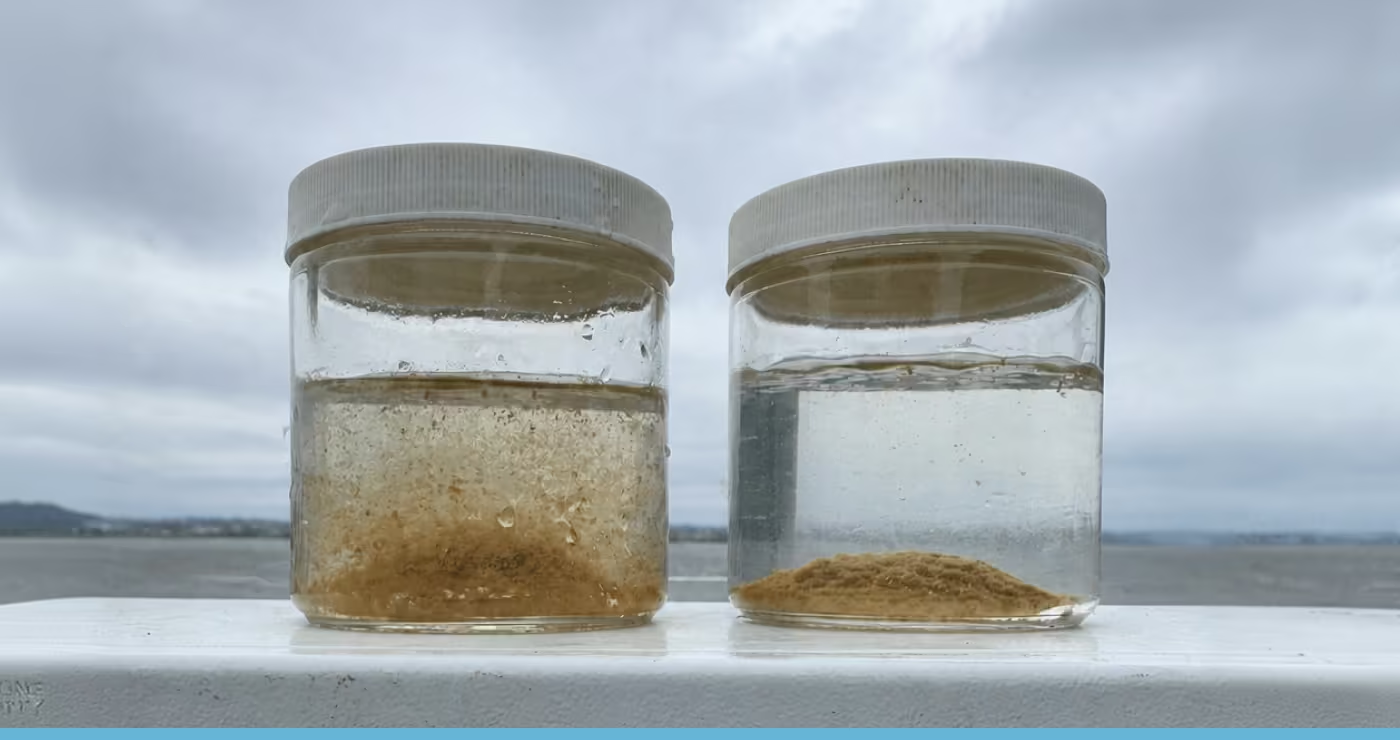
- A sand media filter to polish suspended solids, support turbidity or NTU limits, and protect downstream infrastructure
- Pressure vessels loaded with specialty media or resins when dissolved metals or other contaminants need to be stripped from the flow
Even modest wellpoint systems can produce several litres per second, while large perimeter systems may run at 50–100 L/s, so tanks, filters, and discharge piping must be sized for continuous 24/7 duty; portable wellpoint pumps such as those in the CD150MV wellpoint pump brochure illustrate typical capacities.
Nexgen configures sand media filters, pumps, and pressure vessels, often supplied as complete pressure vessel rental packages, so discharge meets permits and water‑quality targets like the 25 mg/L total suspended‑solids benchmark used in CCME wastewater effluent standards.
2. Wheel wash systems and truck wash equipment
Even with clean discharge, trucks can carry mud and fines from a wet excavation onto public roads. A wheel wash system at the site exit helps keep haul routes clean and compliant. Nexgen supports this with:
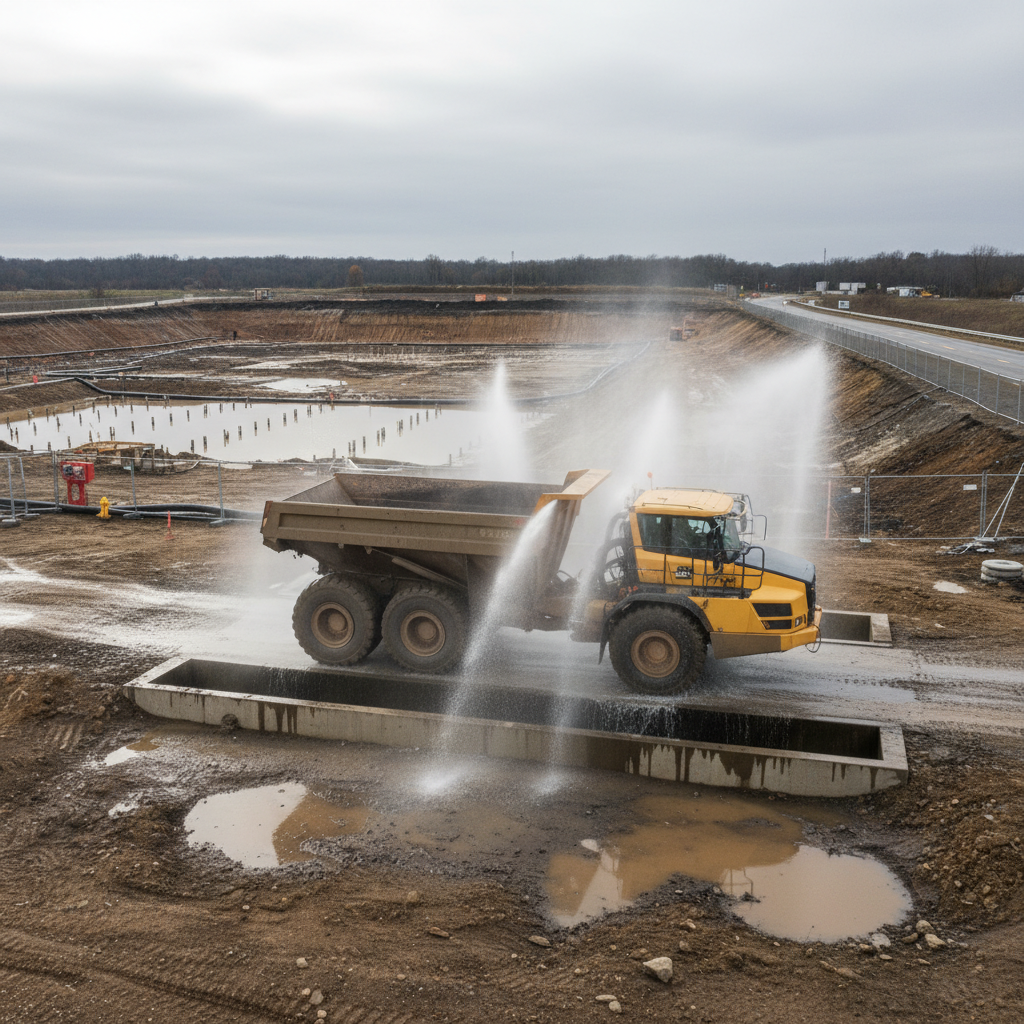
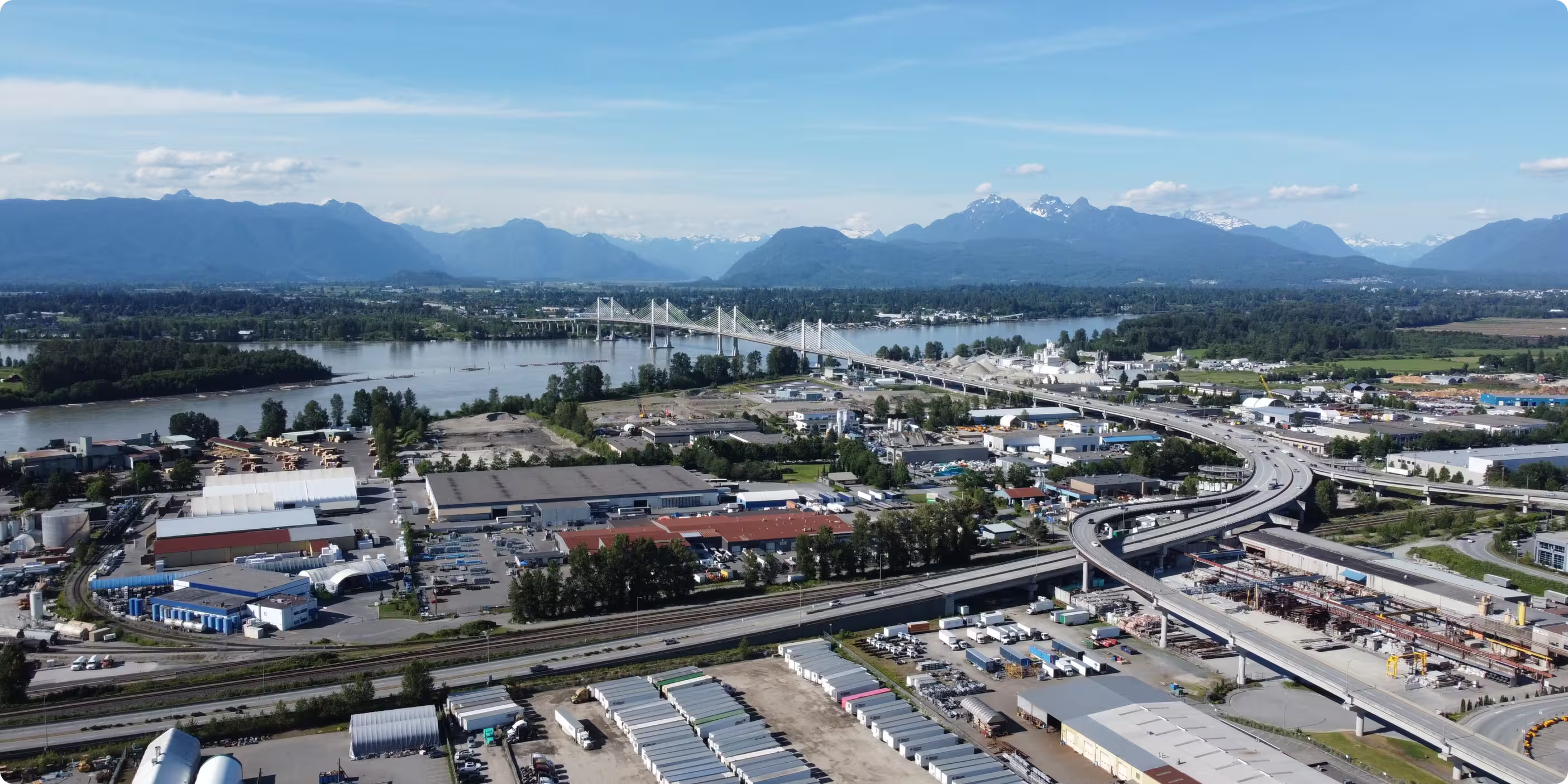
Wheel wash systems at the site exit help prevent mud and fines from tracking out from dewatered excavations onto public roads.
- Permanent and semi‑permanent wheel wash services that clean undercarriages and tires before trucks hit the street
- truck wash equipment rentals that integrate with tanks, pumps, and sand media filters for water recycling and sediment control
Used together, wellpoints and wheel wash gear keep both the excavation and the haul route under control: groundwater goes through filtration, and mud and fines stay off city asphalt.
3. Staying aligned with B.C. construction dewatering rules
B.C.’s tiered construction dewatering exemptions and conditions under the Water Sustainability Regulation are summarized in the provincial construction dewatering policy documents. When your wellpoint design, filtration train, and discharge route are planned together, it is easier to document flows, match the right tier, and show due diligence if questions come up later.
On many projects, Nexgen serves as both the dewatering contractor and the equipment‑rental partner, so the same team helps size pumps, specify filters and pressure vessels, and coordinate sampling and reporting.
Micro case study: parkade excavation in Metro Vancouver
A typical mid‑rise parkade excavation in Metro Vancouver, about 4 m deep in silty sand with groundwater less than 1 m below grade, might use a single‑stage wellpoint ring (flow in the 20–30 L/s range) discharging through a sand media filter and poly tank train to a municipal storm connection. Nexgen tailors layouts like this to local discharge criteria so turbidity and TSS limits in permits or bylaws are met.
Planning wellpoint dewatering with Nexgen
Effective wellpoint dewatering starts at the planning table, not when water is already in the excavation. Nexgen typically follows this four‑step playbook.
Nexgen’s 4‑step wellpoint dewatering playbook
Review → Design → Install → Tune
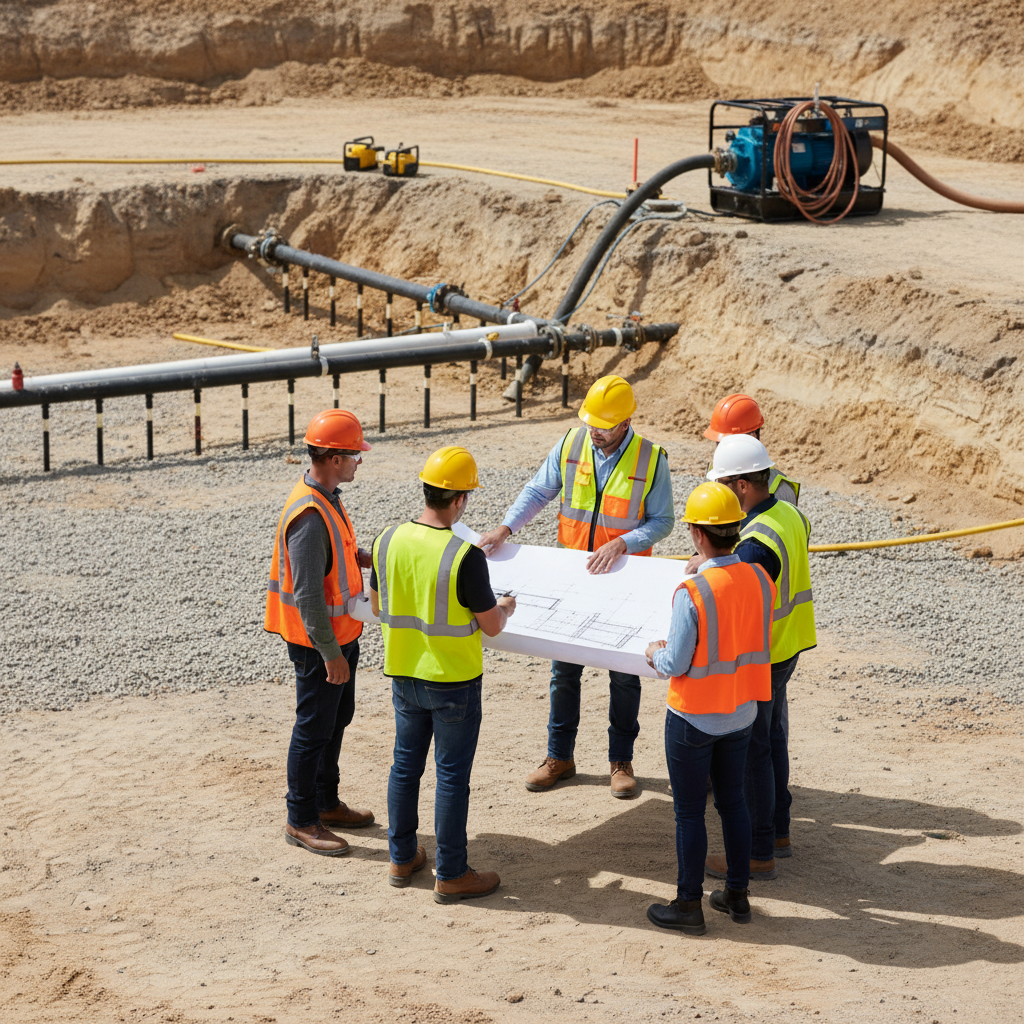
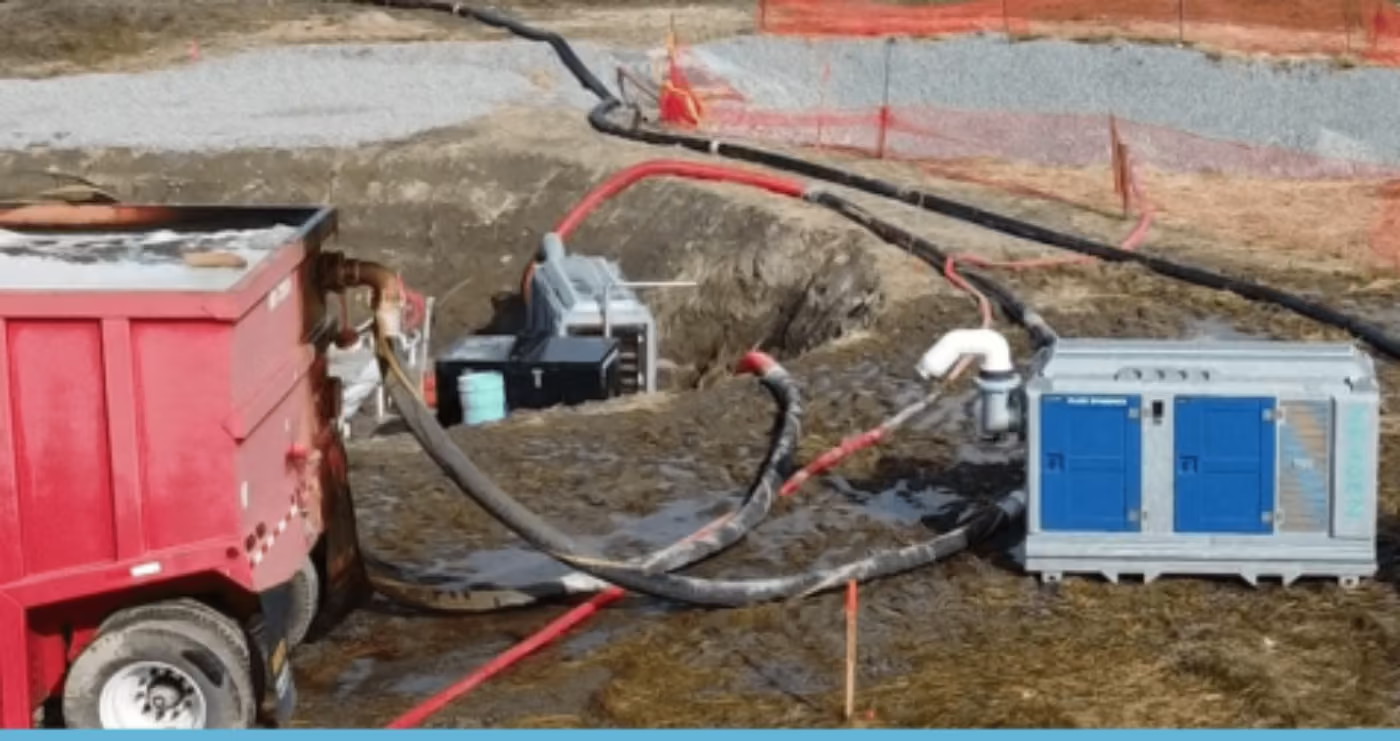
Planning a wellpoint dewatering system starts with reviewing geotechnical data, groundwater levels, and excavation geometry before designing the layout.
- Review the paperwork. Confirm from the geotechnical reports, groundwater levels, and shoring plans that wellpoints are feasible and what drawdown is realistic.
- Design the layout and system. Map point spacing, depths, header routing, pump sizing, and a matching discharge and treatment train using tanks, filters, and pressure vessels.
- Install and start up. Crews install and connect the wellpoints, check for leaks, and commission the system with clear but simple monitoring instructions.
- Tune as excavation progresses. Adjust vacuum levels, point locations, and treatment as the cut advances so performance keeps pace with production.
For projects in Metro Vancouver, Alberta, or elsewhere in Western Canada, a short intake call and drawing review are usually enough to see if wellpoints are worth pricing. To talk through a specific site, you can request a free consultation with Nexgen’s dewatering team.
Key takeaway
Wellpoints are at their best on shallow to mid‑depth excavations in permeable soils where steady, predictable groundwater control matters. Paired with the right filtration, wheel wash system, and rental equipment, they keep both the cut and the discharge under control from start to finish.
FAQs
What is wellpoint dewatering?
Wellpoint dewatering is a construction dewatering method that uses a series of small wells, header pipes, and a vacuum pump to lower groundwater around an excavation. Instead of pumping water from the bottom of the trench, the system controls groundwater before it enters the work area.
When should you use a wellpoint dewatering system?
A wellpoint dewatering system works best for shallow to mid-depth excavations in sandy, silty, or permeable soils. It is commonly used for utility trenches, parkades, lift stations, manholes, shallow shafts, and linear construction projects where groundwater needs to be controlled evenly.
How deep can wellpoint dewatering lower groundwater?
A single-stage wellpoint system typically lowers groundwater by about 4 to 6 metres, depending on soil conditions, pump capacity, point spacing, and excavation layout. Deeper excavations may require multiple wellpoint stages, deep wells, or a hybrid dewatering design.
Is wellpoint dewatering right for clay or rock sites?
Usually not. Wellpoints need soil that allows water to move toward the screens. Very tight clay, till, or bedrock often does not drain well enough for a vacuum-based system, so deep wells, sump pumping, cutoff walls, or other methods may be more effective.
Do wellpoint systems need filtration before discharge?
Often, yes. Groundwater from wellpoint dewatering may carry sediment, fines, metals, or other site-related contaminants. Many projects use settling tanks, sand media filters, pressure vessels, or treatment systems before discharge to help meet permit, bylaw, and water quality requirements.
How does Nexgen support wellpoint dewatering for construction projects?
Nexgen reviews site conditions, groundwater data, excavation plans, and discharge requirements before designing the wellpoint layout. Their team can provide pumps, headers, filtration, pressure vessels, wheel wash systems, monitoring, and field support so the excavation stays dry and compliant.
How deep can a wellpoint system lower groundwater?
Depth depends on soil conditions, pump selection, and layout, but a single‑stage wellpoint ring usually lowers groundwater by about 4–6 m. Deeper excavations often use multiple stages or a mix of wellpoints and deep wells.
Can I rely on wellpoints in very silty or clayey ground?
Light silts can work with careful design, though yields are lower and more points are required. In very tight clays, groundwater barely moves toward the screens, so deep wells, cutoff walls, or staged excavation with sumps are usually better options.
What does wellpoint dewatering cost compared with deep wells?
Wellpoint costs scale with point count, depth, pump size, discharge route, and run time. For shallow, broad excavations, wellpoints are often more economical; for very deep, long‑term, or high‑flow projects, deep wells can be more cost‑effective. A quick budget comparison usually starts by sketching both options from the same drawings and groundwater data.
Do I always need filtration or treatment with wellpoints?
Not always, but in urban B.C. many bylaws expect suspended solids, turbidity, and sometimes metals or pH to be managed before discharge. Depending on site conditions, treatment may be as simple as settling tanks and sand media filters or as involved as full contaminated water treatment systems.
What if I only need wellpoints for a short period?
Temporary wellpoint systems are usually rented as complete packages with pumps, headers, tanks, filters, and pressure vessels sized for the expected flow and schedule. When excavation and backfilling are done, the system is shut down, removed, and the points are pulled or abandoned as specified.