How Ion Exchange Helps Treat Contaminated Water
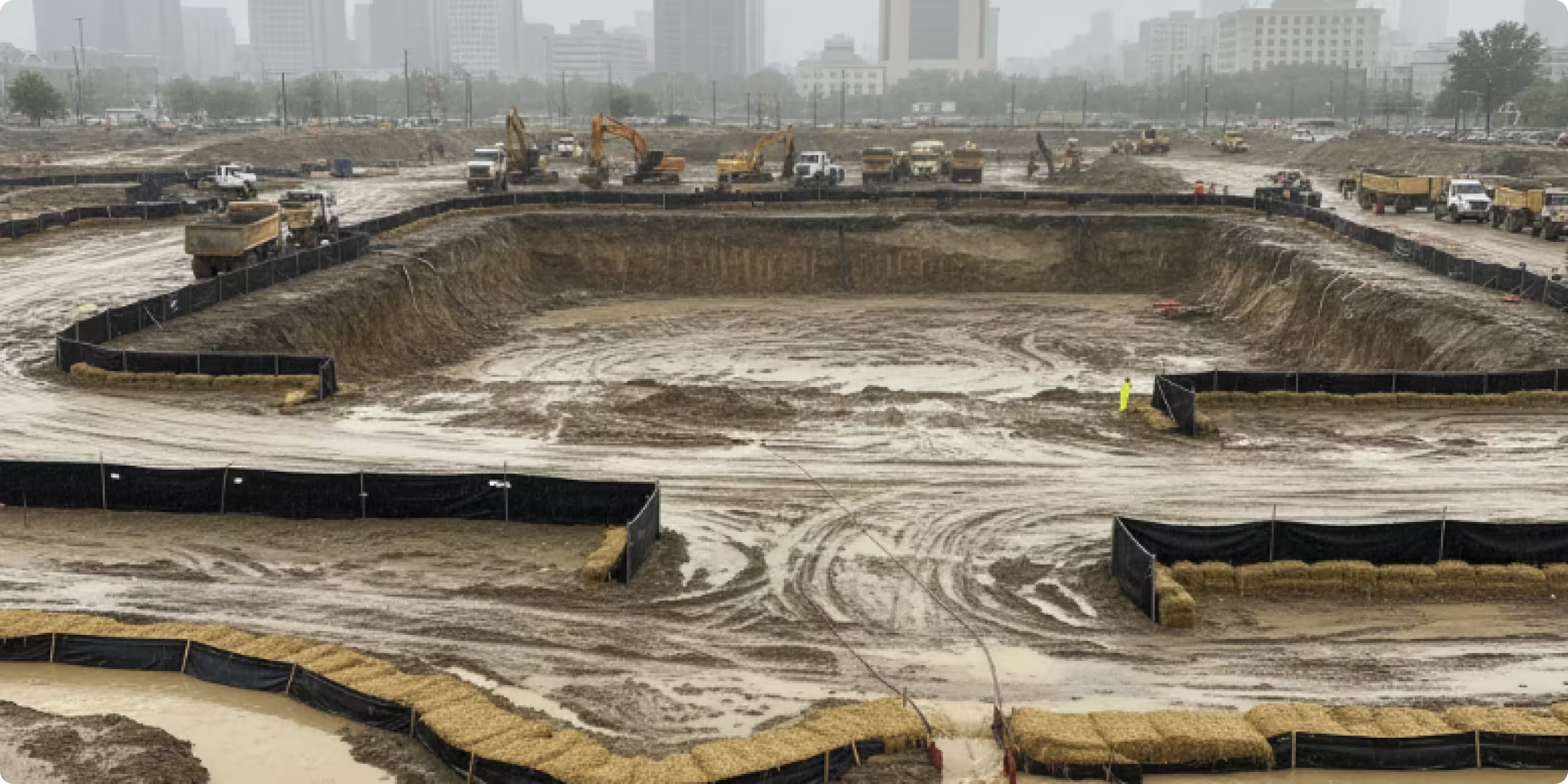
You start dewatering a deep excavation and the water looks clear enough. Then the lab report lands on your desk: dissolved metals above discharge limits, hardness through the roof, regulators asking for a plan before the next storm.
One proven way to strip those dissolved contaminants from pumped groundwater is ion exchange, a treatment step that swaps unwanted ions out of the water so you can send it to storm, sewer, or a holding tank with confidence.
This guide explains how the process works, where it fits alongside dewatering services and bypass pumping, and what to check before you commit to a treatment system like this on your next project.
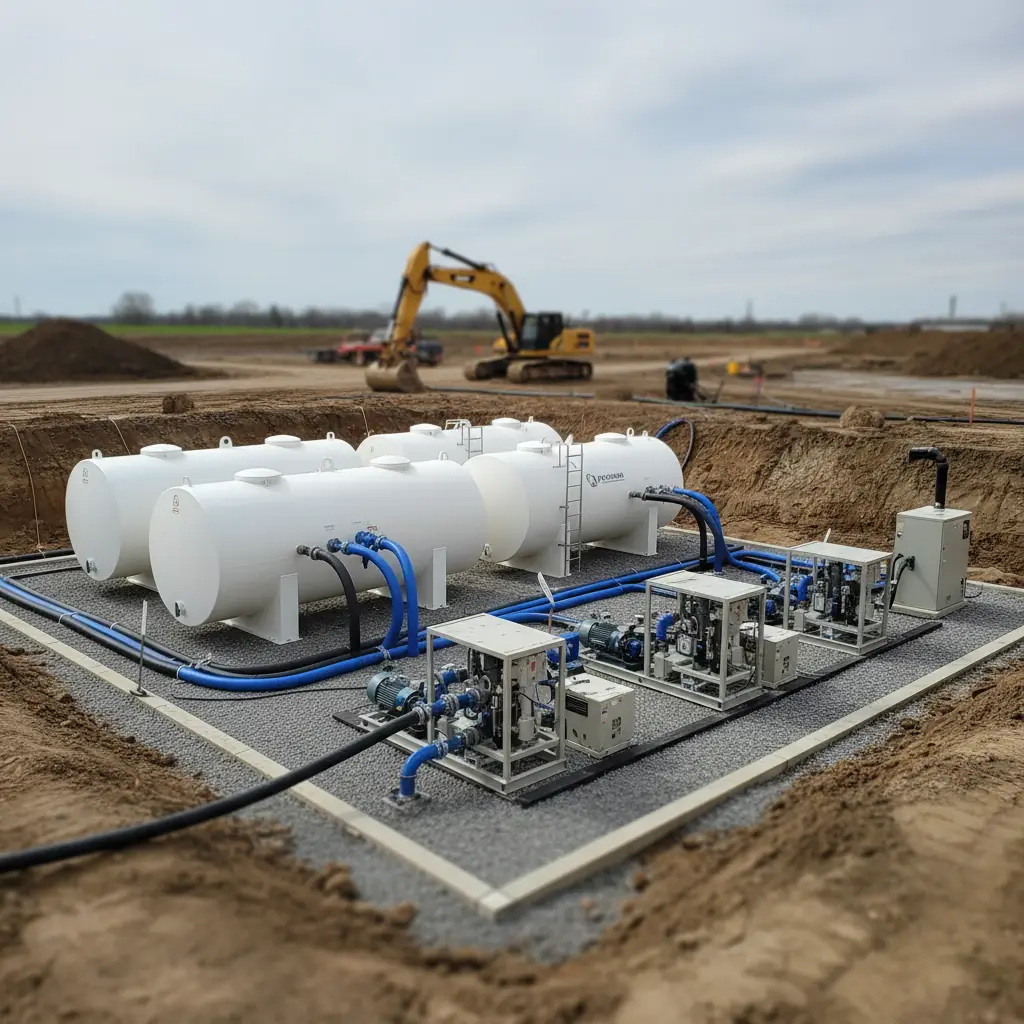
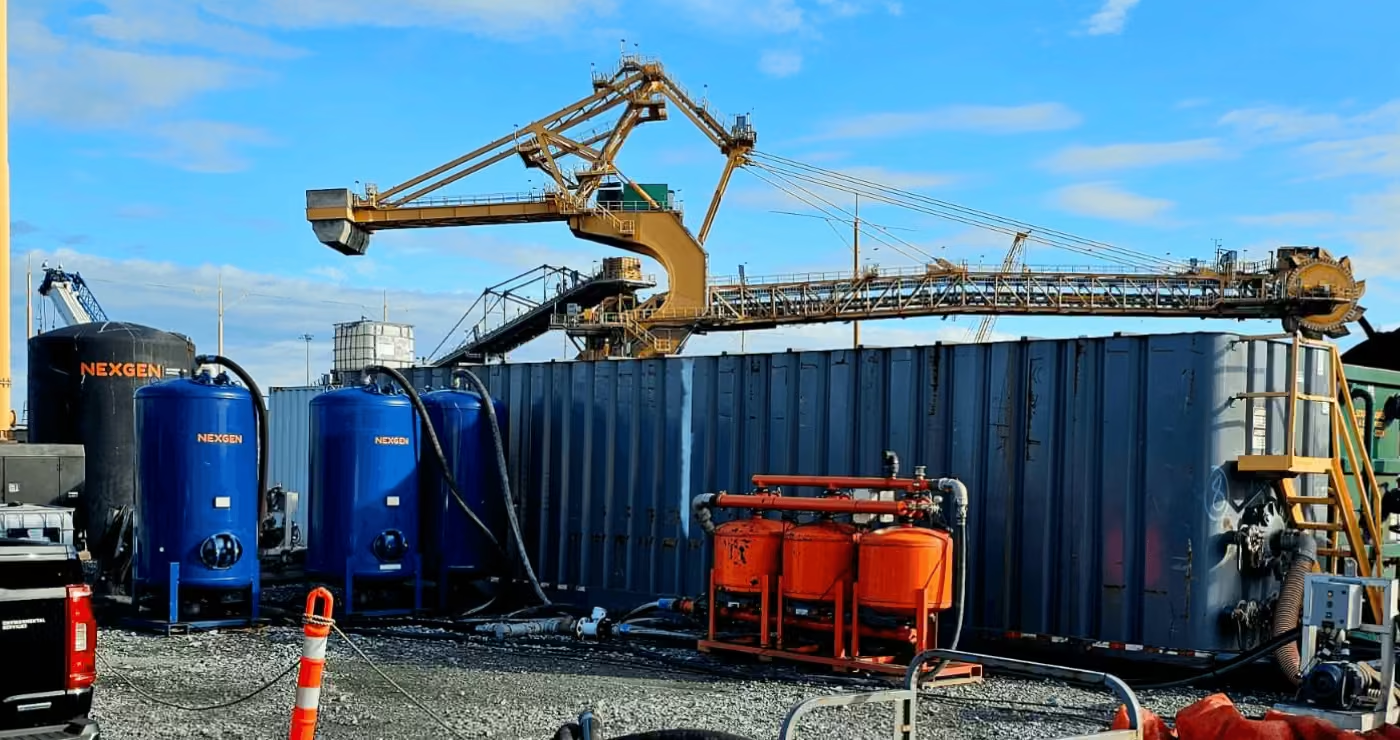
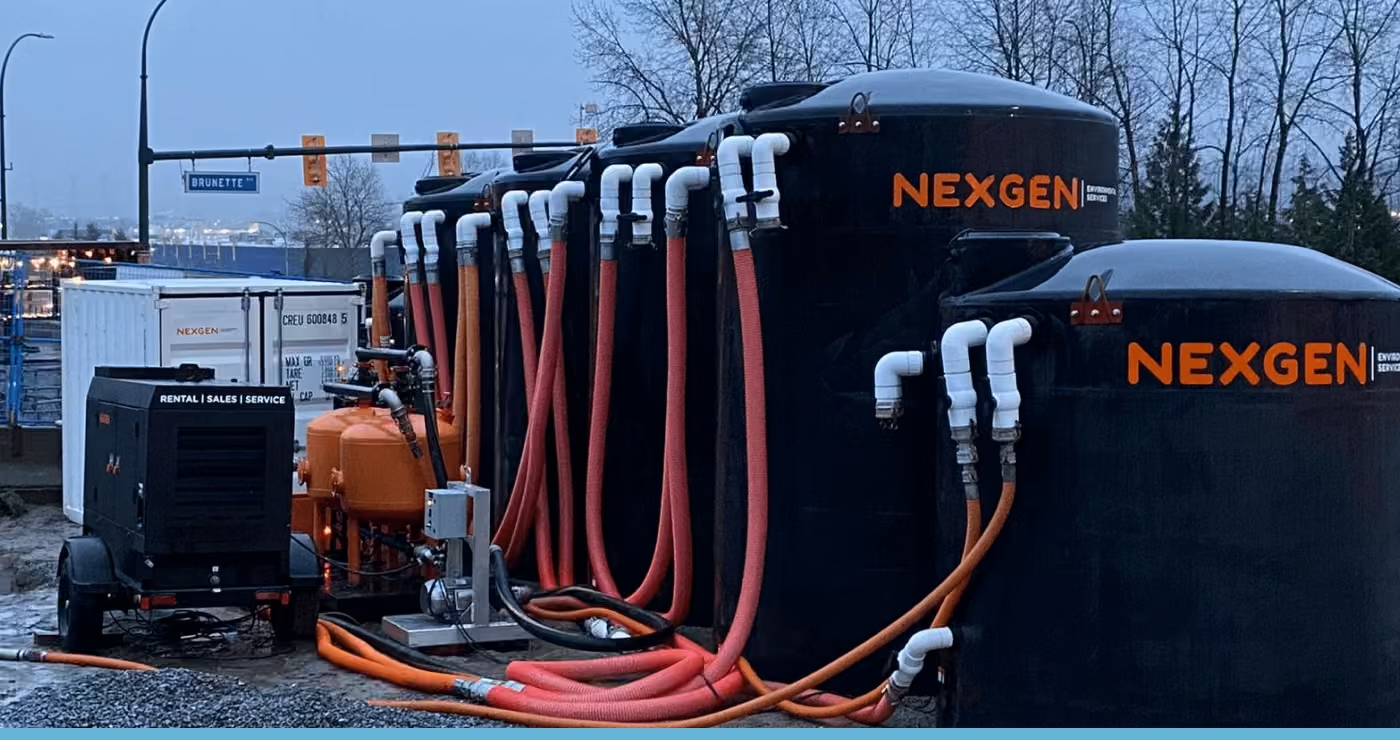
Temporary treatment equipment managing contaminated groundwater on an active excavation.
TL;DR: How ion exchange helps on real job sites
- What it does: Ion exchange uses charged resin beads to pull dissolved metals and hardness out of water and swap them for less harmful ions.
- Where it shines: As a polishing step for contaminated water treatment, especially when zinc, copper, lead, or high hardness are driving your discharge limits.
- How it’s used: Pumped water runs through pre-filtration, then through ion exchange vessels (sometimes called an ion exchange water filter) before discharge or reuse.
- When it fits best: Construction, civil, industrial, and municipal sites in Western Canada that need compact, modular treatment to stay within CCME and municipal guidelines.
- Who can help: A specialist Environmental Dewatering Services provider that can integrate ion exchange with wellpoints, bypass pumping, frac tanks, and monitoring.
Table of contents
- What is ion exchange?
- How ion exchange treats contaminated water on job sites
- Key components: resin, filters, and softeners
- Where ion exchange fits in dewatering services and bypass pumping
- Meeting discharge limits in Western Canada
- Choosing an ion exchange partner
- FAQ: Ion exchange and contaminated water treatment
What is ion exchange?
At its core, ion exchange is chemistry with a very practical job: it swaps dissolved ions in water for different ions that sit on a solid material called ion exchange resin.
Think of tiny plastic beads covered in charged “parking spots.” Dissolved metals like zinc or lead trade places with safer ions such as sodium or hydrogen, so the treated water carries fewer problem ions and more harmless ones.
Cation vs. anion exchange
- Cation exchange: targets positively charged ions such as calcium, magnesium, iron, manganese, and many heavy metals.
- Anion exchange: targets negatively charged ions such as nitrate, sulphate, or some forms of arsenic and chromium.
Most construction and civil projects that use ion exchange focus on cation exchange for hardness and metals, sometimes supported by anion exchange for site‑specific contaminants.
For more background on ion exchange in water treatment, see Health Canada – Drinking Water and CCME – Water Quality Resources.
How ion exchange treats contaminated water on job sites
On active sites, ion exchange rarely works alone; it typically sits near the end of a treatment train once the easy contaminants have been handled.
A typical treatment train
Typical ion exchange treatment train for contaminated groundwater.
Wellpoints / sumps → EQ tank → Pre‑filtration → Coagulant / flocculant / carbon → Ion exchange vessels → Compliance sampling → Discharge
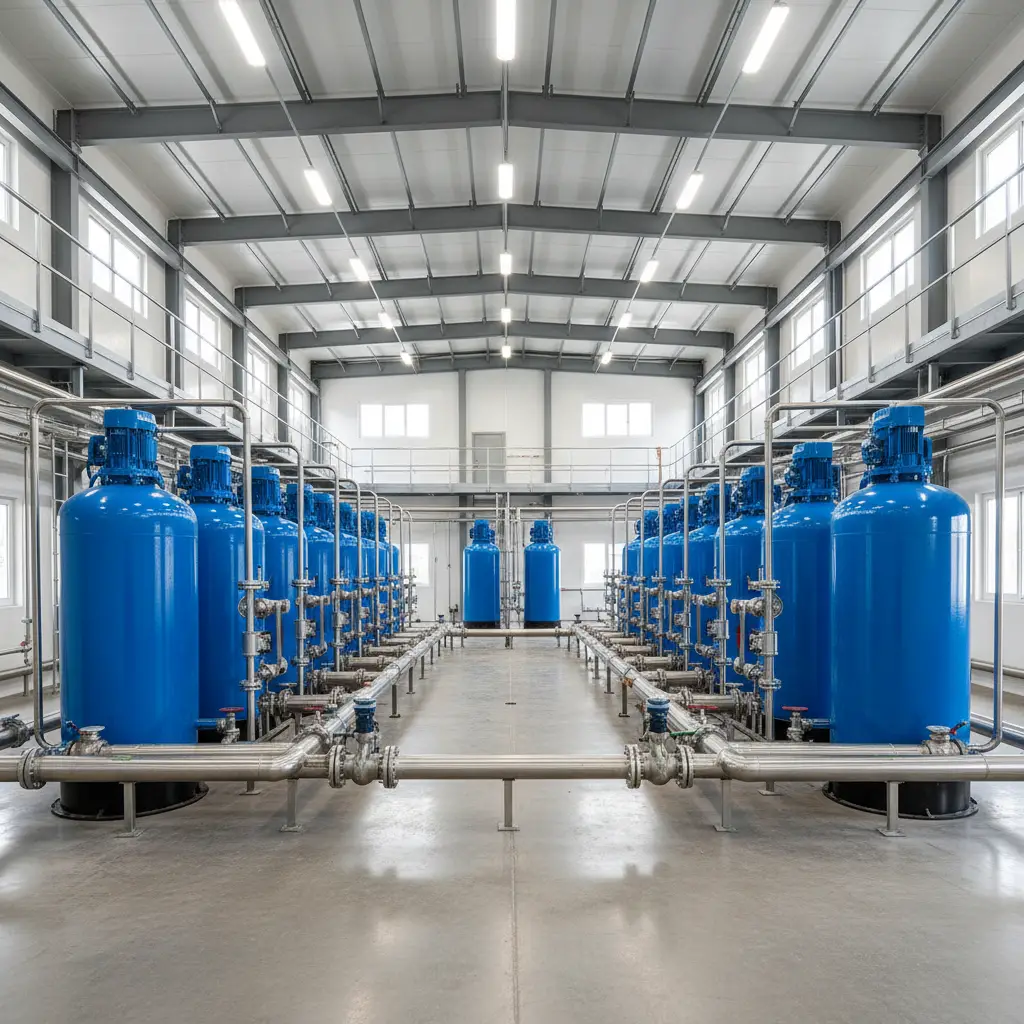
Modular ion exchange vessels and tanks arranged as a treatment train on site.
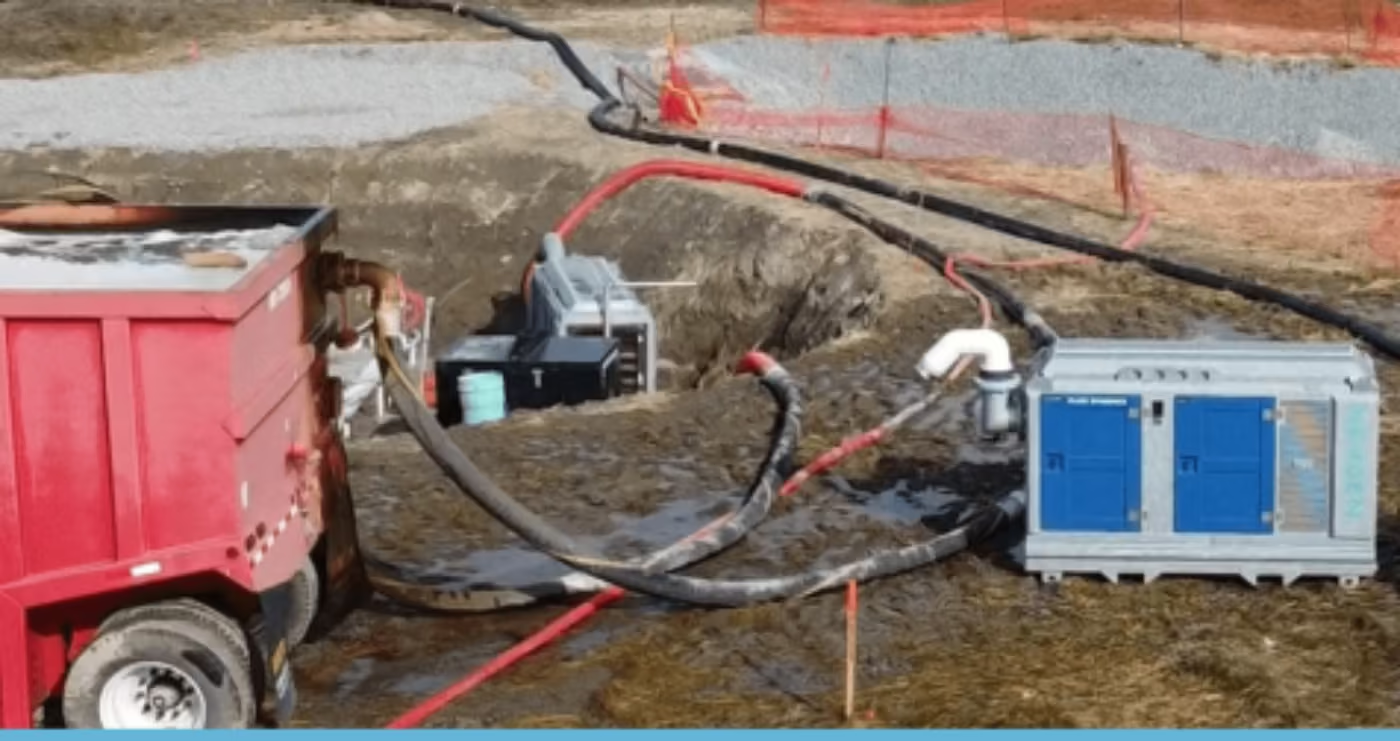
- Pumping and equalization: Groundwater or stormwater is pumped from wellpoints, sumps, or manholes into a frac tank or equalization tank supplied through our dewatering equipment rentals.
- Pre‑filtration: Suspended solids are removed using bag filters or sand media filters so sediment doesn’t plug the ion exchange resin.
- Primary treatment: Depending on chemistry, coagulants, flocculants, or carbon may reduce turbidity, hydrocarbons, or organics.
- Ion exchange polishing: Water passes through one or more ion exchange vessels designed to remove dissolved metals and hardness.
- Verification and discharge: Samples confirm compliance with permits or bylaws before discharge to storm, sanitary sewer, or surface water.
Common ion exchange pitfalls on site (and how to avoid them)
- Resin fouling from solids or oil: Use adequately sized, staged pre‑filtration and watch differential pressure so solids and sheen do not blind the resin.
- Undersized vessels and short contact time: Size vessels and flows for realistic loads so resin has enough bed depth and contact time to prevent early breakthrough.
- Poor pre‑filtration maintenance: Set clear change‑out or backwash triggers based on pressure and flow so crews keep filters protecting the resin.
- Sampling mistakes: Sample from the correct downstream port after steady state using clean bottles and permit‑approved procedures.
- Weak breakthrough monitoring: Track routine sample trends versus bed volumes and rotate or change vessels before results approach permit limits.
On many sites, ion exchange is the difference between “no discharge allowed” and routine, compliant pumping through every rain event.
This is why ion exchange shows up so often in contaminated water treatment plans for excavations near waterways, utility corridors with historic fill, or industrial footprints.
Key components: ion exchange resin, filters, and softeners
Ion exchange resin
Ion exchange resin is a manufactured polymer with functional groups that attract target ions. Different resins target different ions: some favour hardness, others focus on heavy metals like copper, nickel, or lead.
On site, three questions matter most:
- Capacity: How many bed volumes the resin can treat before breakthrough shows up in sampling.
- Selectivity: Whether the resin prefers the metals you care about, or spends most of its capacity on benign ions like calcium.
- End‑of‑life handling: Whether the resin can be regenerated off‑site or requires disposal under hazardous waste rules.
| Resin Type | Primary Target Ions | Typical Use-Cases |
|---|---|---|
|
Strong-acid cation (SAC) |
Calcium, magnesium, iron, manganese, many dissolved metals | Hardness reduction, polishing for metal discharge limits. |
|
Weak-acid cation (WAC) |
Hardness metals at higher alkalinity | High-alkalinity groundwater where softening and metals control are both needed. |
|
Strong-base anion (SBA) |
Nitrate, sulphate, some arsenic and chromium species | Site-specific anion removal to meet permit or reuse targets. |
|
Mixed-bed (cation/anion) |
Combination of cations and anions | Polishing where multiple dissolved contaminants must be reduced together. |
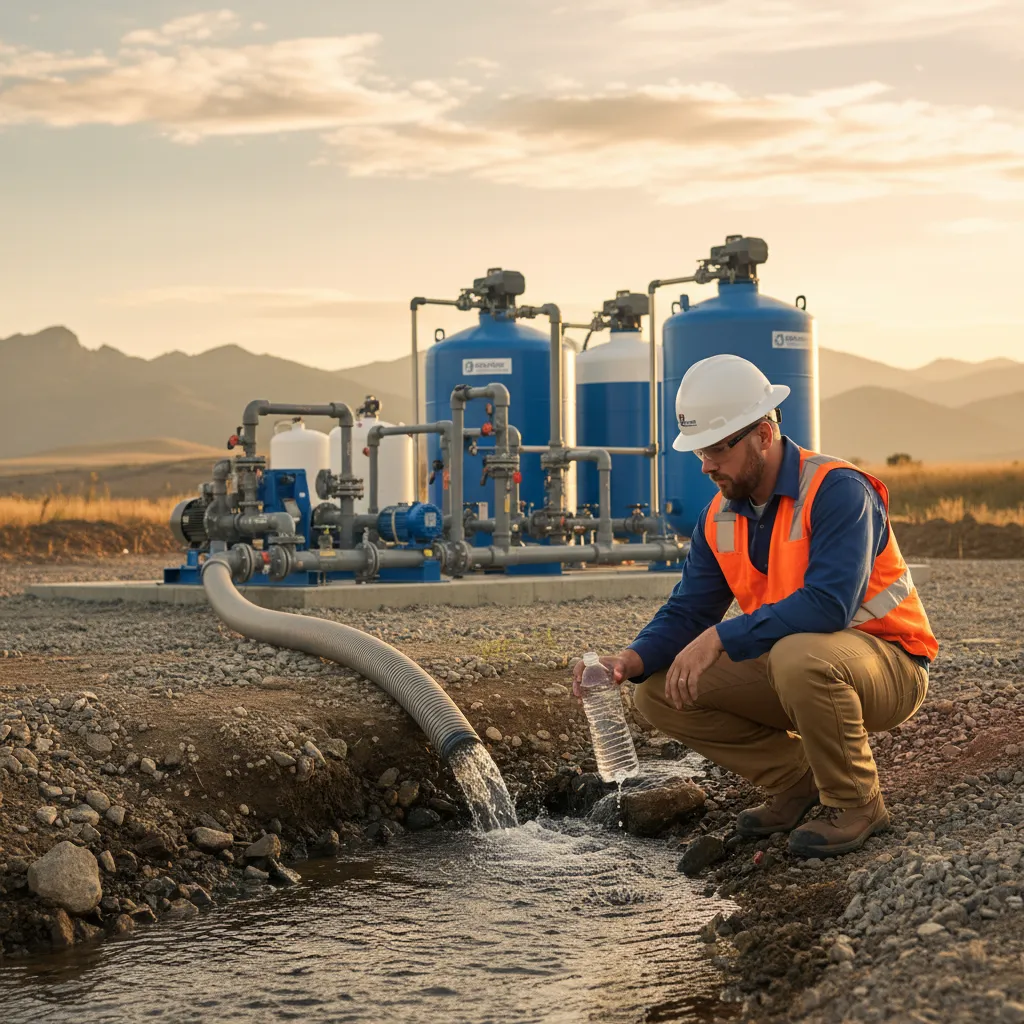
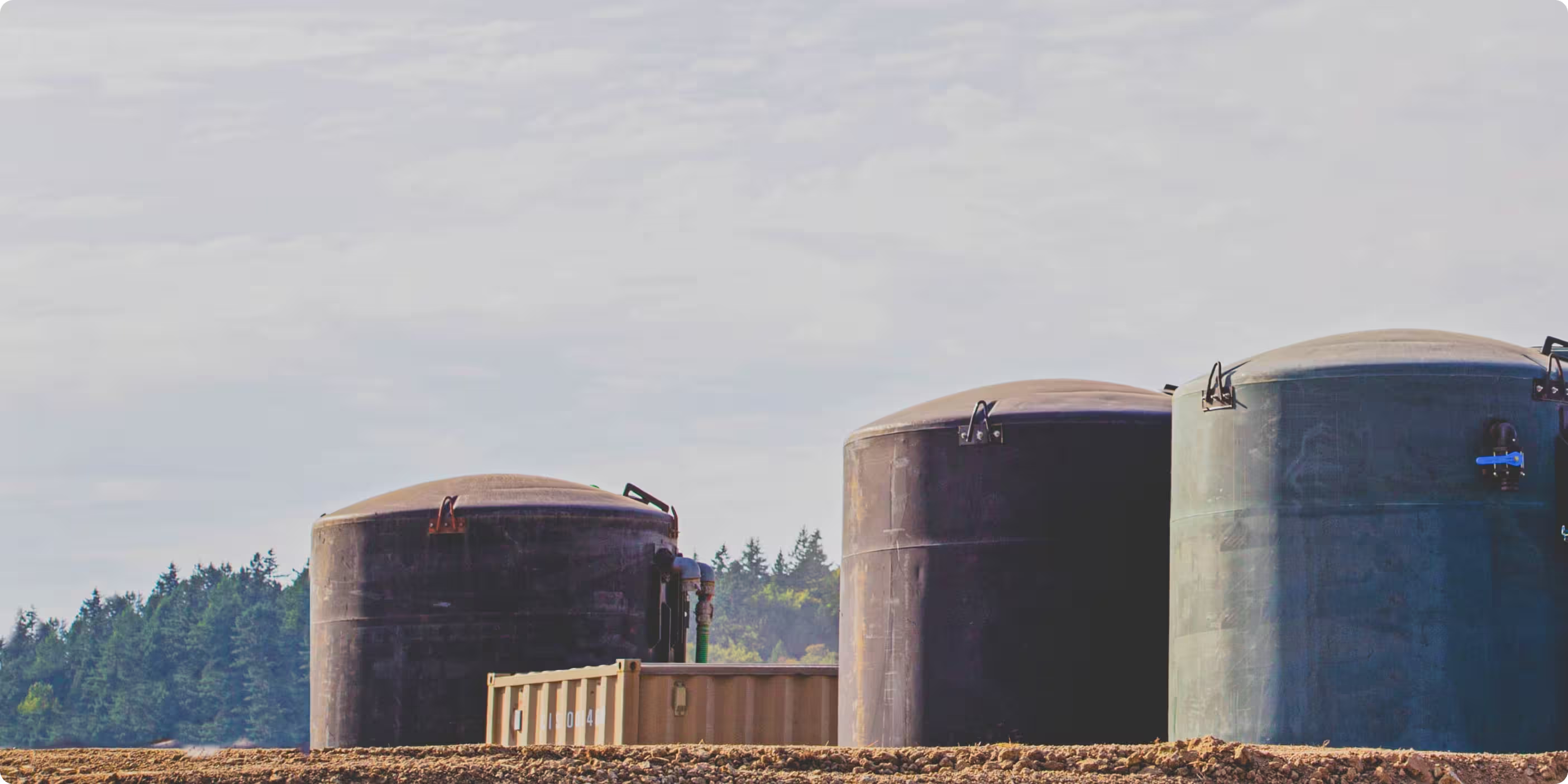
Industrial ion exchange vessels and filters used to remove dissolved metals and hardness.
Ion exchange water filter vs. ion exchange water softener
The terms can be confusing, especially when household and industrial language collide, but the underlying chemistry is the same:
- An ion exchange water filter on a job site is a steel pressure vessel packed with resin and fitted with valves, gauges, and sample ports for treating higher flows.
- An ion exchange water softener in a home or small building is a compact cation exchanger that swaps hardness ions (calcium, magnesium) for sodium and is usually regenerated on site with a brine tank.
On job sites, you are almost always dealing with industrial ion exchange vessels, not small residential softeners.
Where ion exchange fits in dewatering services and bypass pumping
Ion exchange has the most value when it is integrated into a complete water management plan rather than bolted on at the last minute. That is where a specialist in Environmental Dewatering Services earns its keep.
Common integration points
- Wellpoint and sump systems: Groundwater drawn down by wellpoints flows to treatment skids where ion exchange sits after solids removal.
- Trenchless and sewer work: In bypass pumping setups, infiltration groundwater can be sidestreamed through ion exchange before returning to the bypass line or discharge point.
- Industrial turnarounds: During shutdowns, process water and washdown streams often need temporary polishing for metals before release; skid‑mounted ion exchange units can sit beside tanks or lagoons.
Because ion exchange vessels are modular, they can be swapped, added in series, or taken off‑line without shutting down the entire dewatering system, which is valuable when flows spike during a storm or when discharge limits tighten mid‑project.
Meeting discharge limits in Western Canada
Across Western Canada, regulators lean on Canadian Environmental Quality Guidelines, provincial standards, and local bylaws. For metals such as copper, zinc, and lead, allowable concentrations for discharge to aquatic receiving environments are often in the low microgram‑per‑litre range, and hardness can influence those limits. A representative Canadian guideline value for zinc in freshwater is about 0.03 mg/L (30 µg/L), so “clear” water can still be out of spec for dissolved metals. CEQG zinc guideline summary (ECCC).
Ion exchange is often the most compact way to hit those numbers when metals stay dissolved after pH adjustment and settling. In a mixed‑bed resin study, dissolved copper removal stayed above about 95% and zinc around 90–95% at lower influent concentrations, confirming how effective well‑selected resins can be as a polishing step. Mixed‑bed resin study.
A simple three‑step framework
- Test: Lab analysis for dissolved and total metals, hardness, and key anions to understand the full picture.
- Design: Bench testing and modelling to select resin types, bed depth, flow rate, and contact time.
- Prove: Pilot or first‑day performance testing with tight sampling to confirm real‑world breakthrough timing.
Mini‑case: Westshore Terminals chromium treatment
At Westshore Terminals in Delta, BC, an underground vault project generated chromium‑contaminated groundwater during tremie concrete pours. The site needed continuous dewatering at approximately 475 gpm while meeting strict marine discharge criteria for direct release to the Pacific Ocean. Nexgen designed a high‑capacity treatment train: three large weir tanks for sediment control, sand filters, automated pH adjustment, and multiple ion exchange vessels loaded with chromium‑specific resin. Daily lab testing confirmed the system was holding discharge within permit limits, allowing pumping and concrete work to continue without dewatering‑related shutdowns. For more detail, see the Westshore Terminals case study.
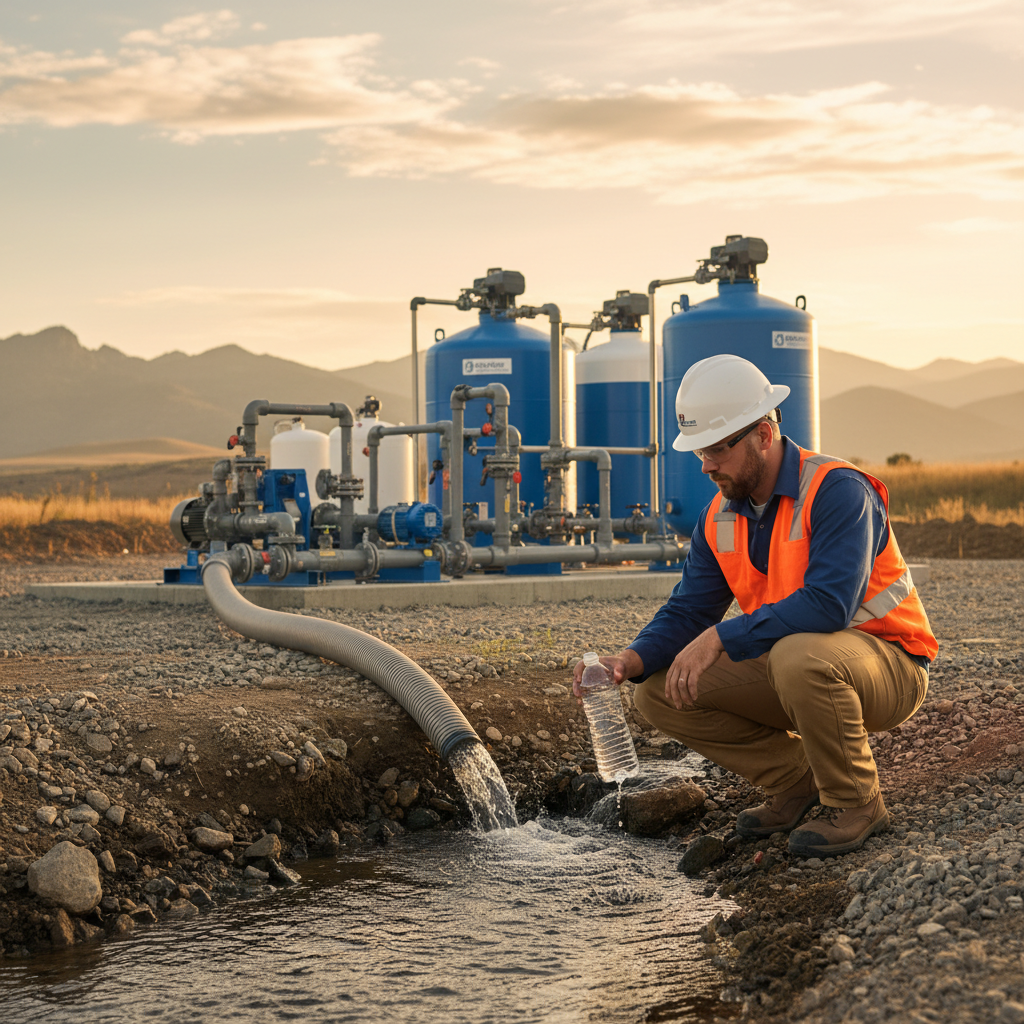
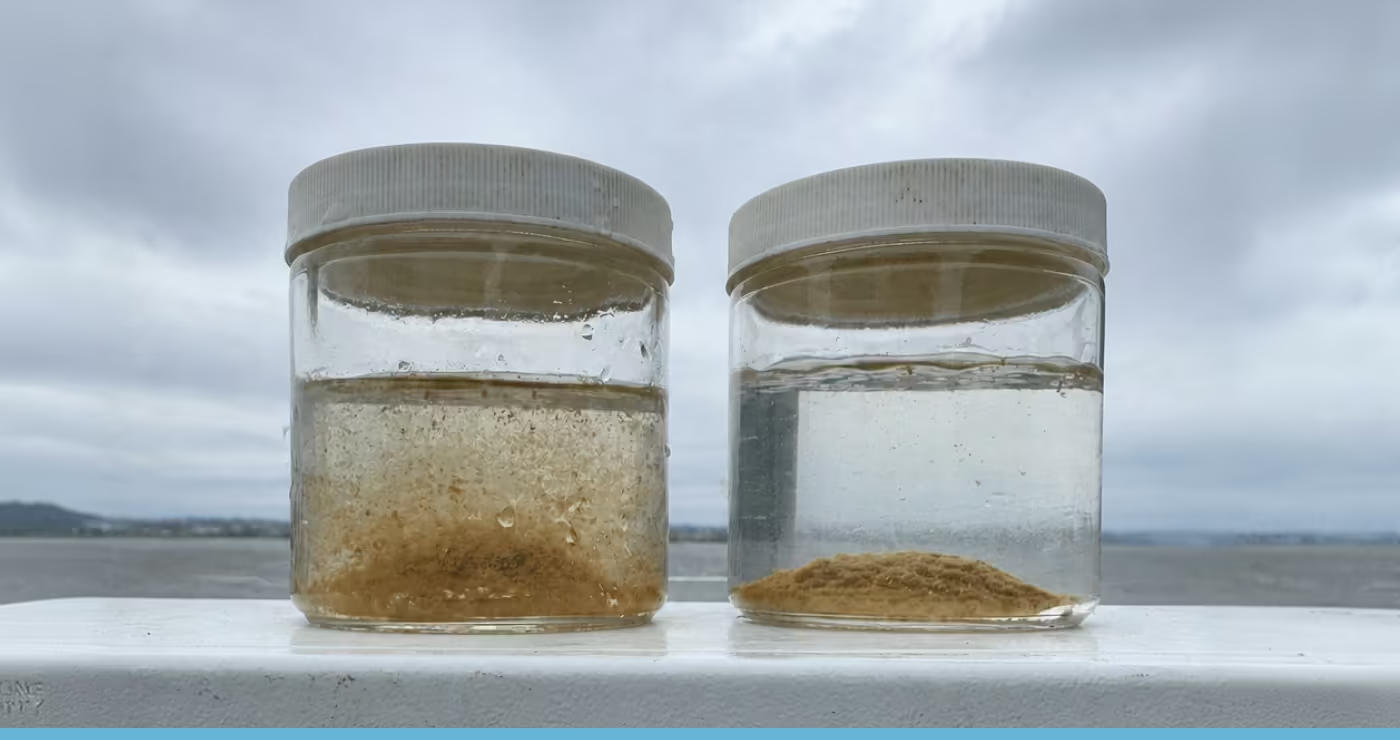
Compliance sampling verifies ion exchange treated water meets discharge limits.
Working with a partner that understands water quality guidelines, sampling, and reporting saves back‑and‑forth with regulators and helps keep your team out of penalty territory.
Choosing an ion exchange partner
An ion exchange skid is only as good as the people specifying, operating, and monitoring it. When you evaluate partners, look for:
- Field experience: Recent ion exchange systems on projects similar to yours.
- Integrated services: Ability to combine ion exchange with dewatering services, bypass pumping, tankage, and sampling.
- Regulatory fluency: Familiarity with CCME guidelines, municipal bylaws, permits, and sampling plans.
- Responsive support: Capacity to add vessels, adjust chemistry, and troubleshoot quickly when conditions change.
If you want to talk through a specific site, the Nexgen team can review drawings and lab results and propose options—Request a Free Consultation early in design.
FAQ: Ion exchange and contaminated water treatment
Does ion exchange remove everything from contaminated water?
No. Ion exchange treats dissolved ions (metals, hardness, some anions) but not suspended solids, oils, or most organics, so it must be paired with media or bag filters and sometimes carbon in a complete contaminated water treatment system.
Is ion exchange cost‑effective for short‑term construction projects?
Often, yes. Skid‑mounted ion exchange vessels can be mobilised as part of temporary Environmental Dewatering Services and removed once dewatering or bypass work wraps up. For moderate flows with tight metals limits, resin and monitoring often cost less than hauling all water off site during multi‑week pumping.
What happens to exhausted ion exchange resin?
Once resin reaches the end of its useful life, it is taken out of service and either regenerated or sent for disposal through licensed facilities, depending on the contaminants it has captured. Correct handling includes documenting volumes, manifests, and final destinations as part of compliance.
How do I know if ion exchange is the right option instead of hauling water off-site?
Compare total volume, duration, and how far your dissolved metals are above permit limits. A few truckloads may be simpler to haul, but for continuous pumping and thousands of cubic metres, a temporary ion exchange system is usually more cost‑effective and reduces truck traffic.
What flow rates are realistic for temporary ion exchange systems on construction sites?
Temporary ion exchange skids can treat from a few gallons per minute on small sumps or manholes up to tens or hundreds of gallons per minute for full dewatering or bypass flows. Industrial ion exchange systems are commonly offered in roughly the 40–1,000 gpm range, and rental packages can be configured from about 5 to 1,200 gpm by adding vessels in series or parallel, so most construction projects can be handled with modular equipment. Industrial IX system ranges.
Key takeaway
Ion exchange turns dissolved metals and hardness problems into manageable design choices about resin, pre‑treatment, contact time, and monitoring so you can stay within permit limits and keep work moving.
If you are planning a project where groundwater chemistry might cause headaches, Nexgen’s team can combine ion exchange with pumping, tankage, and monitoring—Request a Free Consultation to discuss options for your next site.