Contaminated Groundwater: 4 Steps to Compliant Discharge
Excavations can fill with water overnight, turning a job site into a small lake. Most days that’s just a dewatering problem, but the moment an oily sheen, chemical odour, or lab exceedance shows up, you’re dealing with contaminated groundwater, and a very different set of rules.
This guide is for project managers, supers, and environmental coordinators who need a practical way to handle contaminated groundwater before it reaches a storm drain, river, or sanitary system. We’ll walk through how groundwater gets contaminated, how to tell if your water is an issue, and the step‑by‑step process Nexgen uses on Western Canadian sites to collect, treat, and discharge it in compliance with regulations.
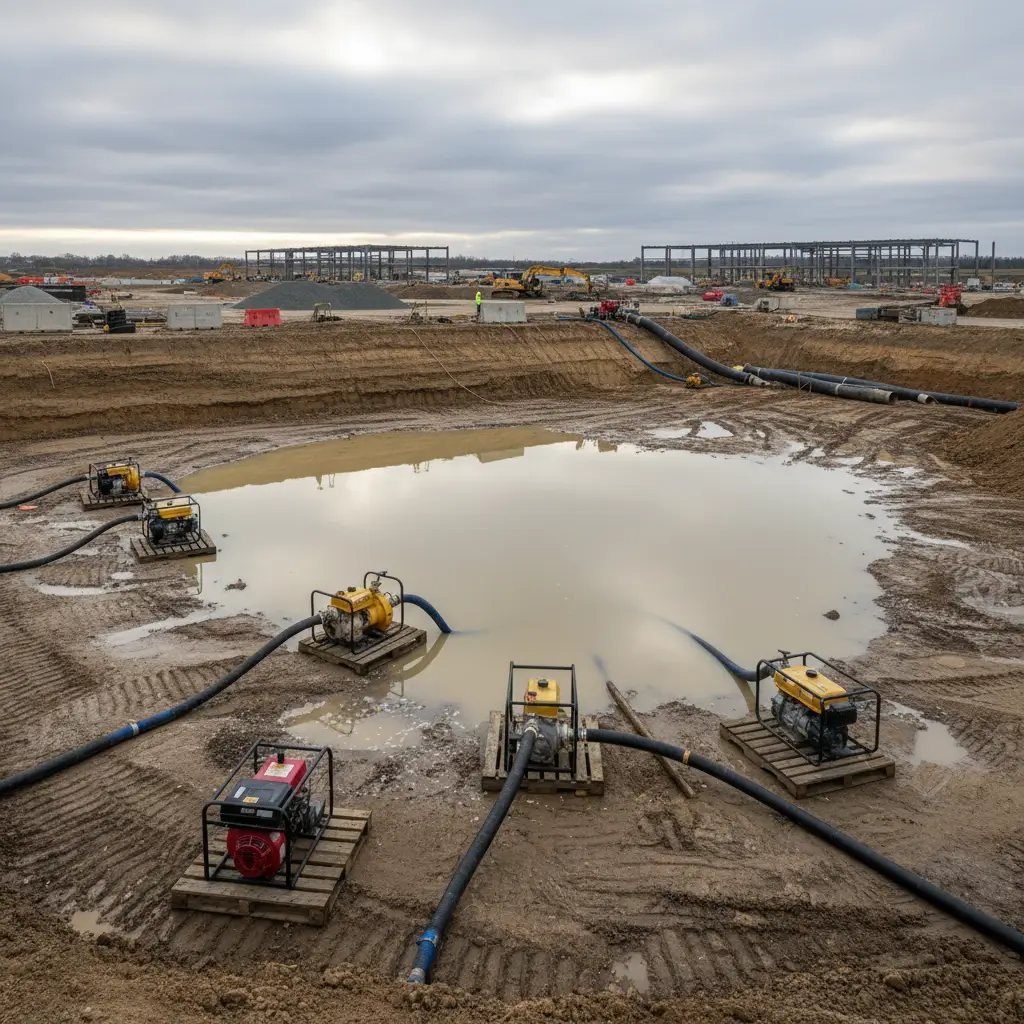
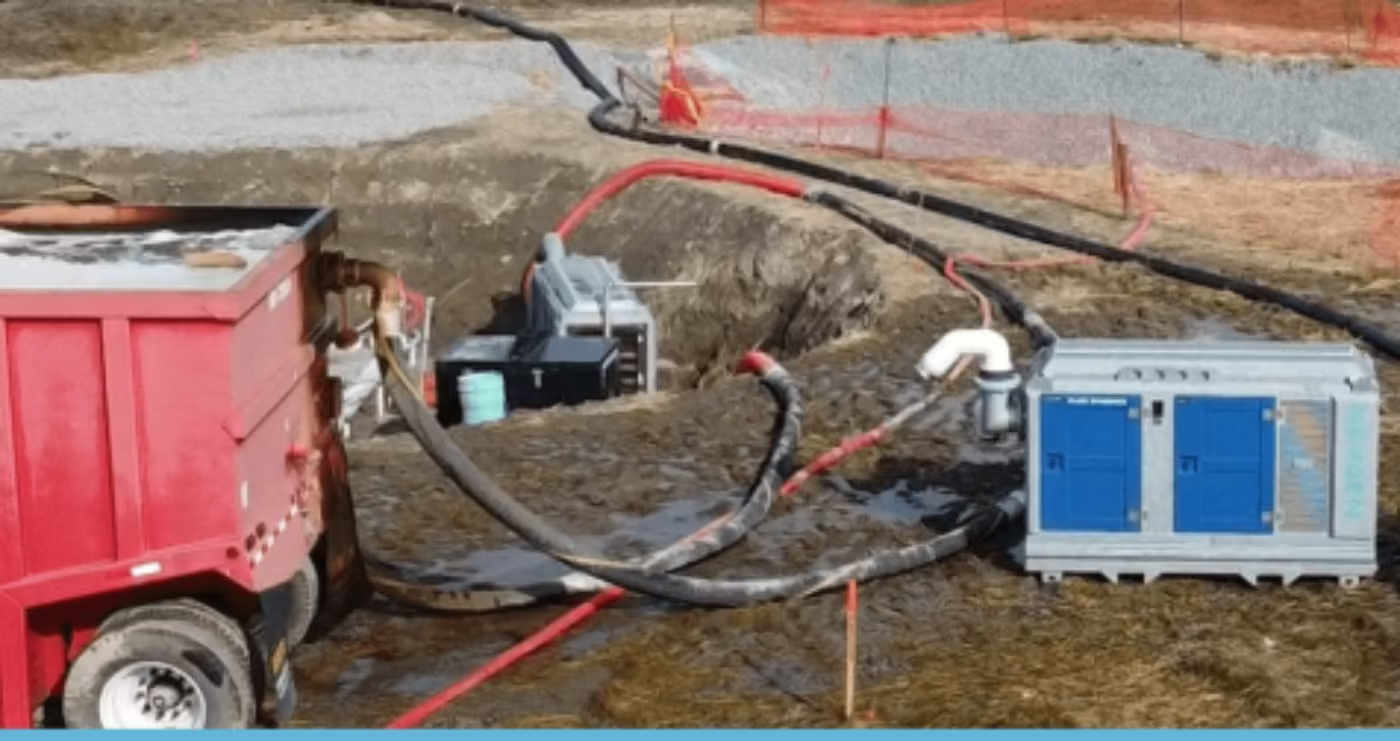
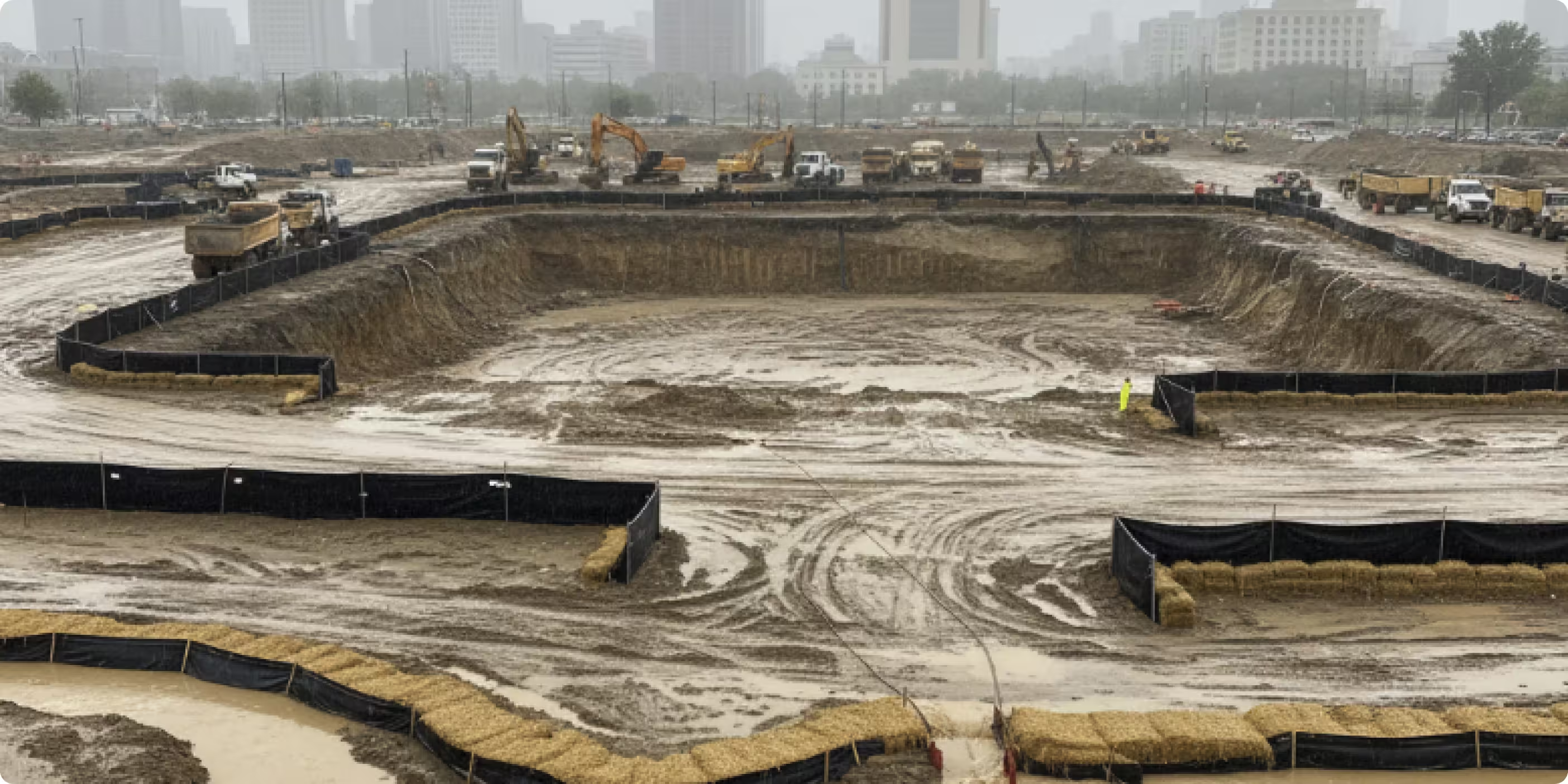
A groundwater-filled excavation on a commercial construction site with pumps and hoses set up for dewatering.
Table of Contents
- What is contaminated groundwater on a job site?
- How groundwater gets contaminated around construction
- Why handling contaminated groundwater before discharge matters
- Step 1: Confirm whether your groundwater is contaminated
- Step 2: Choose the right construction dewatering method
- Step 3: Treat contaminated groundwater before discharge
- Step 4: Monitor pH, flow, and quality during discharge
- When to bring in a dewatering and treatment specialist
- Contaminated groundwater FAQ
- Key takeaways
TL;DR: Nexgen’s 4-Step Contaminated Groundwater Handling Framework
Nexgen’s 4-step framework, Test, Dewater, Treat, Monitor, gives your team a simple way to plan contaminated groundwater handling on any site: test early, choose an appropriate construction dewatering approach, route water through engineered treatment, and monitor and adjust discharge in real time so discharge stays within permit and guideline limits.
Callout: When in doubt, walk through Test, Dewater, Treat, Monitor before you open a discharge valve.
What is contaminated groundwater on a job site?
Groundwater is the water stored in soil and rock below the surface. On most sites it carries fine sediment and a bit of natural colour, nothing a basic settlement tank and filter can’t handle.
Groundwater becomes “contaminated” when it contains chemicals or bacteria at levels that could harm people or the environment. Typical construction‑site contaminants include:
- Petroleum hydrocarbons (diesel, gasoline, lubricants)
- Dissolved metals (iron, manganese, lead, etc.)
- Solvents and degreasers from historical industrial use
- High nutrients, road salt, or de‑icers from urban runoff
- High or low pH from concrete wash water or fill
Regulators compare your discharge water against standards such as the Canadian Environmental Quality Guidelines and provincial permits. If your sample results exceed those limits, that’s contaminated groundwater for the purposes of your project. even if it looks clear.
How groundwater gets contaminated around construction
Groundwater can still be contaminated even when you’re “just digging a hole” because today’s excavation often intersects yesterday’s spill, dump, or leaking infrastructure.
FAQ: How can groundwater get contaminated?
Here are the main pathways relevant to construction sites:
- Historical land use: Former fuel stations, dry cleaners, factories, railyards, or wood‑treating plants leave hydrocarbons, solvents, or metals in soil and groundwater.
- Leaking infrastructure: Underground storage tanks, old sewer lines, and industrial sumps release contaminants over time.
- Surface spills and runoff: Oil, fuel, chemicals, and road salt can seep through soil and reach the water table over time.
- Fill and imported materials: Uncontrolled fill may bring in contaminated soil that leaches constituents into groundwater.
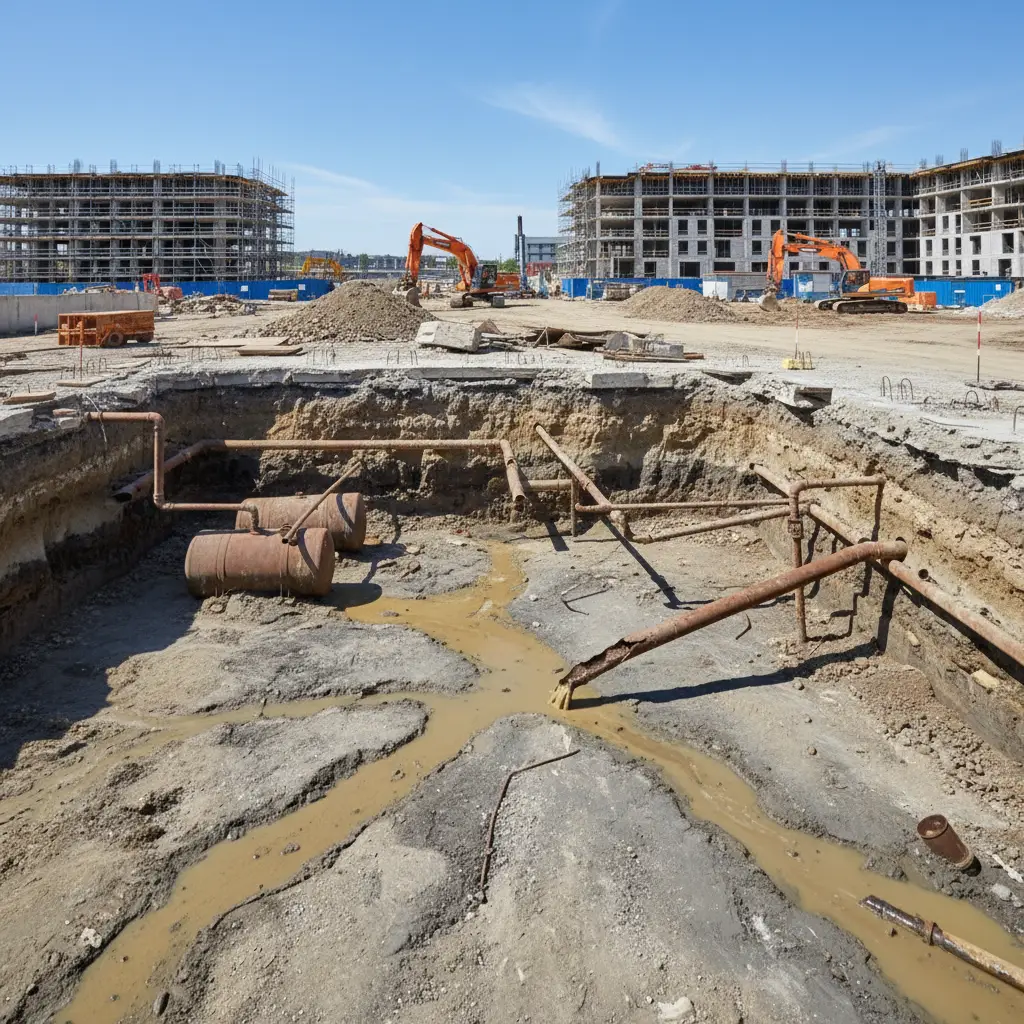
Common sources of contaminated groundwater include historical spills, leaking infrastructure, and legacy fill beneath urban construction sites.
The US EPA gives a good overview of these pathways in its guidance on how groundwater can get contaminated.
Why handling contaminated groundwater before discharge matters
Once contaminated groundwater is pumped, you’re responsible for where it goes and what it does. Uncontrolled discharge can damage storm sewers or receiving waters and quickly lead to fines, stop‑work orders, or permit suspensions. Because groundwater feeds drinking‑water supplies and surface water, regulators set strict contaminant limits and expect contractors to meet them; in B.C., for example, the Groundwater Protection Regulation and construction dewatering policy place clear responsibility on owners and contractors to contain, treat, and monitor contaminated groundwater before discharge.
Step 1: Confirm whether your groundwater is contaminated
The first move is always to stop guessing and get data. That typically involves your environmental consultant plus a dewatering and treatment specialist.
- Review site history. Past investigations, records of underground tanks, and old aerial photos can flag likely contaminants before you dig.
- Screen wells or sumps. Use field meters for pH, electrical conductivity, and temperature, and visually check for sheen, odour, and discolouration.
- Collect lab samples. Your consultant will sample for parameters specified in your permit or guidelines: metals, hydrocarbons, VOCs, nutrients, and others.
With those results in hand, Nexgen designs a contaminated water treatment system train tailored to your site: what needs to be removed, to what level, and at what flow rate.
Step 2: Choose the right construction dewatering method
Once you understand water quality, the next call is how to move it safely so construction can proceed. Your dewatering method directly affects how easy it is to control flow and route groundwater into treatment.
Wellpoint dewatering versus sump pumping
On many Western Canada projects, Nexgen uses wellpoint dewatering systems to lower the groundwater table around excavations. A ring of small-diameter wells connected to a header and vacuum pump gives you:
- Better control of drawdown and inflow than simple sump pumps
- Drier, more stable excavation faces
- A predictable flow to your treatment system
Sump pumping still has a place on smaller or short‑duration jobs, but it can be harder to manage if flows spike or if contaminated groundwater is spread across multiple low points.
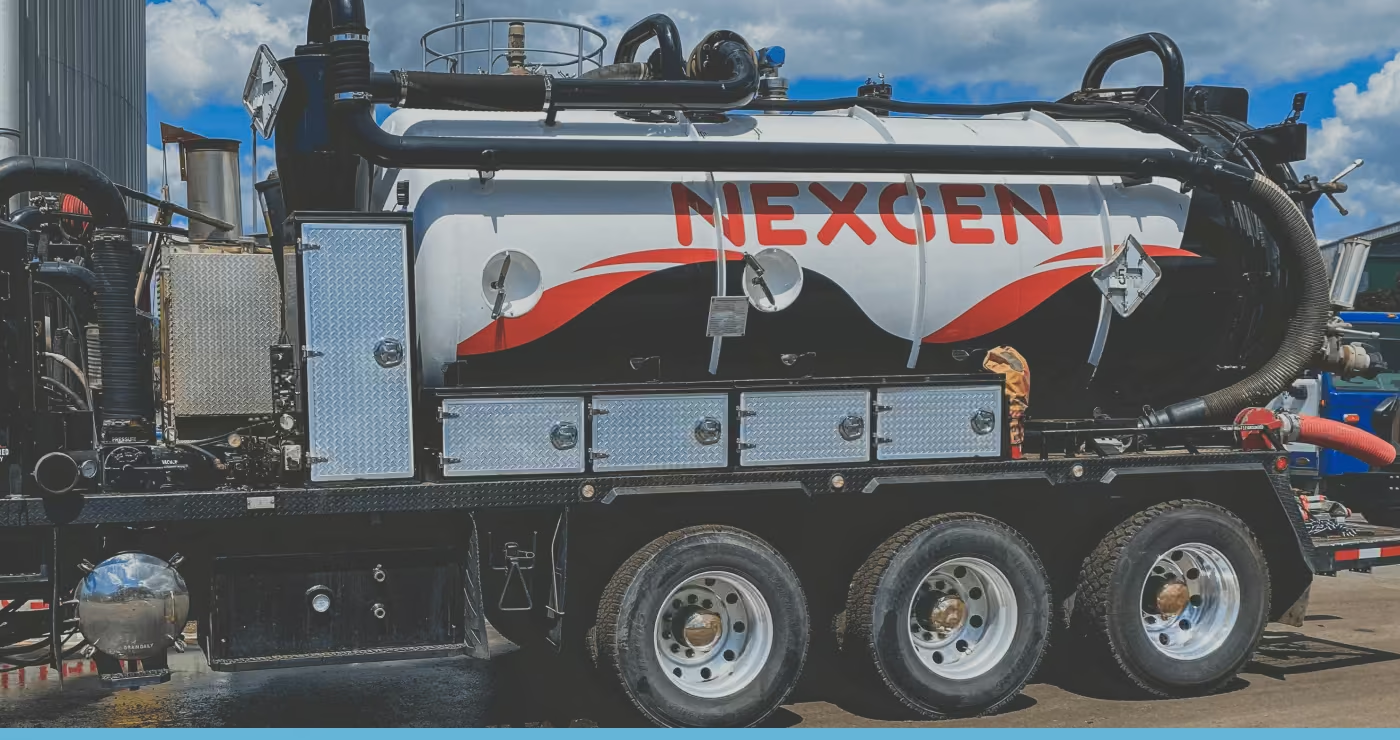
Regardless of the primary method, you’ll usually also need hoses or temporary piping to a treatment area, buffer tanks for storage and settling, and occasional vacuum truck services for sludge, spent media, or water that must be hauled off-site. Designing this plumbing with treatment in mind from day one avoids last‑minute scrambling when the first lab report comes back with exceedances.
Step 3: Treat contaminated groundwater before discharge
Treatment trains are custom, but most follow a similar logic: remove solids, adjust pH, strip out dissolved contaminants, and confirm results before the water is discharged.
Right-size your treatment for flow and chemistry
Construction dewatering flows can range from a few dozen gallons per minute on a short utility trench to more than 1,000 GPM on deep or long‑running excavations. Tank volume, pump capacity, filter area, and chemical dosing all need to scale with that flow and with the contaminants you’re targeting.
- Lower‑flow sites (under ~50 GPM): compact tank‑and‑filter skids or batch tanks with basic coagulant/flocculant dosing and cartridge filtration.
- Moderate flows (~50–300 GPM): multiple settling tanks, inline coagulant dosing, sand or multi‑cartridge filters, and, where needed, carbon or resin vessels for hydrocarbons and dissolved constituents.
- High‑flow systems (300+ GPM): multi‑stage treatment trains with large weir tanks, high‑capacity media vessels, and redundancy so you can maintain permit limits at sustained flows.
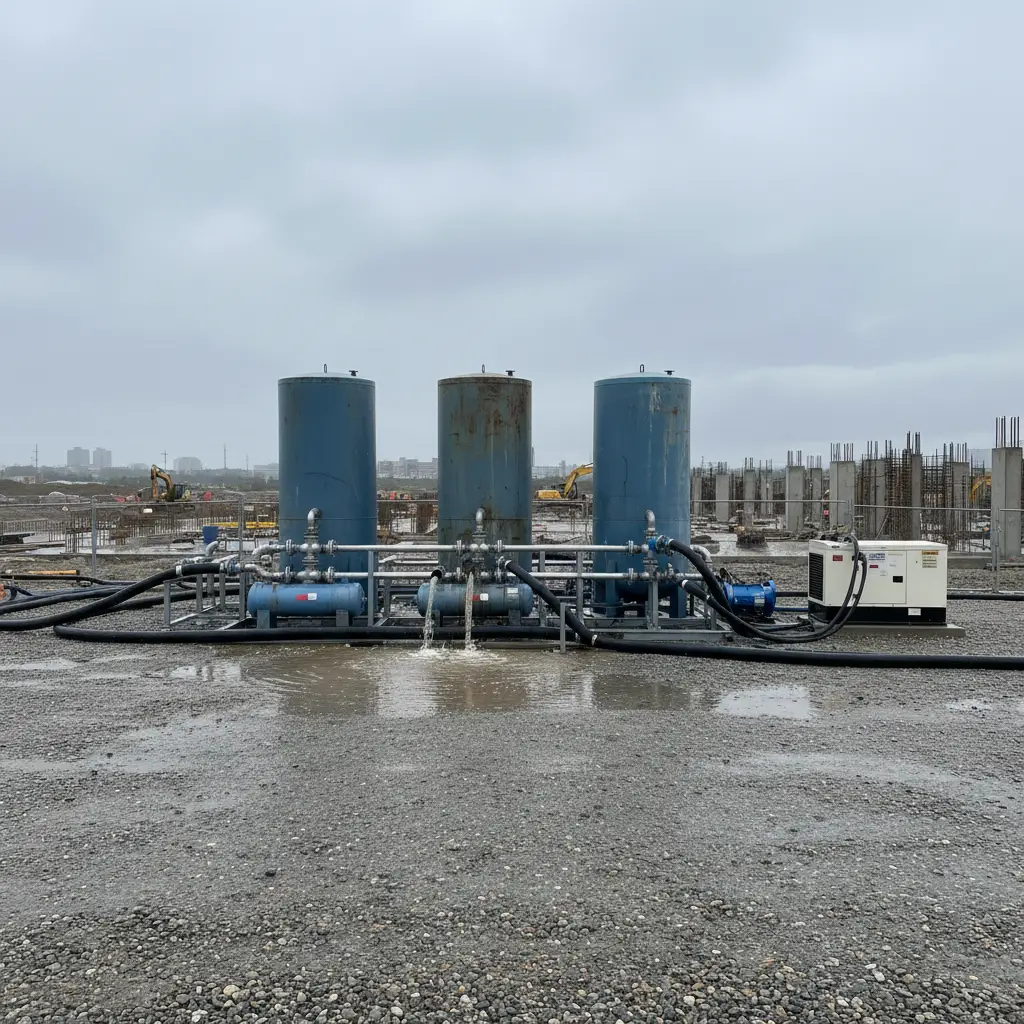
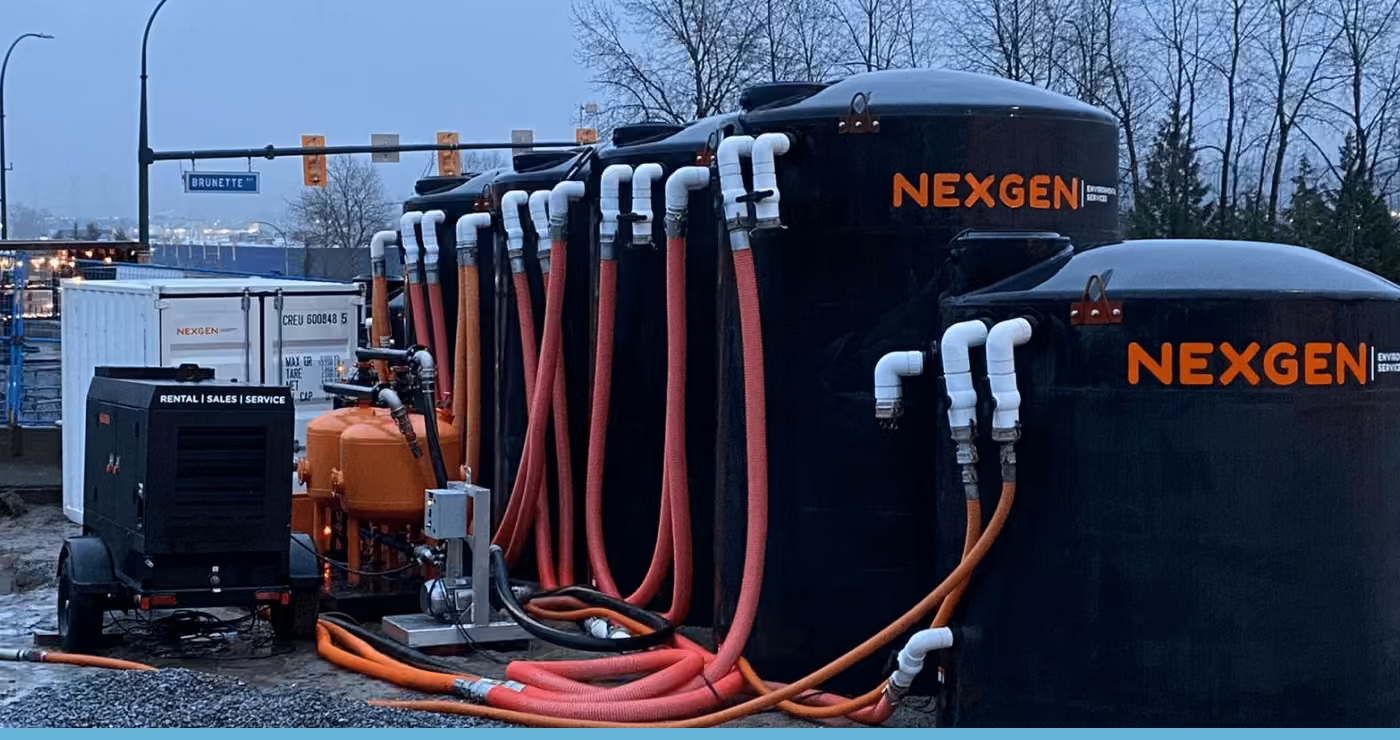
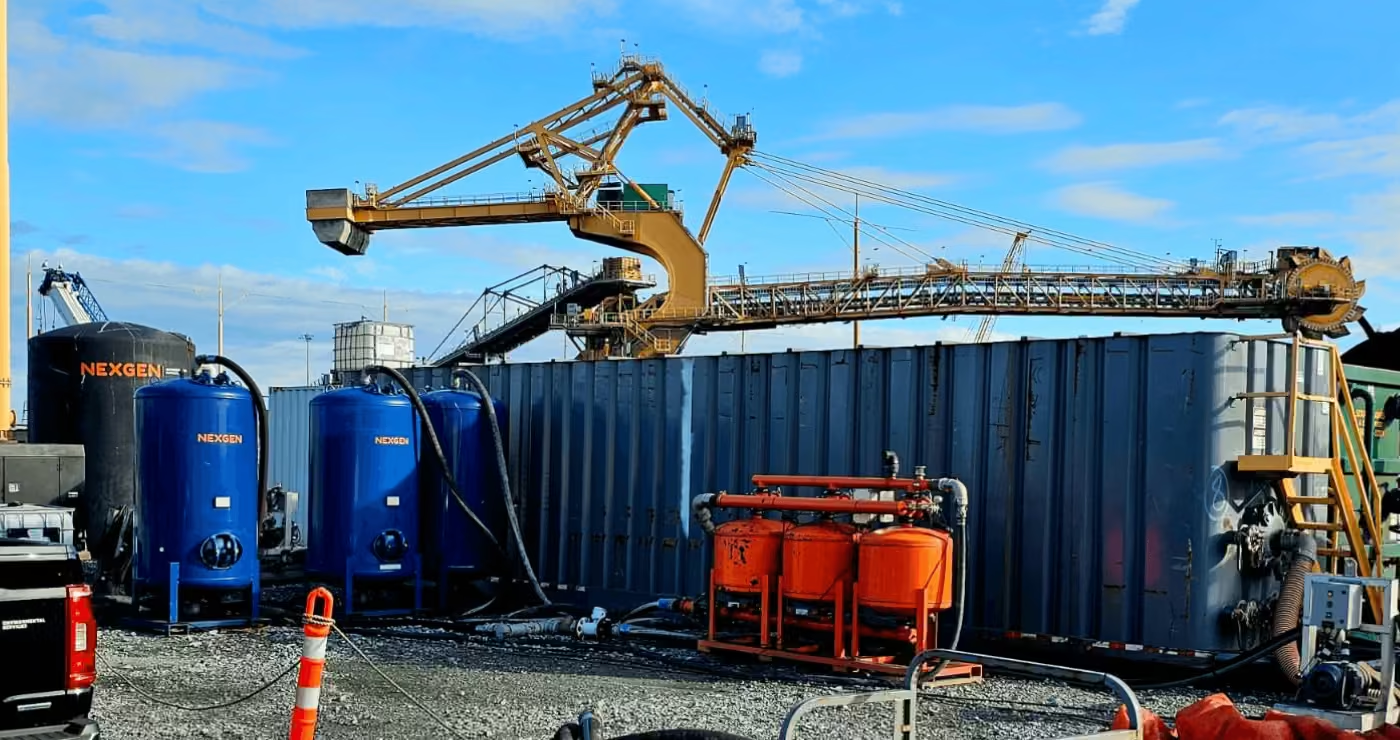
A temporary contaminated groundwater treatment system with tanks, hose runs, and filtration units set up on a construction site.
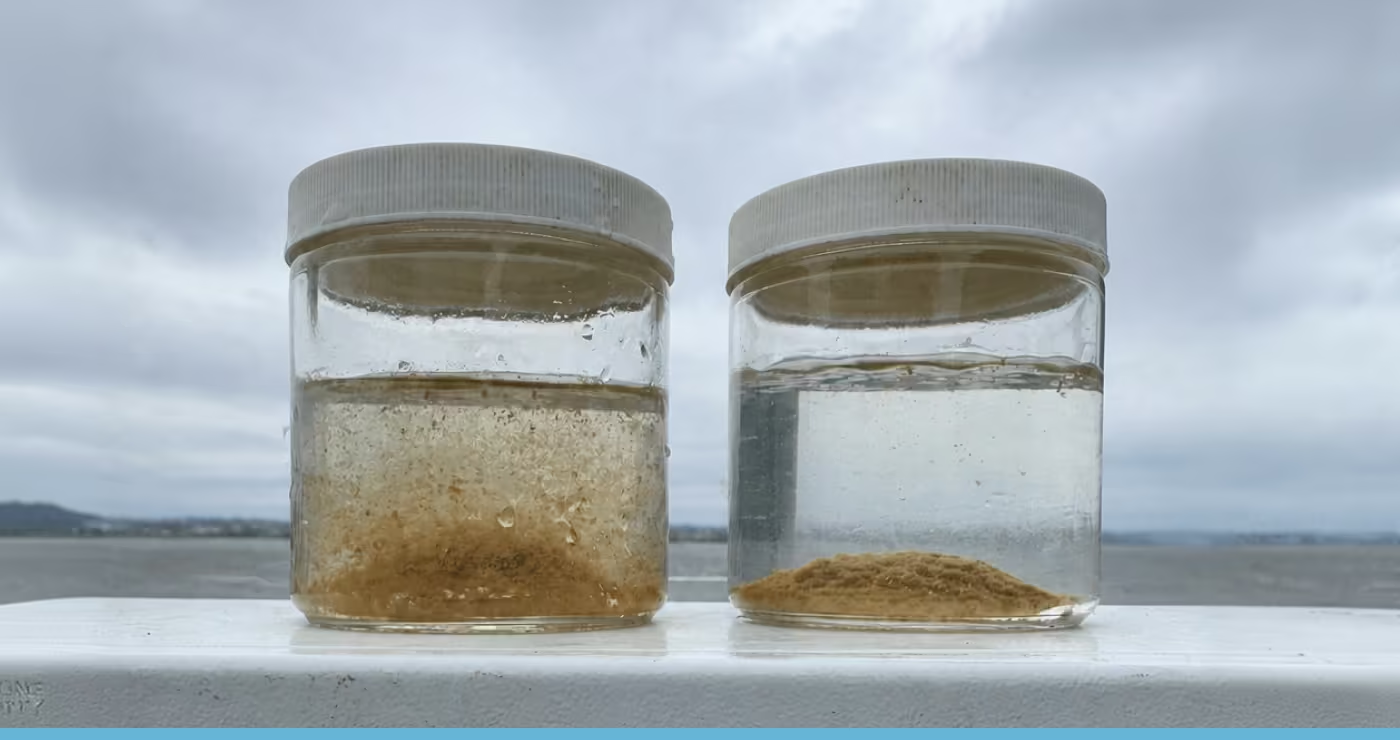
Nexgen combines mechanical filtration with targeted water treatment chemicals such as coagulants, flocculants, oxidants, and activated carbon. Bench‑scale jar testing on site water confirms which products work and the dose ranges needed to meet discharge limits under guidelines like the CCME groundwater quality guidelines.
Using a pH control system in the field
High‑pH water from contact with concrete or cemented soils is a common headache, as is low‑pH water in some industrial areas. A dedicated pH control system monitors and adjusts pH on the fly, typically using:
- Carbon dioxide or acids to lower pH
- Caustic solutions to raise pH when water is too acidic
- Inline sensors and controllers to keep pH within a tight discharge range
Nexgen often integrates pH correction with dewatering equipment rentals, pumps, tanks, and filtration, so water is within range before it reaches your discharge point.
Step 4: Monitor pH, flow, and quality during discharge
Even the best‑designed system isn’t “set and forget.” Soil conditions, rainfall, and construction activities all change over a project’s life, and your groundwater chemistry can shift with them.
A solid monitoring program usually includes:
- Continuous pH and flow tracking at the discharge point
- Regular grab samples for lab analysis at frequencies required by your permit
- Daily logs of system performance, chemical usage, and any upsets
- Trigger/action levels that tell the crew when to adjust dose rates or call for technical support
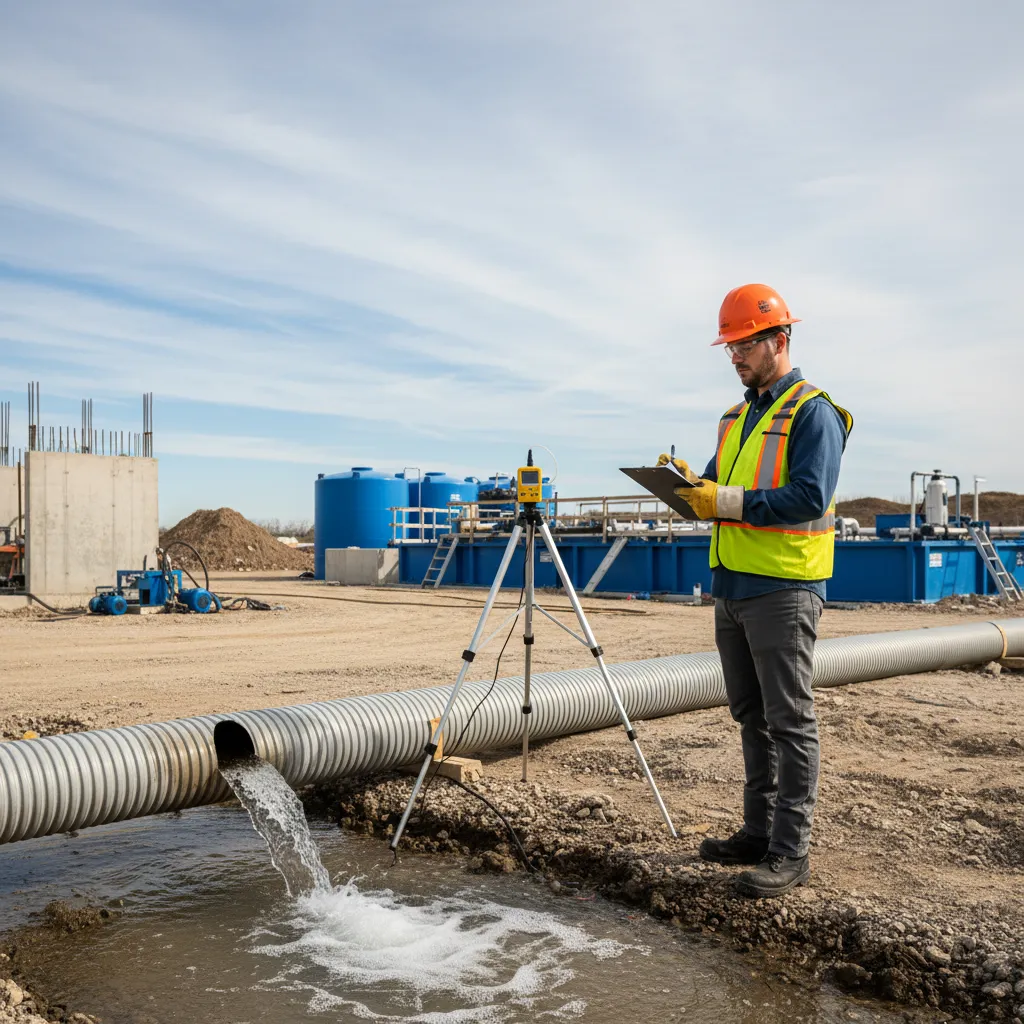
Field monitoring of pH, flow, and water quality at the discharge point helps keep contaminated groundwater within permit limits.
In some jurisdictions, for example, under B.C.’s Construction Dewatering Operational Policy, you may also need to track volumes and provide summary reports showing that groundwater discharge stayed within approved limits over the life of the project.
Example: a simple daily monitoring log
For a 100 GPM system discharging to storm, a basic daily log might capture:
- 07:00 – pH 7.2, turbidity 10 NTU, flow 95 GPM; system running normally.
What happens when you approach permit limits?
If your permit limit for total suspended solids (TSS) is 50 mg/L and a lab result comes back at 42 mg/L after heavy rain, that should trigger action: increase coagulant dose, add a polishing filter, and collect a confirmation sample before increasing discharge. If results keep trending upward, the next step could be to reduce flow, recirculate water through the treatment train, or temporarily divert to a vacuum truck for off‑site disposal while the issue is diagnosed. Clear trigger levels and response steps keep you ahead of enforcement instead of reacting after a non‑compliant sample.
When to bring in a dewatering and treatment specialist
Some projects only need simple pumping and a sediment tank. Others turn into chemistry labs overnight. As a rule of thumb, call in specialist support early when:
- Your ESA or geotech report flags historical contamination or industrial land use
- You see an oily sheen, strong odour, or unusual colour in groundwater
- Early lab data shows metals, hydrocarbons, or pH outside guideline ranges
- You’re working next to sensitive receivers like salmon streams or municipal wells
- You don’t have the in‑house capacity to design, install, and operate treatment
Real example: At the Fraser Mills residential development in Coquitlam, Nexgen treated roughly 1,000 GPM of groundwater beside a sensitive lake, routing water with iron up to ~130 mg/L through eight 20,000‑gallon tanks, chemical injection, and sand filtration to consistently discharge at less than 1 mg/L over a nine‑month schedule.
Nexgen’s team engineers and operates complete systems, from wellpoint systems and construction dewatering planning through to treatment skids and vacuum truck services, across Metro Vancouver and Alberta. The goal is simple: keep your site dry, your permits in good standing, and your crew focused on building, not managing water; if you need support on an upcoming project, you can request a free consultation.
This article is for general information only and does not replace site‑specific advice from qualified environmental professionals or regulatory authorities.
Contaminated groundwater FAQ
How can groundwater get contaminated on construction sites?
Most construction‑related contamination comes from intersecting existing problems such as historical spills, leaking tanks and sewers, contaminated fill, or long‑term runoff from roads and yards. Once you start pumping, your dewatering system can draw that poor‑quality water toward the discharge point. For a breakdown of the main pathways, see How groundwater gets contaminated around construction.
Do I always need treatment before discharge?
No. Some sites with clean groundwater only need flow control and basic sediment removal before discharge, as long as lab results confirm they’re below applicable guidelines. You do need treatment when testing shows exceedances (for example, hydrocarbons, metals, or off‑spec pH), when your permit conditions require it, or when you’re near sensitive receivers such as fish‑bearing streams or drinking‑water infrastructure.
How does Nexgen’s 4-step framework help in practice?
The framework, Test, Dewater, Treat, Monitor, gives your team a checklist to work through whenever groundwater quality is uncertain. You confirm the problem with data, select a dewatering approach that controls flow, design treatment around real chemistry and flow rates, and then monitor performance so you can make adjustments before there’s a compliance issue.
Key takeaways
- Test groundwater early and compare results to permit and guideline limits instead of guessing.
- Use Nexgen’s 4-step framework (Test, Dewater, Treat, Monitor) and right-size pumps, tanks, and treatment to real flow rates.
- Use daily monitoring logs and clear trigger levels, and bring in a dewatering and treatment specialist early on complex or high‑risk sites.
Frequently Asked Questions
What is contaminated groundwater on a construction site?
Contaminated groundwater is groundwater that contains pollutants such as hydrocarbons, metals, solvents, bacteria, or extreme pH levels that exceed environmental discharge guidelines. On construction sites, this water often appears during excavation and construction dewatering activities.
How can groundwater get contaminated?
Groundwater can get contaminated through historical fuel spills, leaking underground tanks, industrial activity, contaminated fill, road runoff, sewer leaks, and chemicals that seep through soil into the water table over time. Construction excavations can expose and mobilize these contaminants.
How does groundwater get contaminated during construction projects?
Construction projects can disturb contaminated soil layers, intersect old industrial contamination, or draw polluted groundwater toward excavations during pumping. Activities like construction dewatering and wellpoint dewatering can increase groundwater movement and require treatment before discharge.
When is groundwater treatment required before discharge?
Groundwater treatment is required when testing shows contaminants such as metals, hydrocarbons, sediment, or pH levels above discharge limits. Treatment systems may include filtration, a pH control system, activated carbon, settling tanks, and specialized water treatment chemicals to meet regulatory requirements.
What role does wellpoint dewatering play in contaminated groundwater management?
Wellpoint dewatering systems help lower groundwater levels around excavations while controlling inflow rates more consistently than basic sump pumping. This allows contaminated groundwater to be routed safely through treatment systems before discharge or disposal.
Why are vacuum truck services important for contaminated groundwater projects?
Vacuum truck services are often used to remove sludge, contaminated sediment, spent filter media, and groundwater that cannot be discharged directly. They also provide emergency support during system maintenance, treatment failures, or high-flow construction dewatering events.