Sediment Control Systems: What Contractors Need to Know
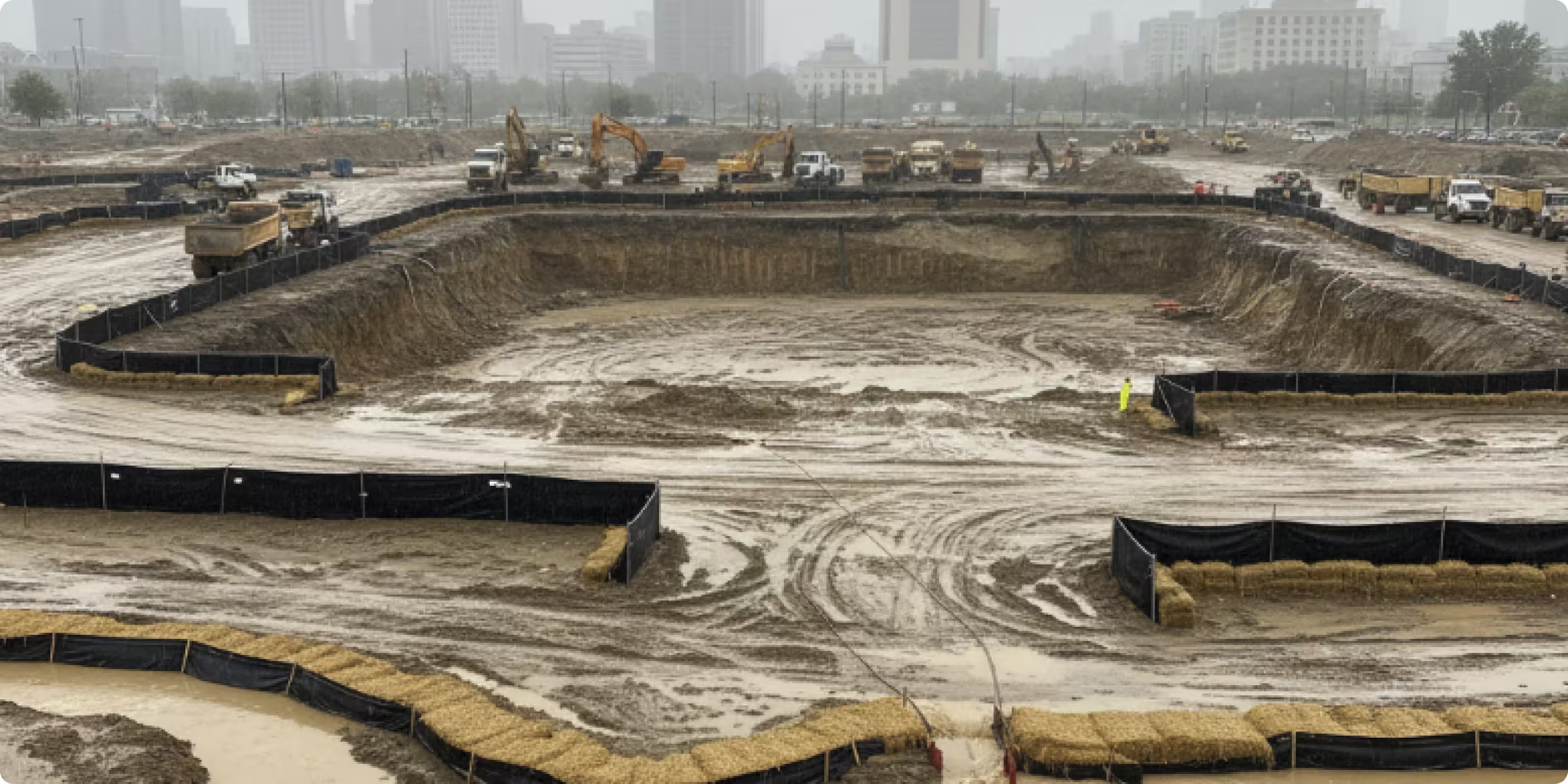
If you run civil or infrastructure jobs in Western Canada, you already know muddy water can shut a site down faster than almost anything else. One heavy rain, one unexpected groundwater seam, and suddenly inspectors, neighbours, and your client are all watching your discharge point. A well-designed sediment control system is what stands between a routine storm event and a messy project delay, blown budget, or environmental fine.
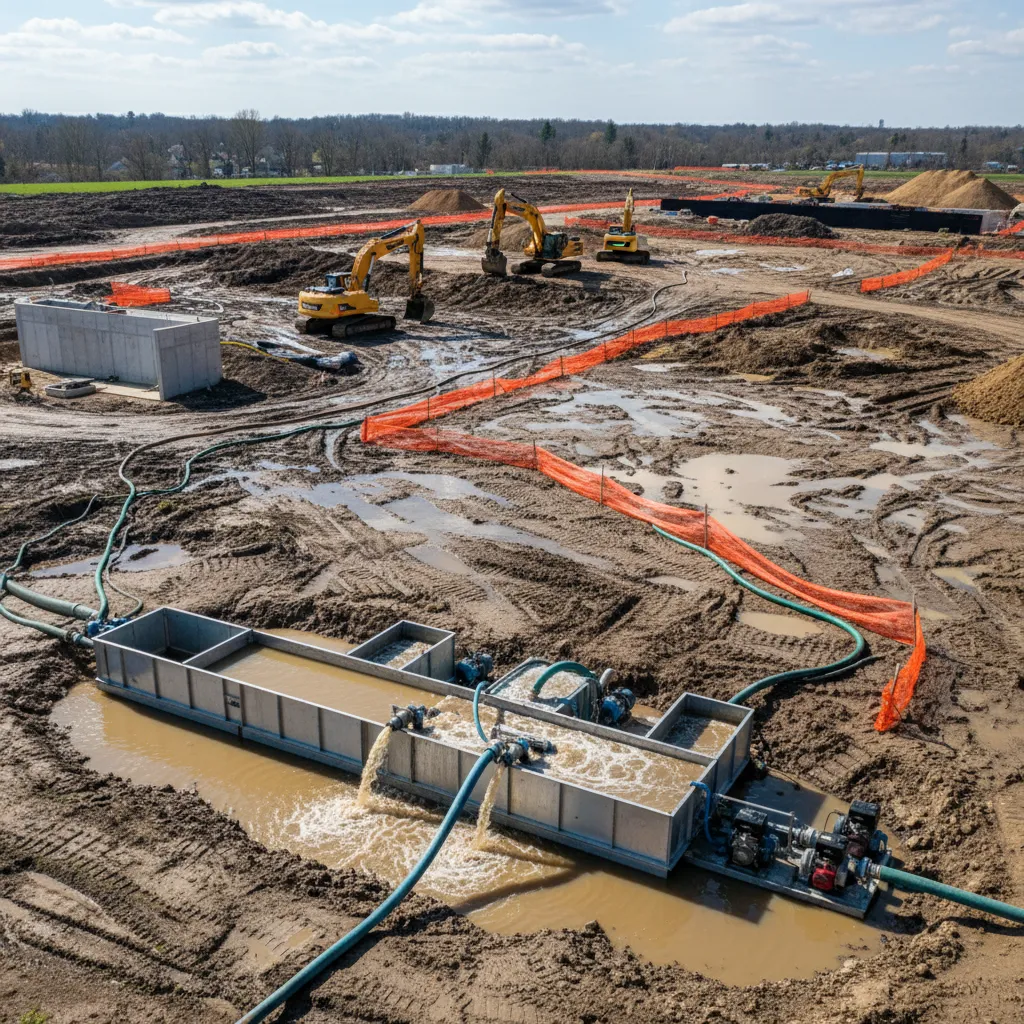
A well-designed sediment control system keeps runoff managed even after heavy rain on active construction sites.This guide breaks down what contractors actually need to know about erosion and sediment control on construction sites: how the systems work, where dewatering and bypass pumping fit in, and what questions to ask before you break ground.
Table of Contents
- Quick TL;DR for busy contractors
- Why sediment control matters more than ever
- What is a sediment control system?
- Erosion and sediment control plans: the basics
- Dewatering, bypass pumping, and treatment
- Questions to ask your sediment control partner
- Common mistakes that cause failures
- How Nexgen supports contractors in BC & Alberta
- Next steps: get eyes on your site early
Quick TL;DR for busy contractors
- Sediment in discharge water is one of the fastest ways to trigger stop-work orders, complaints, and rework.
- An effective erosion and sediment control plan is now table stakes for permits on many BC and Alberta projects.
- On real sites, “sediment control” means integrating dewatering services, temporary bypass pumping, and contaminated water treatment with physical controls like silt fences and settling tanks.
- Getting a specialist to design and operate your sediment control system usually costs less than fixing failures later.
- If you are unsure whether your current setup meets Canadian Water Quality Guidelines, bring in help before inspectors do.
Want a second set of eyes on an upcoming job? Request a free consultation with Nexgen’s field team.
Why sediment control matters more than ever
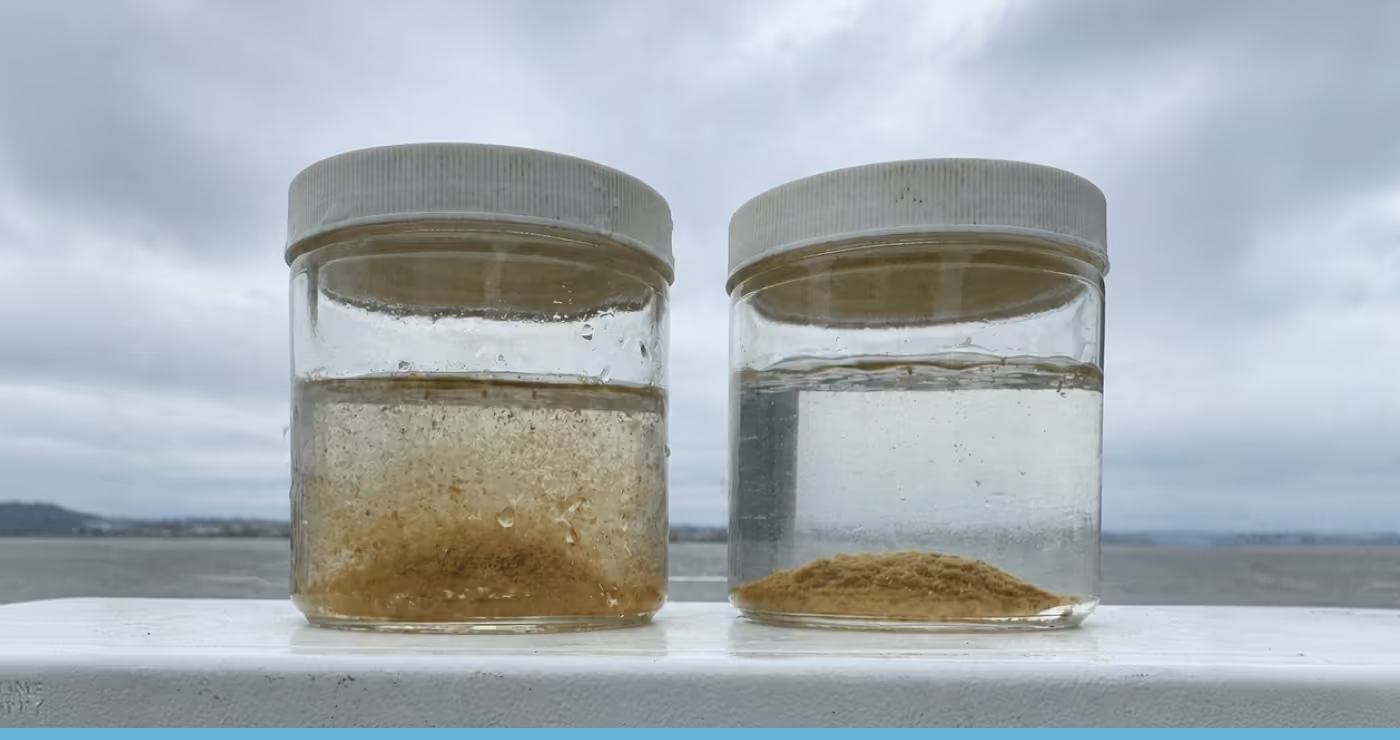
Ask any superintendent who has had a turbid discharge reach a creek. The paperwork, site shutdown, and remediation effort stay burned into memory. Sediment-laden water is more than “dirty”; it can smother fish habitat, clog municipal systems, and breach permit conditions in a single event.
Regulatory pressure in BC & Alberta
Municipalities throughout Metro Vancouver, along with provincial and federal agencies, lean on Canadian Water Quality Guidelines and local bylaws to set limits on turbidity and total suspended solids. Similar expectations exist in Alberta. For contractors, that means inspectors are not just glancing at your fence line, they are checking:
- Whether an erosion and sediment control plan is stamped and on file.
- How you handle high-flow events, pump failures, and power outages.
- Where water actually leaves your site and how it is treated.
Reputation, not just fines
Word travels fast in the local construction community. A project that sends cloudy water to a storm system can end up as a case study in what not to do at the next pre-bid meeting. On the other hand, a contractor known for clean and compliant sites becomes a safer bet for owners and consultants.
What is a sediment control system?
On paper, “sediment control” sounds simple: keep soil on site instead of letting it wash into drains, creeks, or rivers. In practice, a sediment control system is a combination of structures, pumps, and treatment units that work together to manage water from excavation to discharge.
Key components on a construction site
- Erosion controls (keeping soil in place): mulch, hydroseeding, blankets, slope armouring, and staged earthworks.
- Sediment controls (capturing what moves): silt fence, check dams, sediment basins, inlet protection, and turbidity curtains.
- Dewatering equipment: wellpoints, deep wells, sump pumps, and temporary piping that move water to treatment.
- Treatment systems: settling tanks, weir tanks, sand media filters, geotextile dewatering bags, and chemical dosing systems.
- Monitoring and controls: flow meters, sampling points, and operators who check turbidity and adjust treatment.
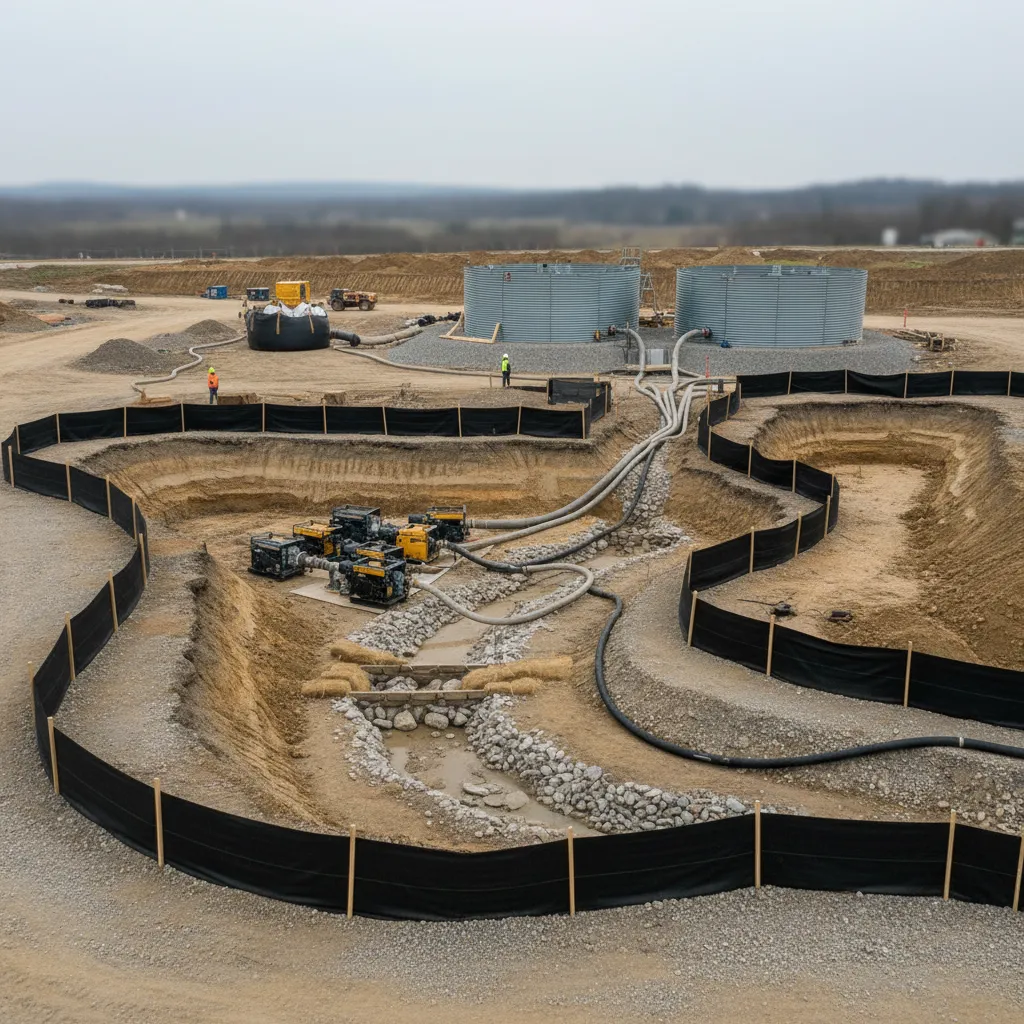
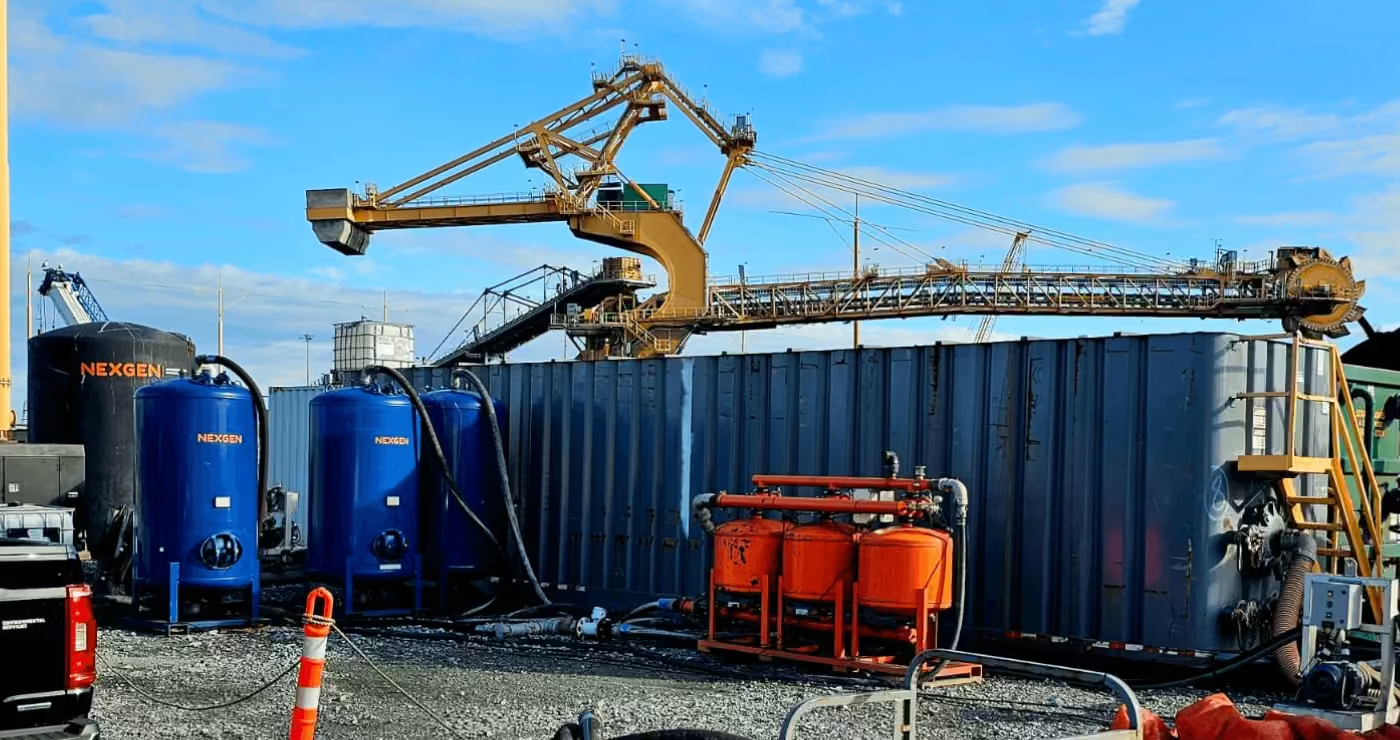
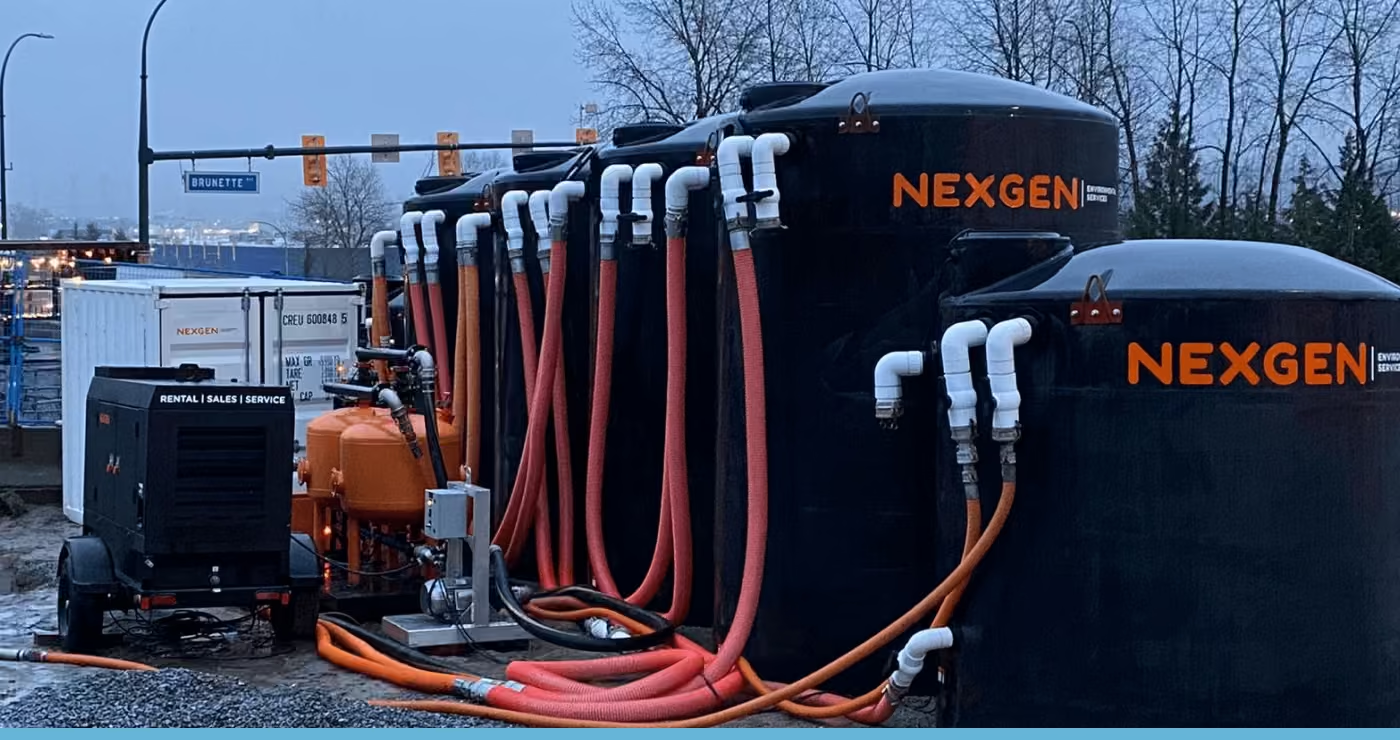
A complete sediment control system links erosion controls, pumps, settling tanks, and monitoring into one integrated setup.
When people ask, “How does a sediment control system work on a construction site?”, the honest answer is: it works if all these pieces are designed as one system, tuned to your soil type, slopes, groundwater conditions, and discharge limits.
Erosion and sediment control plans: the basics
Most municipalities now require a formal erosion and sediment control plan before issuing permits for larger sites. Engineers and environmental consultants typically prepare these documents, but contractors carry the risk if what is drawn cannot be built or operated in the field.
What belongs in an effective plan?
- Clear site grading phases that limit exposed soil at any given time.
- Runoff flow paths that keep clean water separated from dirty water.
- Locations and sizes for sediment ponds, tanks, and discharge points.
- Details for temporary and permanent erosion and sediment control structures.
- Sampling locations, frequency, and reporting protocols.
- Contingency steps for storms, freeze–thaw cycles, or equipment breakdowns.
If you are handed an erosion and sediment control plan that does not mention dewatering services, bypass pumping, or contaminated water treatment, that is a red flag for deep excavations, utility crossings, or brownfield work.
You can often strengthen your plan by bringing in a specialist who both designs and operates systems. Nexgen frequently works with consulting engineers to sanity-check plans against real pump capacities, available environmental dewatering services, and local discharge requirements.
For more technical background, many practitioners refer to resources such as the Erosion and Sediment Control Association of BC (ESCABC) when setting expectations for controls and inspection frequency.
Dewatering, bypass pumping, and contaminated water treatment
On deep utilities, foundations, or shoring jobs, erosion matting and silt fence only take you so far. Groundwater, stormwater, and process water often need to be pumped, routed, and treated before they are released. That is where integrated environmental dewatering services come in.
Where dewatering connects to sediment control
A typical setup might include:
- Wellpoints or sumps lowering groundwater in the excavation.
- Pumps moving water to a frac tank, weir tank, or series of poly tanks.
- Mechanical filtration (screens, sand media filters) to remove larger solids.
- Chemical treatment (coagulants, flocculants, specialty polymers) to settle fine clays and silts.
- Final polishing through filters before discharge to storm, sanitary (with approval), or a receiving watercourse.
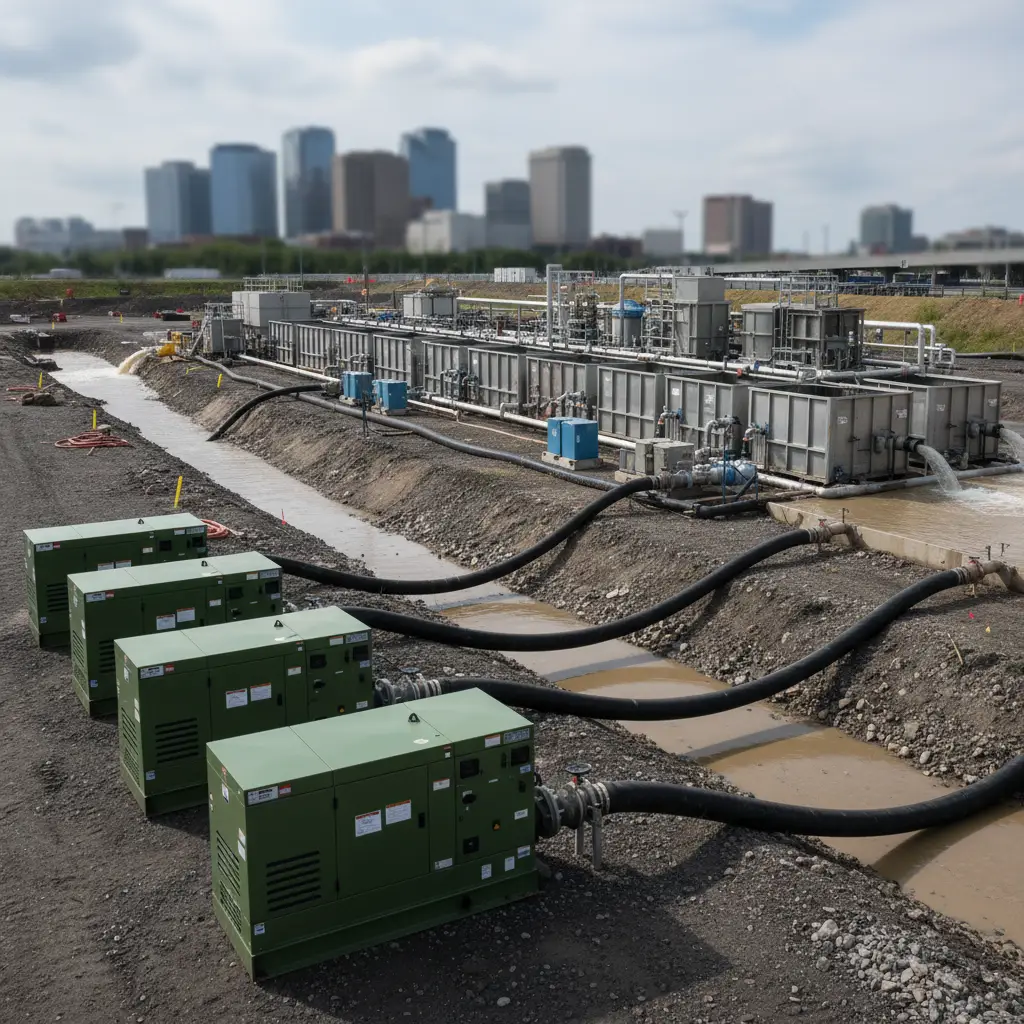
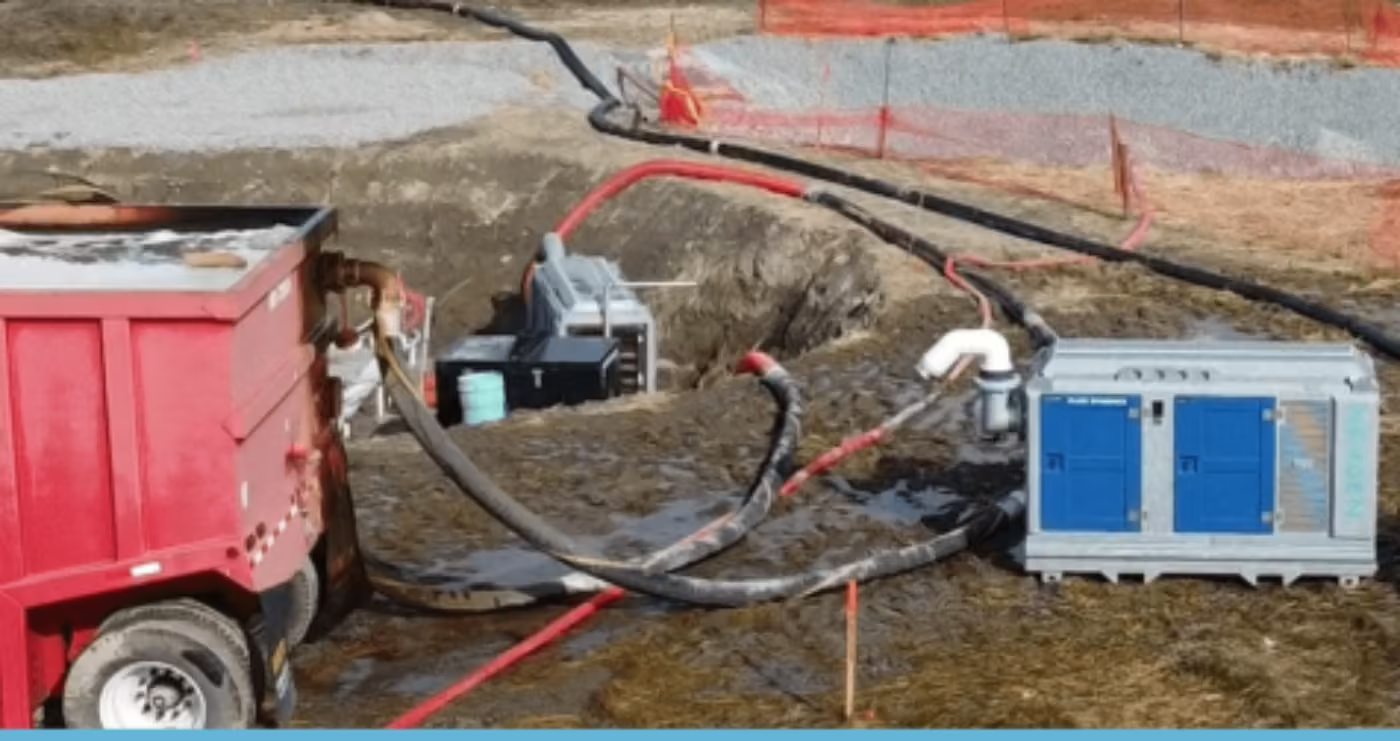
Dewatering and bypass pumping setups move water through treatment units so your sediment control system meets discharge limits.
In other words, dewatering is not just about keeping your excavation dry. It is a core part of how you meet your erosion and sediment control obligations.
Bypass pumping while systems stay live
Many civil projects can never “shut off” existing sewers, force mains, or streams. Temporary bypass pumping systems keep flows moving around your work zone while you repair or replace infrastructure. If those flows carry grit, organics, or other solids, your bypass line is also a sediment control system, and failure can create serious environmental issues in a hurry.
Nexgen’s bypass pumping services are often combined with sediment control measures, screening, and treatment so that what comes out of the discharge hose matches regulatory limits, not just hydraulic needs.
When you need contaminated water treatment
In brownfield sites, industrial plants, or yards with historic spills, you may be dealing with more than just soil and silt. Metals, hydrocarbons, and other contaminants can show up in groundwater or stormwater. In these situations, you need contaminated water treatment that layers on:
- Specialty filter media or carbon for hydrocarbons.
- Ion-exchange resins or other media for metals.
- Additional monitoring for pH, dissolved metals, and other parameters.
Nexgen designs systems that integrate contaminated water treatment with erosion and sediment control so that both solids and dissolved contaminants are addressed before discharge.
Questions to ask your sediment control partner
Not all pump suppliers or fence installers think in terms of whole systems. When you talk to a potential partner, these questions help reveal whether they can keep your site both dry and compliant:
- Have you designed and operated systems in soil conditions like ours?
Clay lenses in the Lower Mainland behave very differently than sands in parts of Alberta. - How do you connect dewatering, sediment control, and treatment?
Listen for a clear explanation of how water moves from excavation to final discharge. - What happens on a heavy rain weekend?
Ask about backup pumps, power, storage capacity, and call-out response. - Who is responsible for sampling and reporting?
You should know who is taking samples, how often, and how results are shared. - Can you help us fine-tune the erosion and sediment control plan?
Specialists like Nexgen can flag details that look good on paper but fail on a muddy Tuesday.
If the answers feel vague or focus only on equipment rentals instead of complete systems, that is your signal to keep looking.
Common mistakes that cause sediment control failures
After hundreds of projects, patterns start to repeat. Here are some of the missteps that cause headaches for contractors:
- Installing controls late. Silt fence and inlet protection go in after excavation has started, not before.
- Undersized tanks or ponds. A small settlement area might look fine in dry weather but cannot handle real storms.
- No plan for fine clays. Mechanical settling is often not enough for glacial silts and clays common in Western Canada.
- Pumps without treatment. Discharging directly from pumps to ditches or storm drains without filtration or treatment.
- Weak inspection habits. Nobody owns daily checks, so problems show up when a regulator does.
- Forgetting winter. Frozen hoses, iced-up weir tanks, and snowmelt can all break an otherwise solid sediment control setup.
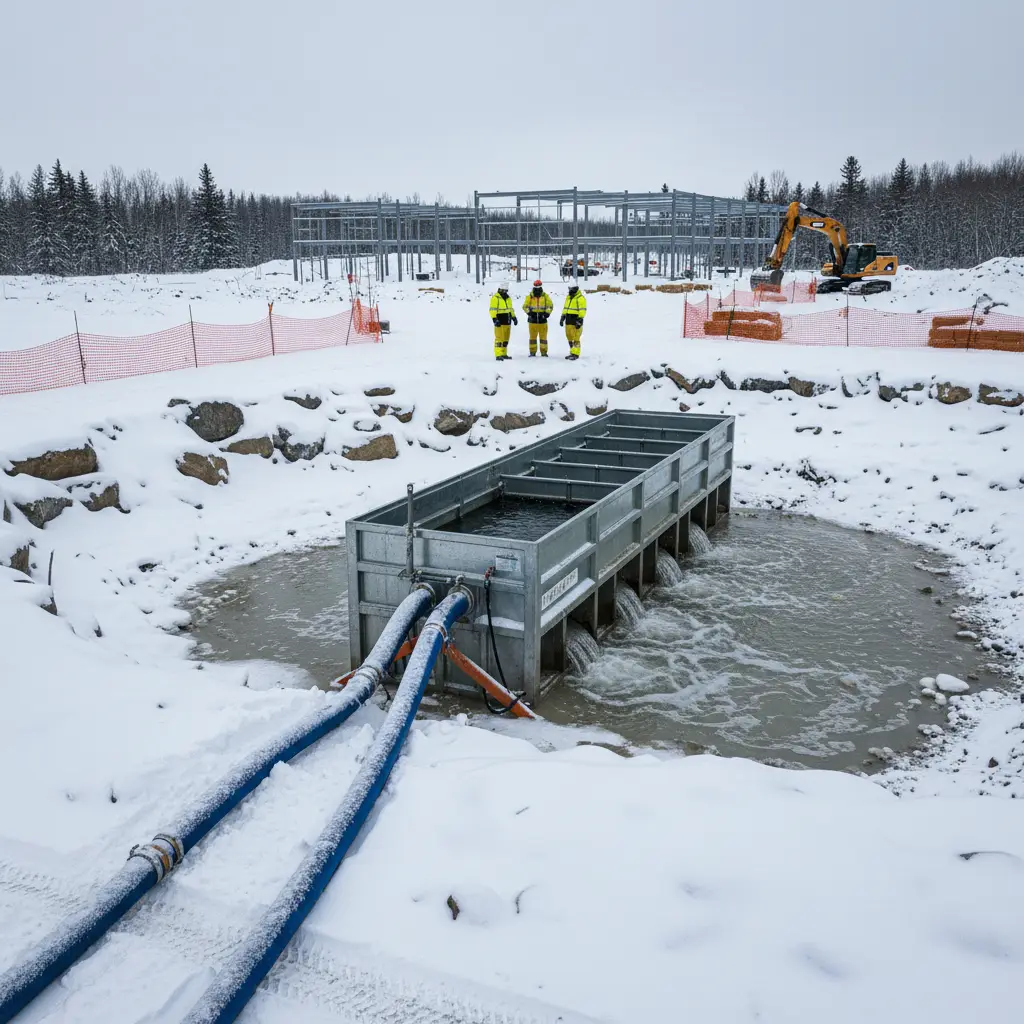
Regular inspections, especially in winter conditions, prevent small sediment control issues from turning into site shutdowns.
The good news: most of these issues are preventable with up-front planning and a partner who has seen similar jobs in your region.
How Nexgen supports contractors in BC & Alberta
Nexgen Environmental has built its business around one thing: helping contractors handle water and sediment on real jobs, not just in drawings. From wellpoint dewatering systems to erosion and sediment control programs, the focus is on systems that meet performance and regulatory targets in Western Canadian conditions.
A few practical benefits contractors see when bringing Nexgen into the conversation early:
- Site-specific design. Technicians review soil conditions, expected flows, and discharge limits before spec’ing pumps and treatment units.
- Turnkey installation and operation. The same team that designs the setup also installs, starts up, and operates it in the field.
- Regulatory fluency. Nexgen works to Canadian Water Quality Guidelines, CCME guidance, CEPA rules, and local bylaws every day.
- Single point of contact. Contractors are not stuck coordinating between a pump shop, a treatment vendor, and a fencing crew.
That mix of design, field experience, and accountability is what turns a paper erosion and sediment control plan into a system that keeps jobs moving.
Curious what this might look like on your next project? Start with a quick look at who we are or request a free consultation to talk through site-specific sediment control options.
Next steps: get eyes on your site early
Sediment control is not just a checkbox in the spec book anymore. With tighter oversight, more urban projects, and sensitive receiving waters, contractors who treat erosion and sediment control as core project scope tend to sleep better.
Before your next deep excavation, utility tie-in, or brownfield job kicks off, bring in a specialist who lives and breathes dewatering and sediment control systems. A short site review now can spare you from uncomfortable conversations with inspectors later.
Frequently Asked Questions
What is a sediment control system on a construction site?
A sediment control system is a combination of erosion controls, dewatering equipment, treatment systems, and monitoring processes designed to prevent sediment-filled water from leaving a construction site and entering nearby storm drains, rivers, or environmentally sensitive areas.
Why is erosion and sediment control important for contractors?
Erosion and sediment control helps contractors stay compliant with environmental regulations, avoid stop-work orders, protect nearby waterways, and reduce the risk of costly delays, fines, and site remediation caused by uncontrolled runoff or turbid discharge water.
What should be included in an erosion and sediment control plan?
An erosion and sediment control plan should include site grading phases, runoff management strategies, sediment containment methods, dewatering procedures, discharge treatment details, inspection schedules, and contingency plans for storms, pump failures, and changing site conditions.
How do dewatering services support sediment control systems?
Dewatering services help remove groundwater and stormwater from excavations while routing the water through settling tanks, filtration systems, or contaminated water treatment processes before discharge. Proper dewatering is a critical part of maintaining an effective sediment control system.
When is bypass pumping needed on infrastructure projects?
Bypass pumping is commonly used during sewer repairs, utility work, and infrastructure upgrades where existing water or wastewater flows must continue operating while construction is underway. These systems are often integrated with erosion and sediment control measures to manage discharge safely.
What happens if sediment control systems fail on a job site?
Failed sediment control systems can lead to environmental violations, muddy discharge entering waterways, project shutdowns, permit breaches, reputational damage, and expensive cleanup or remediation work. Regular inspections and properly designed environmental dewatering services help reduce these risks.