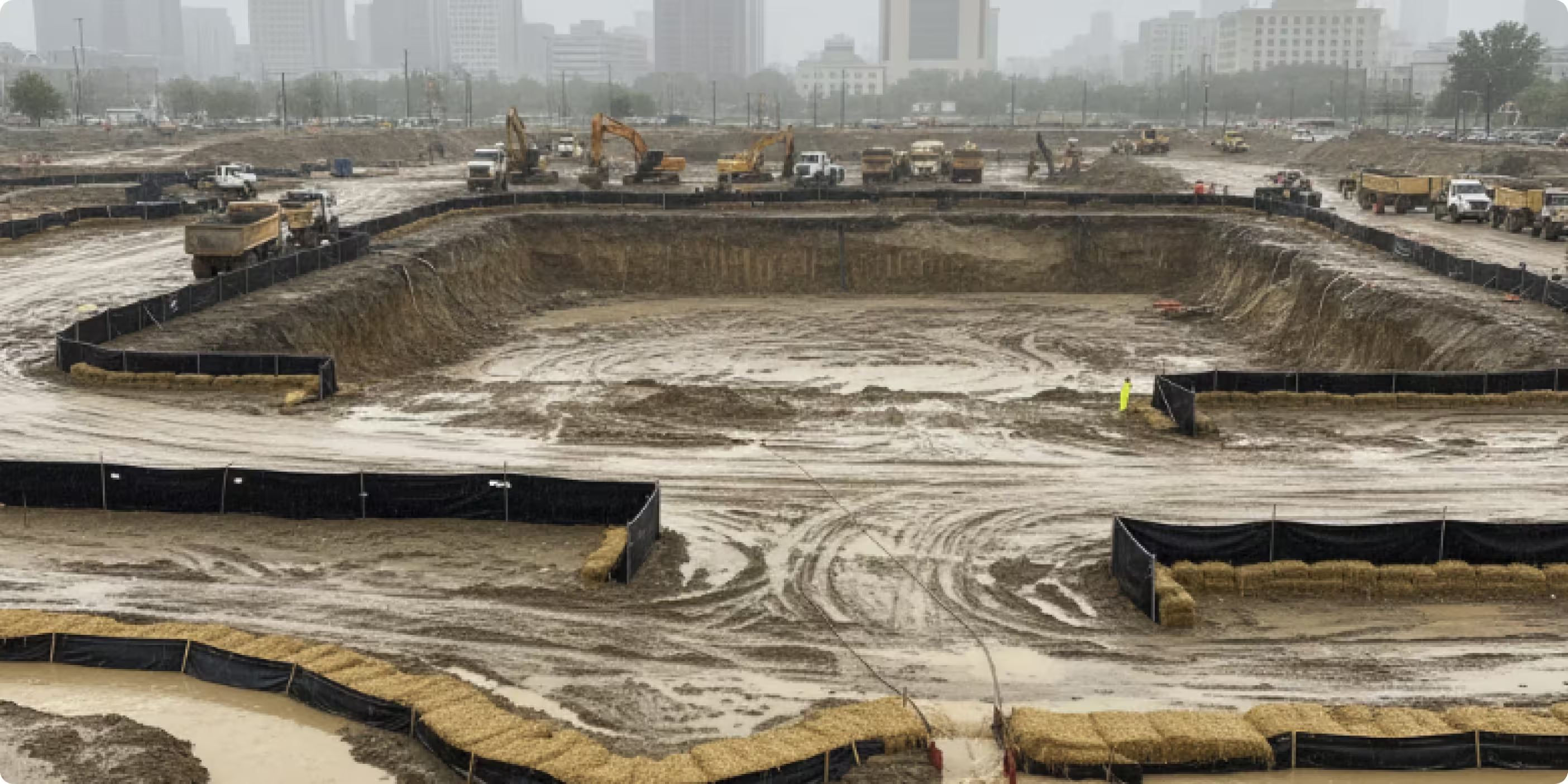
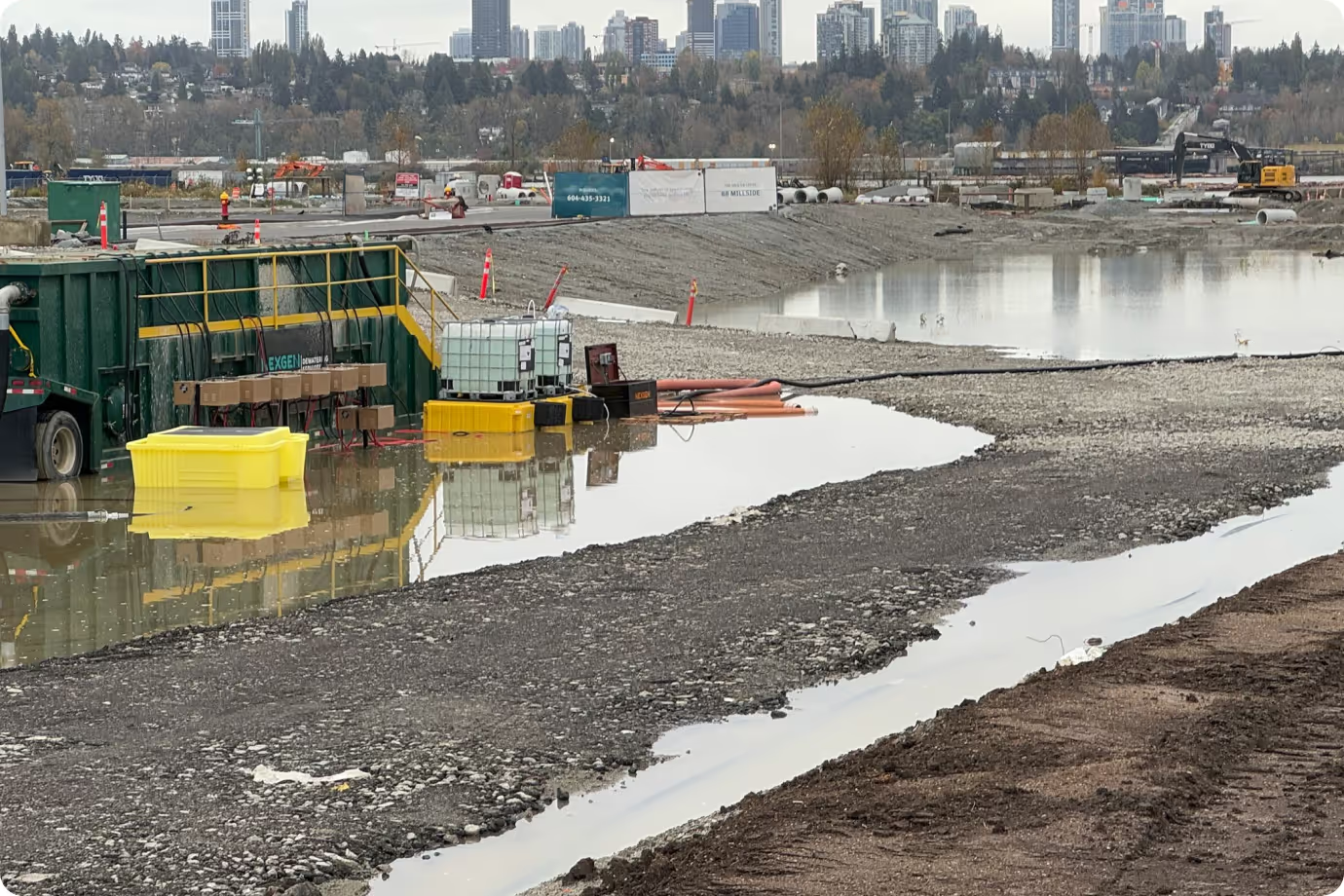
It happens to the best of us. You roll up to the site after a solid night of rain, or maybe you just break ground on a new excavation, and within an hour, you aren't looking at a foundation, you're looking at a lake. It’s a mess, it’s a massive drain on your budget, and if you don’t get ahead of it immediately, it’s a safety nightmare. In heavy construction, water isn’t just a nuisance; it’s an adversary.
Recent industry data highlights just how much of a struggle this is. The global construction dewatering market is expected to climb past $1.9 billion by 2032 (QY Research, 2026), mostly because we’re being forced to build in trickier, more water-logged spots than ever before. On your site, managing that flow isn't just about ticking a box, it's about keeping the project alive.
We’ve seen plenty of guys try to "wing it" with a single pump, only to watch a trench wall slump and lose two weeks of progress. Dewatering is really about environmental control. If you’re trying to figure out which tool is right for your current headache, let’s get into the five methods that actually get the job done.
1. Sump Pumping: The Quick Fix
When you’ve got a shallow hole and the water is just trickling in, sump pumping is the go-to. It’s common sense engineering: dig a small pit at the lowest point, let gravity do its thing, and drop in a pump to kick the water out.We usually call this the "Band-Aid." It’s great for getting started, but it has a major flaw. If you’re working in fine soil or high-pressure groundwater, a sump pump can actually pull the soil out along with the water. That’s how you get underground erosion, which is a disaster waiting to happen near a foundation. Keep this for the simple, shallow stuff where you just need to keep things dry enough to pour.
We usually call this the "Band-Aid." It’s great for getting started, but it has a major flaw. If you’re working in fine soil or high-pressure groundwater, a sump pump can actually pull the soil out along with the water. That’s how you get underground erosion, which is a disaster waiting to happen near a foundation. Keep this for the simple, shallow stuff where you just need to keep things dry enough to pour.
2. Wellpoint Systems: The Surgical Strike
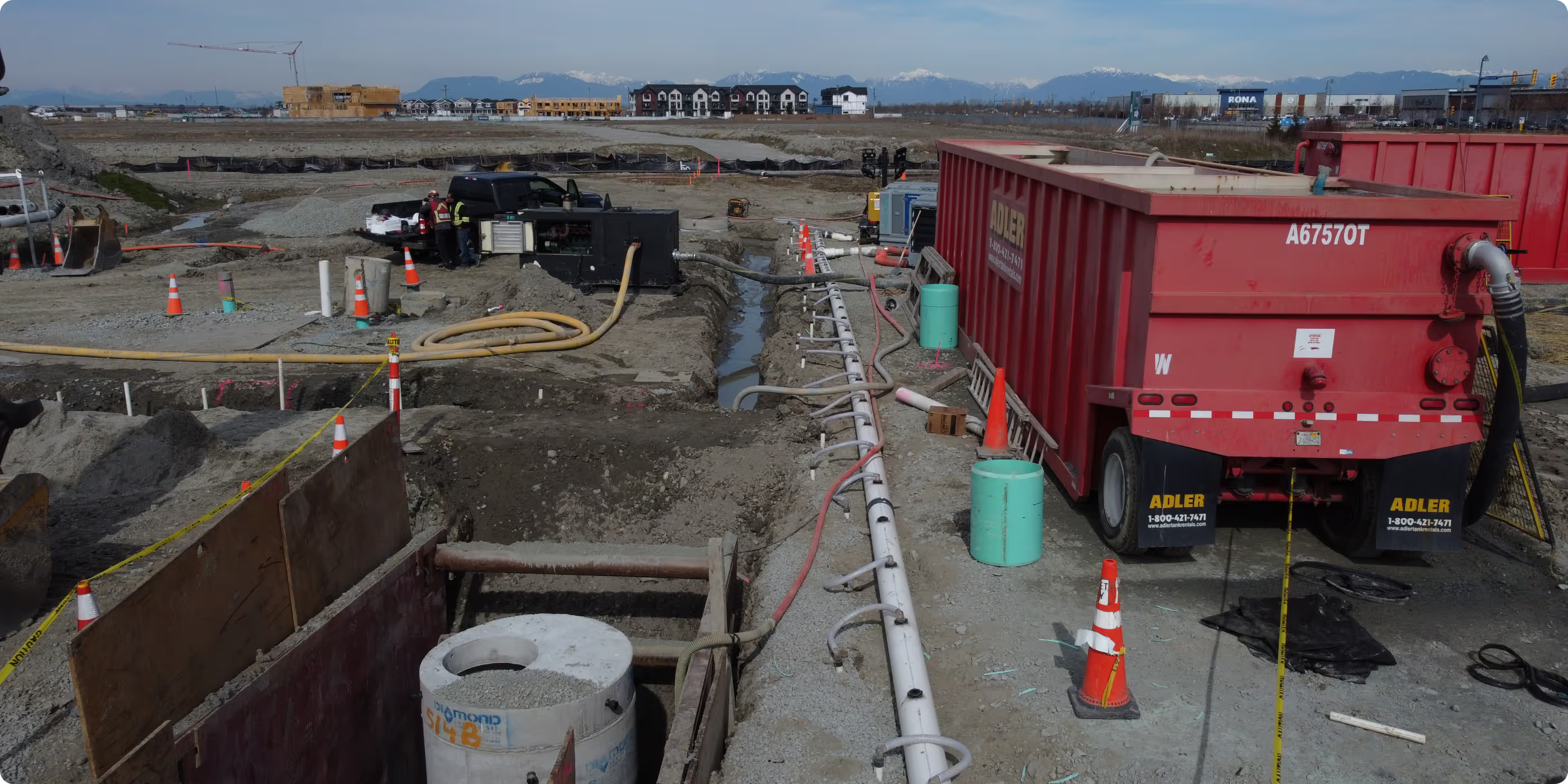
If you need to be precise, you move to wellpoints. Think of these as a line of straws surrounding your site. You drive small-diameter wells into the ground a few feet apart and hook them all up to one main "header" pipe and a vacuum pump.
This is a total game-changer for sandy ground. It sucks the water out before it even has a chance to reach your excavation. But there’s a catch, physics. Suction only works up to about 15 or 20 feet. If you’re going deeper than that, you’re going to need a bigger hammer.
3. Deep Wells: For the Big Jobs
When you’re building a high-rise with three levels of underground parking, wellpoints won't cut it. You need deep wells. Here, we aren't using little straws; we’re drilling massive wells, sometimes 100 feet down, well outside the dig zone.
Inside each well is a high-powered submersible pump. Unlike the vacuum systems, these push the water up, meaning depth isn’t an issue. It’s the heavy-duty way to handle high water tables, especially if you’re working near a river or a coast. It costs more upfront, but for total control over a large area, it’s the only way to fly.
4. Eductor Wells: The "Problem Child" Solution
Eductor wells (or jet pumps) are a bit unique. They don’t have a mechanical pump at the bottom. Instead, they use high-pressure water to create a vacuum that pulls groundwater up.
You use these when the soil is "tight", think silty sand or heavy clay that refuses to let go of its water. Standard pumps just can’t get a grip in those conditions, but the high-vacuum pull of an eductor can. They aren’t very energy efficient, you’re basically using a lot of water to move a little water, but when you’re stuck in silt, they’re worth their weight in gold.
5. Vacuum Dewatering: Ground Stabilization
Sometimes, the goal isn't just moving water, it’s stopping the ground from turning into toothpaste. In very fine soils, water gets trapped in the pores, making the earth unstable.
By adding a sealed vacuum to the top of your wells, you lower the air pressure in the soil itself. This literally squeezes the water out. It’s a highly technical, high-detail approach, and you really need a pro who understands the local geology to get the pressure right.
Why the "Right" Call Matters
Picking the wrong method isn't just a minor oops, it can kill a project. We once saw a contractor try to save a buck using sump pumps in a deep sandy pit. They were moving water, sure, but they were also moving the sand from under the neighboring sidewalk. The sidewalk started to sink, the city showed up, and the "savings" disappeared into hundreds of thousands of dollars in repairs and engineering fees.
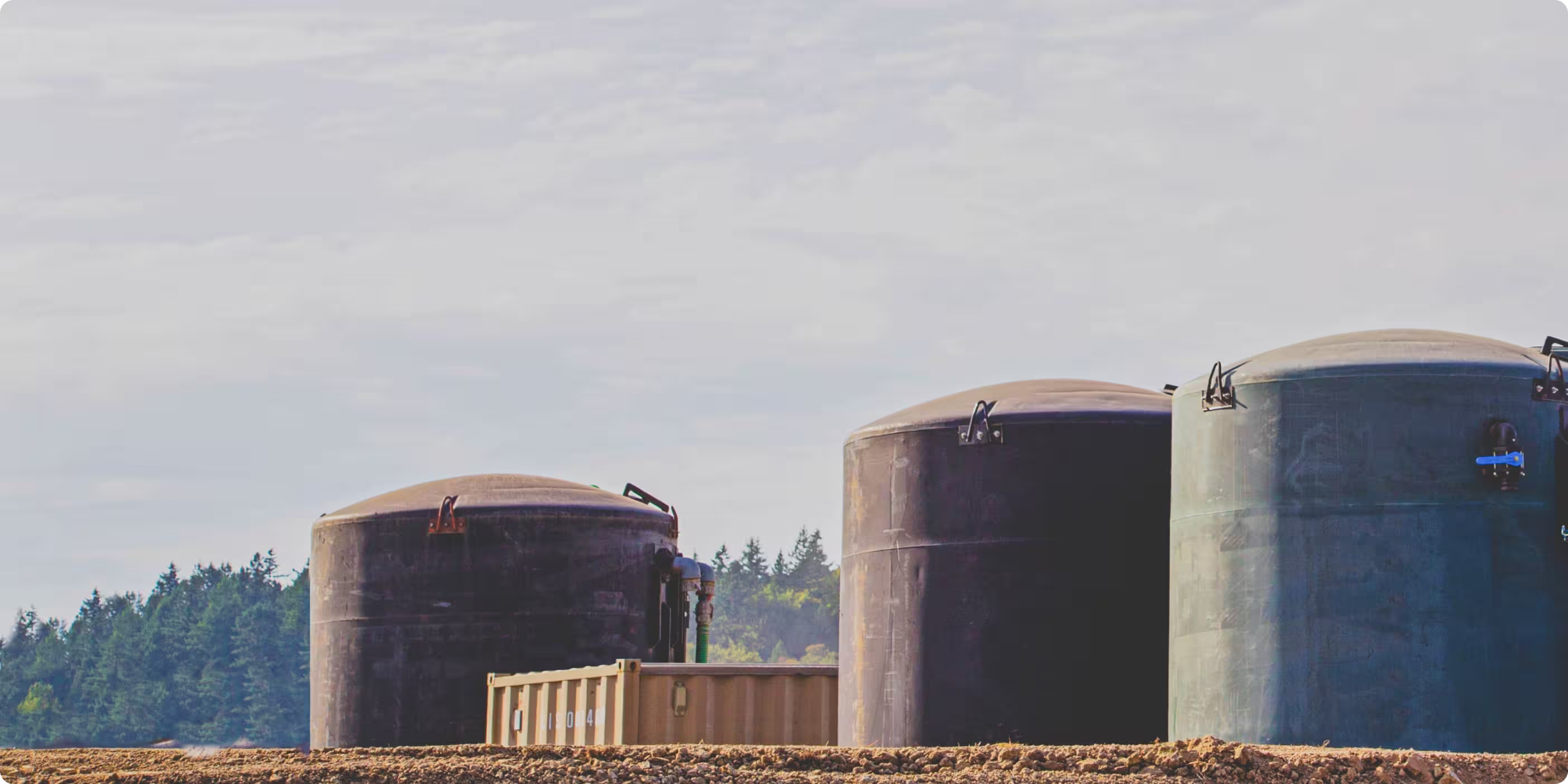
And don't forget where that water goes. You can't just pump muddy water into the street. Most cities are strict about "Total Suspended Solids" (TSS). You’re going to need settling tanks or filtration to keep things clean. Being a responsible builder isn't just about the dig; it's about the discharge.
The Bottom Line
So, how do you choose? It usually comes down to three things:
- Depth: Under 15 feet? Sumps or wellpoints. Deeper? Deep wells.
- Soil: Sandy? Wellpoints. Silt or Clay? Eductors.
- Volume: A puddle or a river?
Dewatering is part science, part gut feeling. Every site has its own personality, and if you aren't sure, don’t guess. Calling in a specialist like Nexgen Dewatering Services is a lot cheaper than fixing a collapsed excavation. Get the plan right, let the pros handle the water, and just focus on building.
For dependable and efficient Mainland dewatering services, Nexgen Environmental stands unmatched—delivering strength below the surface and excellence above it.