icon-arrow-left
Back to Services

Services

Dewatering Services

Dewatering Services for Construction Projects in British Columbia

NexGen Environmental designs, installs, and operates construction dewatering systems across Metro Vancouver, the Fraser Valley, and British Columbia. We handle temporary groundwater control for excavations, utility trenches, and infrastructure work from the initial dewatering plan through system operation, treatment, discharge monitoring, and the documentation your reviewers will ask for. This page covers what dewatering involves, which method fits which site, what actually drives cost, and where we work.

>
icon-quarter-circle
Risk

What happens without proper dewatering planning

The Risks of Proceeding Without a Dewatering Strategy

01 Schedule collapse
Without proper dewatering, groundwater intrusion can halt excavation and foundation work. Delays quickly compound, pushing back timelines and increasing overall project costs.
02 Environmental violations
Uncontrolled water discharge can carry sediment and contaminants into surrounding areas. This exposes projects to regulatory violations, fines, and potential work stoppages.
03 Structural damage
Excess groundwater weakens soil stability and increases hydrostatic pressure on foundations. Over time, this can lead to cracking, settlement, and long-term structural failure.
04 Budget overruns
Unplanned delays, repairs, and emergency mitigation quickly drive costs beyond the original budget. What starts as a water issue often escalates into major financial losses without proper dewatering.
Dewatering Services

What Construction Dewatering Actually Involves

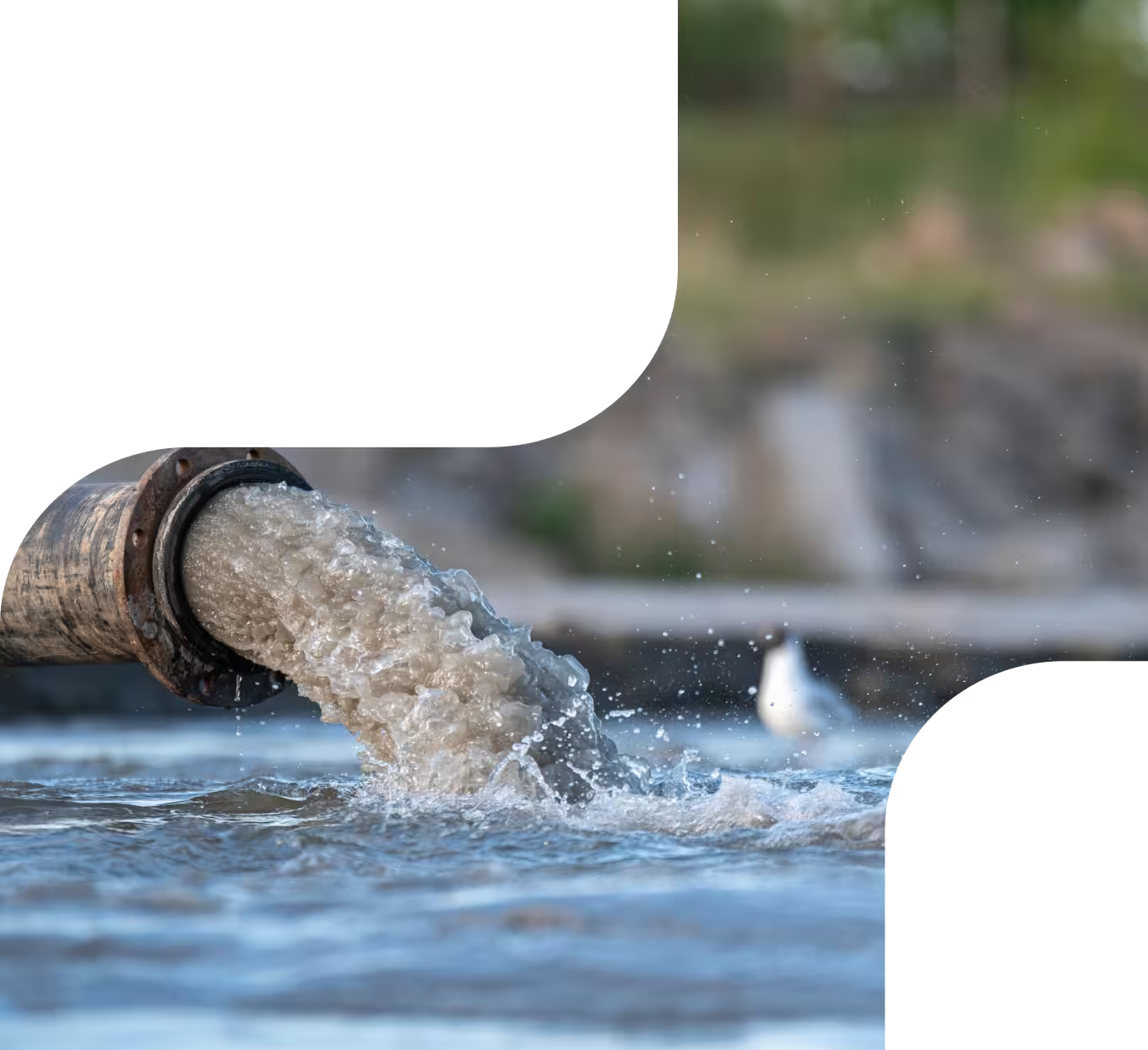
Dewatering is temporary groundwater control lowering or diverting water so crews can work in a dry, stable excavation. On most BC sites it is not one piece of equipment but a chain: extraction, conveyance, treatment, and a compliant discharge point, each sized to the others. The part that catches projects out is rarely the pumping. It is the discharge. Water pulled from a BC excavation usually cannot go straight to storm or sanitary it typically needs sediment and turbidity control, sometimes pH correction or contaminant removal, and almost always sampling records. A system that moves water beautifully but cannot discharge it legally has not solved the problem.

Dewatering Services
icon-quarter-circle
how we work

Dewatering Methods and When Each One Fits

Choosing wrong is expensive in a specific way: you don't find out on day one, you find out three weeks in when drawdown stalls and the excavation can't be worked. We'd rather tell you early that a method doesn't fit than sell you the one we have in the yard.

Wellpoint systems
Wellpoint systems
Shallow to mid depth excavations where soil lets water migrate toward the points. Best when you need even drawdown across a footprint.
Sump and open pumping
Simplest approach, suited to low inflow and stable ground. Struggles when fines mobilize or drawdown must be precise.
Deep wells
Deep wells
Higher volume or deeper drawdown where wellpoint vacuum limits are exceeded.
Bypass pumping
Bypass pumping
Not drawdown at all: keeping a live line flowing around a work zone during tie-ins or maintenance.
icon-quarter-circle
CUSTOMER REVIEWS
"Knowledgeable team that knows what there talking about and setups up systems professionally which avoids you problems in the project. Recommend them for Sediment control systems."
icon-quarter-circle
Help & Support

Questions for this service

Get answers about dewatering project planning and our approach.
How long does planning take?
arrow up
Most projects can move from intake to a usable plan in a few business days once we have drawings, excavation depth, schedule, and any geotech or groundwater notes. If discharge constraints or treatment needs are complex, we’ll still start quickly and confirm the timeline early.
What permits do we need?
arrow up
That depends on where water is discharged and what the project requires. Common needs include discharge authorization, erosion and sediment controls, and water quality sampling requirements. We help identify what applies and provide the planning documentation needed for review.
Can you handle emergency dewatering?
arrow up
Yes. We can mobilize quickly to stabilize the excavation, then convert that response into a structured plan so the job doesn’t stay stuck in reactive mode.
What if conditions change mid project?
arrow up
It happens. We adjust equipment selection, routing, and treatment as needed and keep logs and reporting aligned so changes remain traceable during reviews.
Do you handle environmental compliance?
arrow up
Typically it includes daily logs, sampling records (when required), discharge notes, and any treatment performance documentation. We keep it simple to share with inspectors, consultants, owners, and project teams.
What information should I send to start dewatering planning?
arrow up
Why is dewatering planning important before construction?
arrow up
What factors are considered during dewatering planning?
arrow up
Can NexGen prepare dewatering plans for contaminated groundwater?
arrow up
Which projects require dewatering planning?
arrow up

Request a dewatering quote

Tell us about your project and we'll design a solution that fits your needs and timeline.

cutout-background